➡️ INTRODUCTION
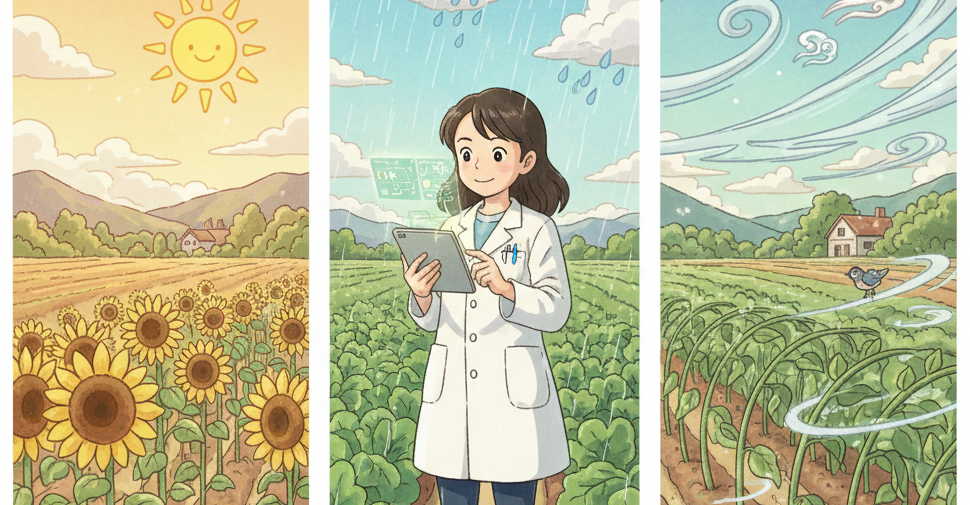
→ Climate change is reshaping agriculture across the world. Rising temperatures, unpredictable rainfall, stronger storms, and longer droughts are affecting crop growth and farm productivity. For farmers, adapting to these changes is no longer optional—it is essential for survival and long-term success. By selecting suitable crops, adjusting planting schedules, improving soil health, and using smart farming techniques, farmers can reduce risks and protect their harvests. Adapting crops to climate change not only safeguards income but also strengthens food security for communities. With practical planning and informed decisions, farmers in every country can build resilient systems that continue to produce reliable yields despite changing environmental conditions.
➡️ Key Points / Benefits
→ Reduces crop losses caused by extreme weather events.
→ Improves yield stability under changing climate conditions.
→ Enhances soil and water management efficiency.
→ Strengthens farm income and long-term sustainability.
→ Promotes resilient farming systems for future generations.
🔵 1️⃣ → Selecting Climate-Resilient Crop Varieties
Choosing the right crop varieties is one of the most effective ways to adapt to climate change. Modern and traditional breeding programs offer drought-tolerant, heat-resistant, and flood-tolerant varieties suited to different regions.
Step-by-step guidance:
- Consult local agricultural extension services for recommended varieties.
- Select seeds tested for resistance to local pests and diseases.
- Choose early-maturing crops in areas with shorter growing seasons.
- Diversify crops to reduce overall risk.
For example, farmers in drought-prone regions can plant sorghum or millet instead of water-demanding crops. Diversifying between cereals, legumes, and vegetables spreads risk and improves soil health. Avoid relying on a single crop variety, as this increases vulnerability to climate stress.
🔵 2️⃣ → Adjusting Planting Schedules and Crop Calendars
Changing weather patterns often require adjustments to traditional planting dates. Monitoring seasonal forecasts and local climate trends can help farmers make informed decisions.
Practical tips:
- Track rainfall patterns and temperature changes annually.
- Use short-term weather forecasts during planting seasons.
- Shift sowing dates to avoid peak heat or heavy rainfall.
- Consider staggered planting to spread risk.
For example, planting earlier in regions experiencing rising temperatures may allow crops to mature before extreme heat occurs. However, avoid planting too early without reliable rainfall. Careful observation and record-keeping improve decision-making over time and reduce unexpected losses.
🔵 3️⃣ → Improving Soil Health for Climate Resilience
Healthy soil plays a key role in adapting crops to climate change. Soil rich in organic matter retains moisture during droughts and drains excess water during heavy rains.
Actionable tips:
- Add compost or organic matter regularly.
- Practice crop rotation to maintain nutrient balance.
- Use cover crops to protect soil from erosion.
- Reduce excessive tillage to maintain soil structure.
Mistakes to avoid:
- Leaving soil bare during extreme weather seasons.
- Overusing chemical inputs that degrade soil quality.
- Ignoring signs of erosion or nutrient depletion.
Improved soil health enhances root development and nutrient uptake. Over time, this increases yield stability and reduces the impact of unpredictable weather.
🔵 4️⃣ → Efficient Water Management Strategies
Water scarcity and irregular rainfall are common climate challenges. Efficient irrigation and water conservation practices can protect crops during dry periods.
Practical guidance:
- Install drip or sprinkler irrigation systems where possible.
- Harvest rainwater using ponds or storage tanks.
- Mulch fields to reduce evaporation.
- Monitor soil moisture before irrigating.
For example, drip irrigation delivers water directly to plant roots, reducing waste. Mulching with straw or crop residues keeps soil cooler and retains moisture. Avoid over-irrigation, as it can lead to nutrient leaching and increased production costs. Smart water management ensures crops receive adequate moisture even during uncertain rainfall patterns.
🔵 5️⃣ → Diversification and Risk Management
Diversifying farming activities reduces financial and environmental risk. Depending on one crop or one income source can be risky under changing climate conditions.
Step-by-step instructions:
- Grow multiple crops with different climate tolerances.
- Integrate livestock or agroforestry systems.
- Consider intercropping to maximize land use.
- Explore crop insurance or community risk-sharing programs.
Dos:
- Monitor market demand when selecting alternative crops.
- Keep farm records to evaluate performance.
- Invest gradually in new practices.
Don’ts:
- Avoid switching entirely to unfamiliar crops without testing.
- Do not ignore local knowledge and farmer experience.
- Avoid overexpansion without assessing climate risks.
Diversification improves income stability and strengthens overall farm resilience. It also enhances biodiversity, which supports natural pest control and soil fertility.
➡️ CONCLUSION
→ Adapting crops to climate change requires careful planning, informed decisions, and consistent monitoring. By selecting resilient varieties, adjusting planting schedules, improving soil health, managing water efficiently, and diversifying farm systems, farmers can reduce climate-related risks and protect their livelihoods. These practical strategies increase yield stability, strengthen soil and water resources, and support long-term sustainability. Climate challenges may continue to evolve, but proactive adaptation helps farmers stay prepared. With thoughtful implementation and ongoing learning, agricultural communities worldwide can build resilient farming systems that thrive even in changing environmental conditions.