➡️ INTRODUCTION
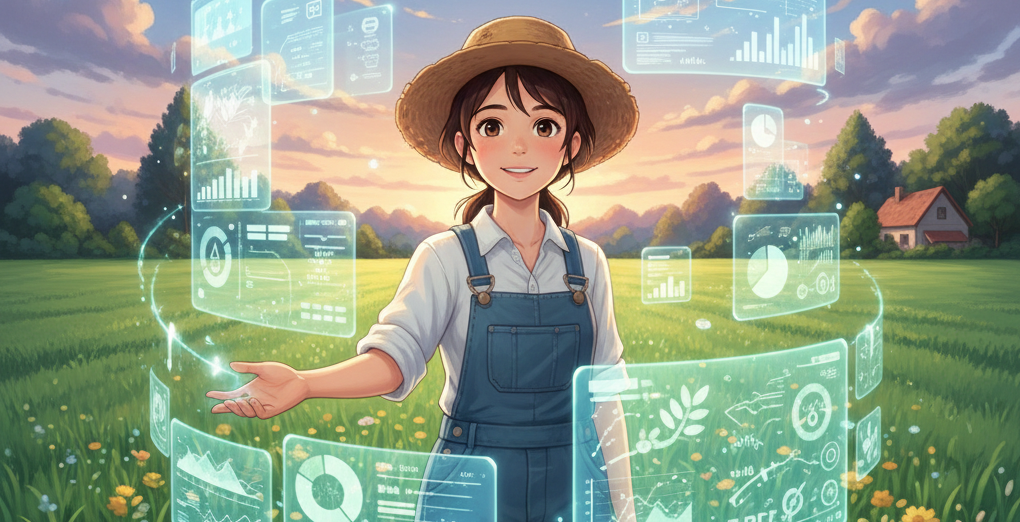
→ Farming is becoming more data-driven than ever before. With the help of advanced digital tools and intelligent systems, farmers can now collect, analyze, and use data to make better decisions about planting, irrigation, fertilization, and harvesting. AI in farming is transforming traditional agriculture into a smarter and more efficient system. By using data from soil sensors, weather stations, drones, and satellites, farmers can improve crop health, reduce waste, and increase yields. This approach not only saves time and money but also supports sustainable practices. Understanding how data improves crop production allows farmers worldwide to stay competitive and prepare for future agricultural challenges.
➡️ Key Points / Benefits
→ Improves crop yields through data-based decision-making.
→ Reduces input costs by optimizing water, fertilizer, and pesticide use.
→ Detects crop diseases and stress at early stages.
→ Enhances resource efficiency and sustainability.
→ Provides accurate forecasting for better farm planning.
🔵 1️⃣ → Data Collection Through Smart Sensors and Devices
Modern farms rely on sensors and digital tools to collect real-time information from fields. These devices measure soil moisture, temperature, nutrient levels, and weather conditions. The collected data is then analyzed to guide farming decisions.
Step-by-step implementation:
- Install soil moisture and nutrient sensors in different field zones.
- Use weather stations to monitor rainfall, humidity, and wind.
- Connect devices to a central digital platform.
- Review data reports regularly.
For example, if soil moisture levels drop below a set threshold, irrigation can start automatically. This prevents overwatering and reduces water waste. Farmers should ensure sensors are properly calibrated and positioned for accurate readings. Reliable data collection is the foundation of smarter crop production.
🔵 2️⃣ → Predictive Analytics for Crop Planning
Predictive analytics uses historical and real-time data to forecast crop performance. By analyzing past yields, weather trends, and soil conditions, farmers can make informed decisions before planting begins.
Practical benefits include:
- Selecting the right crop variety for specific soil types.
- Determining optimal planting dates.
- Estimating potential yield outcomes.
- Planning fertilizer requirements in advance.
To apply this effectively:
- Maintain accurate farm records each season.
- Compare historical yield data with weather patterns.
- Adjust planting schedules based on predictions.
Avoid relying solely on past habits without reviewing updated data. Predictive analysis helps reduce risks and supports long-term farm stability. With proper planning, farmers can improve productivity while minimizing unexpected losses.
🔵 3️⃣ → Early Disease and Pest Detection
One of the most valuable applications of AI in farming is early detection of crop diseases and pest infestations. Drones, cameras, and imaging tools can identify subtle changes in plant color, growth, or leaf patterns before visible damage becomes severe.
Actionable tips:
- Conduct regular drone or field imaging scans.
- Monitor leaf discoloration or irregular growth patterns.
- Compare current images with healthy crop data.
- Take quick action when abnormalities appear.
Early detection allows farmers to apply targeted treatments instead of spraying entire fields. This reduces chemical use and protects beneficial organisms. A common mistake is delaying action after identifying warning signs. Timely intervention prevents minor issues from becoming major crop losses.
🔵 4️⃣ → Precision Application of Inputs
Data-driven farming enables precise application of water, fertilizers, and pesticides. Instead of treating the entire field uniformly, farmers can apply inputs only where needed.
Practical guidance:
- Divide fields into management zones.
- Use variable-rate technology for fertilizer application.
- Adjust irrigation based on soil moisture data.
- Monitor crop response after each application.
For example, one part of a field may require more nutrients than another. Applying fertilizer uniformly can lead to waste or soil imbalance. Precision techniques improve nutrient efficiency and reduce costs. Farmers should review application maps and adjust settings regularly to maintain accuracy.
🔵 5️⃣ → Continuous Monitoring and Performance Evaluation
Ongoing monitoring is essential to maximize the benefits of data-driven farming. Regular evaluation helps farmers understand what strategies are working and what needs adjustment.
Step-by-step monitoring process:
- Track crop growth weekly.
- Compare yield data across different field zones.
- Analyze input usage versus output results.
- Update digital records after each season.
Do’s:
- Keep detailed production records.
- Train farm workers to understand digital tools.
- Review performance reports regularly.
Don’ts:
- Ignore data trends over multiple seasons.
- Skip system updates or software maintenance.
- Rely only on manual observation.
Consistent monitoring ensures continuous improvement. By evaluating results, farmers can refine their strategies and increase profitability over time.
➡️ CONCLUSION
→ Data-driven farming is reshaping agriculture by helping farmers make informed and timely decisions. Through smart sensors, predictive analytics, early disease detection, precision input application, and continuous monitoring, crop production becomes more efficient and sustainable. These technologies reduce waste, lower costs, and improve yields while protecting natural resources. Success depends on accurate data collection, proper system setup, and regular performance evaluation. By embracing modern digital tools and using data wisely, farmers can strengthen productivity and prepare for the evolving demands of global agriculture.