➡️ INTRODUCTION
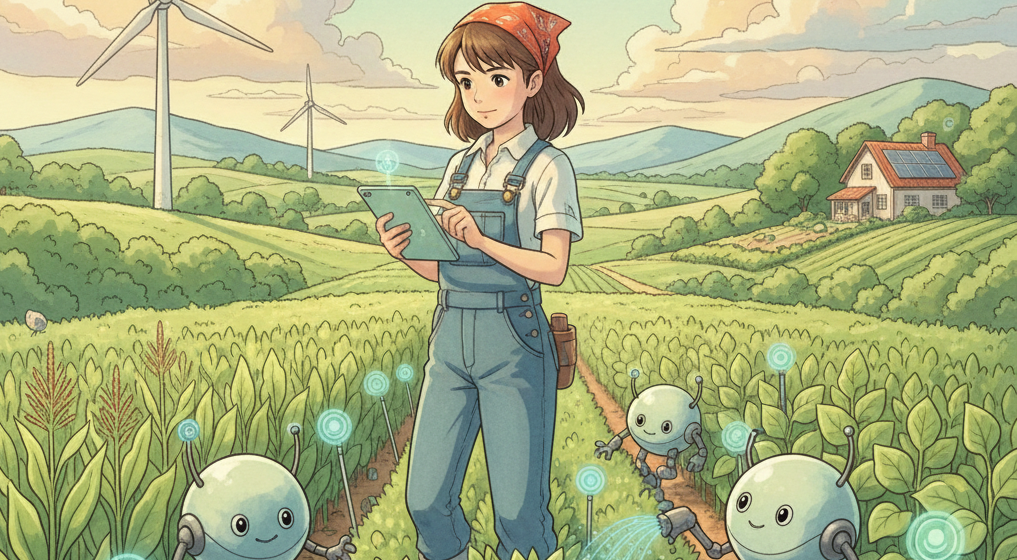
→ Precision agriculture is a modern farming approach that uses technology to monitor, measure, and manage crops more accurately. Instead of treating the entire field the same way, farmers use data, sensors, GPS, and smart tools to apply water, fertilizer, and pesticides only where needed. This method helps reduce waste, lower costs, and increase crop yields. In today’s world, where food demand is rising and resources are limited, precision agriculture offers practical solutions for sustainable farming. By adopting these technologies, farmers can make better decisions, improve productivity, protect the environment, and increase profitability while maintaining soil health for future generations.
➡️ Key Points / Benefits
→ Increases crop yields by providing the right inputs at the right time and place.
→ Reduces production costs by minimizing waste of water, fertilizers, and chemicals.
→ Improves soil health through targeted nutrient management.
→ Enhances decision-making using real-time data and field monitoring.
→ Supports sustainable farming by reducing environmental impact.
🔵 1️⃣ → GPS and Field Mapping Technology
GPS (Global Positioning System) is one of the foundations of precision agriculture. It allows farmers to map their fields accurately and track equipment movement. With detailed field maps, farmers can identify variations in soil type, moisture levels, and crop growth.
How to use GPS effectively:
- Create digital field maps using GPS-enabled devices.
- Divide fields into smaller management zones.
- Record planting patterns and yield results for each zone.
- Compare data from different seasons to identify trends.
For example, if one section of a field consistently produces lower yields, GPS mapping helps locate the exact area for improvement. Farmers can then test soil or adjust irrigation only in that zone. This targeted approach saves time and resources while improving overall productivity.
🔵 2️⃣ → Soil Sensors and Testing Tools
Healthy soil is the foundation of successful farming. Soil sensors and testing tools measure moisture levels, nutrient content, pH balance, and temperature. Instead of guessing, farmers can make data-driven decisions.
Practical steps:
- Install soil moisture sensors at different depths.
- Conduct soil testing before planting each season.
- Monitor nutrient levels regularly.
- Adjust fertilizer application based on test results.
For example, if soil moisture sensors show adequate water levels, irrigation can be delayed, preventing overwatering. Similarly, nutrient testing ensures that crops receive exactly what they need, reducing fertilizer waste. Avoid applying fertilizers without testing, as excessive use can harm soil health and increase costs.
🔵 3️⃣ → Drones for Crop Monitoring
Agricultural drones provide an aerial view of fields, helping farmers detect problems early. They can capture high-resolution images and identify issues such as pest attacks, nutrient deficiencies, or uneven crop growth.
Benefits of drone monitoring:
- Quick field inspection without walking long distances.
- Early detection of disease outbreaks.
- Identification of irrigation problems.
- Accurate crop health analysis using imaging tools.
To use drones effectively:
- Schedule regular flights during key growth stages.
- Compare images over time to track crop progress.
- Focus on problem areas for detailed inspection.
A common mistake is using drone data without proper analysis. Always combine drone images with soil tests and field observations for better decisions.
🔵 4️⃣ → Variable Rate Technology (VRT)
Variable Rate Technology allows farmers to apply inputs such as seeds, fertilizers, and pesticides at different rates across a field. Instead of uniform application, VRT adjusts quantities based on field conditions.
How it works:
- Use field maps and soil data to create application plans.
- Program machinery with variable rate settings.
- Apply inputs according to each zone’s needs.
For instance, areas with rich soil may require less fertilizer, while weaker zones may need more support. This approach reduces waste and improves yield consistency. When implementing VRT, ensure equipment is calibrated properly. Incorrect settings can lead to uneven distribution and reduced efficiency.
🔵 5️⃣ → Farm Management Software and Data Analytics
Modern farm management software collects and analyzes data from multiple sources, including sensors, GPS, drones, and machinery. This digital system helps farmers track performance and plan effectively.
Step-by-step approach:
- Choose reliable farm management software.
- Record planting dates, input usage, and weather data.
- Analyze yield reports after harvest.
- Adjust strategies for the next season based on insights.
Do’s:
- Keep records updated regularly.
- Back up data securely.
- Train staff to use software correctly.
Don’ts:
- Ignore data trends.
- Rely only on past habits instead of current information.
With proper data analysis, farmers can identify which crops perform best, which areas need improvement, and how to optimize resources. Over time, this leads to better planning and higher profits.
➡️ CONCLUSION
→ Precision agriculture combines technology and farming knowledge to create smarter, more efficient agricultural systems. By using GPS mapping, soil sensors, drones, variable rate technology, and farm management software, farmers can increase yields while reducing costs and environmental impact. The key is to start gradually, monitor results carefully, and use data for informed decision-making. Adopting these tools not only improves productivity but also promotes long-term soil health and sustainability. With careful planning and proper implementation, precision agriculture can help farmers meet growing food demands while protecting valuable natural resources.