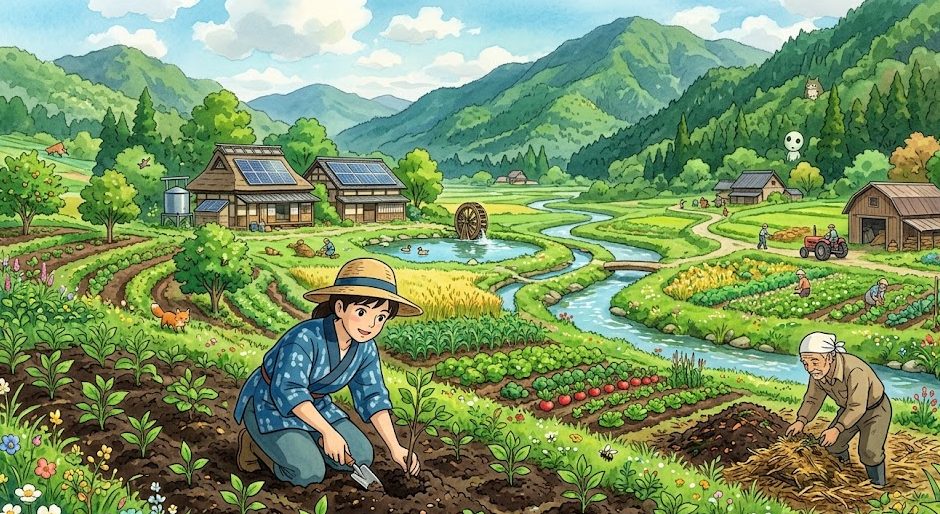
The global agricultural system is facing an unprecedented challenge. Rapidly shifting weather patterns, prolonged droughts, unpredictable floods, and rising global temperatures are threatening food security worldwide. Traditional farming practices, which rely heavily on predictable seasons and intensive chemical inputs, are struggling to keep up.
To secure our future, the agricultural sector must transition toward a triad of modern farming: Climate Resilient Agriculture, Soil Health, and Sustainable Resource Management. This approach does not just aim to increase crop yields; it builds an agricultural ecosystem capable of enduring environmental shocks while preserving the planet for generations to come.
1. Understanding Climate Resilient Agriculture (CRA)
Climate Resilient Agriculture (CRA) is an integrated approach to managing landscapes—croplands, livestock, forests, and fisheries—that addresses the interlinked challenges of food security and accelerating climate change.
CRA aims to achieve three main outcomes:
- Sustained Productivity: Progressively increasing agricultural yields and incomes without harming the environment.
- Enhanced Adaptation: Building resilience within farming ecosystems to help them withstand extreme weather events.
- Reduced Emissions: Lowering greenhouse gas emissions associated with food production wherever possible.
Smart Crop Selection
One of the foundational steps in CRA is shifting away from monoculture toward climate-smart crop varieties. Scientists and farmers are working together to cultivate crops that are naturally drought-tolerant, flood-resistant, and heat-resistant. For example, traditional millets are experiencing a global resurgence because they require minimal water and can thrive in poor soil conditions where wheat or rice would fail.
2. Soil Health: The Living Foundation of Resilience
You cannot have a climate-resilient farm without healthy soil. Soil is not just dirt; it is a complex, living ecosystem teeming with billions of microbes, fungi, and beneficial organisms. Healthy soil acts as a sponge, absorbing water during heavy rains and retaining moisture during dry spells.
Regenerative Practices for Soil Revival
Decades of heavy tilling and chemical synthetic fertilizers have depleted the organic matter in global soils. Restoring soil health requires a shift toward regenerative agriculture:
- No-Till or Conservation Tillage: Tilling breaks apart the natural structure of the soil and releases stored carbon into the atmosphere. No-till farming leaves the soil undisturbed, allowing beneficial fungal networks (mycorrhizae) to thrive and keep the soil bound together.
- Cover Cropping: Leaving fields bare between commercial planting seasons invites erosion from wind and rain. Planting cover crops like legumes, clover, or radishes protects the surface, suppresses weeds naturally, and fixes vital nutrients back into the ground.
- Organic Matter Incorporation: Utilizing compost, biochar, and livestock manure increases the soil’s organic carbon content. Every 1% increase in soil organic matter allows the soil to hold roughly 20,000 gallons of additional water per acre.
3. Sustainable Resource Management
Farming is incredibly resource-intensive, consuming massive amounts of freshwater and energy. Sustainable resource management focuses on optimizing these inputs to achieve a circular, waste-free farming model.
Smart Water Management
Agriculture accounts for nearly 70% of global freshwater withdrawals. Traditional flood irrigation loses massive amounts of water to evaporation and runoff. Sustainable alternatives include:
- Drip and Micro-Irrigation: Delivering water directly to the root zone of the plant drop by drop. This minimizes evaporation and reduces water consumption by up to 60%.
- Rainwater Harvesting: Capturing and storing monsoon or heavy rain runoff in dedicated farm ponds to use during dry seasons.
- Alternate Wetting and Drying (AWD): A management practice used in rice cultivation where fields are allowed to dry out periodically rather than remaining continuously flooded, reducing water use and cutting methane emissions.
Renewable Energy in Farming
Transitioning agricultural machinery away from fossil fuels is crucial. Solar-powered irrigation pumps, wind-driven aeration systems for aquaculture, and biomass energy generators utilize a farm’s natural assets to power its operations cleanly.
4. The Synergy: How They Work Together
When climate resilience, soil health, and resource management are combined, they create a self-sustaining loop of environmental benefits.
| Management Area | Traditional Approach | Sustainable/Resilient Approach |
|---|---|---|
| Water Strategy | Over-pumping groundwater; flood irrigation. | Drip systems, soil moisture sensors, and rainwater storage. |
| Fertility Strategy | Heavy reliance on synthetic NPK chemical fertilizers. | Composting, cover crops, and microbial inoculants. |
| Pest Strategy | Routine prophylactic chemical pesticide spraying. | Integrated Pest Management (IPM) and biodiversity. |
| Carbon Footprint | High emissions due to tilling and chemical manufacturing. | Carbon sequestration through organic soil building. |
Export to Sheets
The Power of Agroforestry
A perfect example of this synergy is agroforestry—the practice of integrating trees and shrubs into crop and livestock farming systems. The trees provide shade to crops (reducing heat stress), act as windbreaks to prevent wind erosion, pump deep-soil nutrients to the surface via their deep roots, and sequester massive amounts of atmospheric carbon.
5. Overcoming the Barriers to Adoption
Despite the undeniable benefits, transitioning to these sustainable models faces several real-world hurdles:
- Initial Transition Costs: Switching to no-till drills, installing solar pumps, or setting up drip irrigation requires upfront capital that smallholder farmers often lack.
- The Knowledge Gap: Regenerative farming is highly scientific. It requires an understanding of local soil chemistry, ecology, and weather data. Access to agricultural extension services and training is essential.
- Delayed Gratification: While chemical fertilizers yield immediate results, rebuilding degraded soil health takes time. Farmers often need financial safety nets or carbon credit incentives during the first 3 to 5 years of the transition.
Conclusion: The Path Forward for Global Food Security
Embracing Climate Resilient Agriculture, Soil Health, and Sustainable Resource Management is no longer an optional environmental choice—it is an economic and survival necessity. By transforming our fields into resilient, carbon-storing, water-efficient ecosystems, we can protect our food supply from the shocks of a changing climate.
The future of agriculture lies in respecting the wisdom of natural ecological systems, enhanced by modern technology, ensuring that our lands remain fertile enough to feed the world for centuries to come.