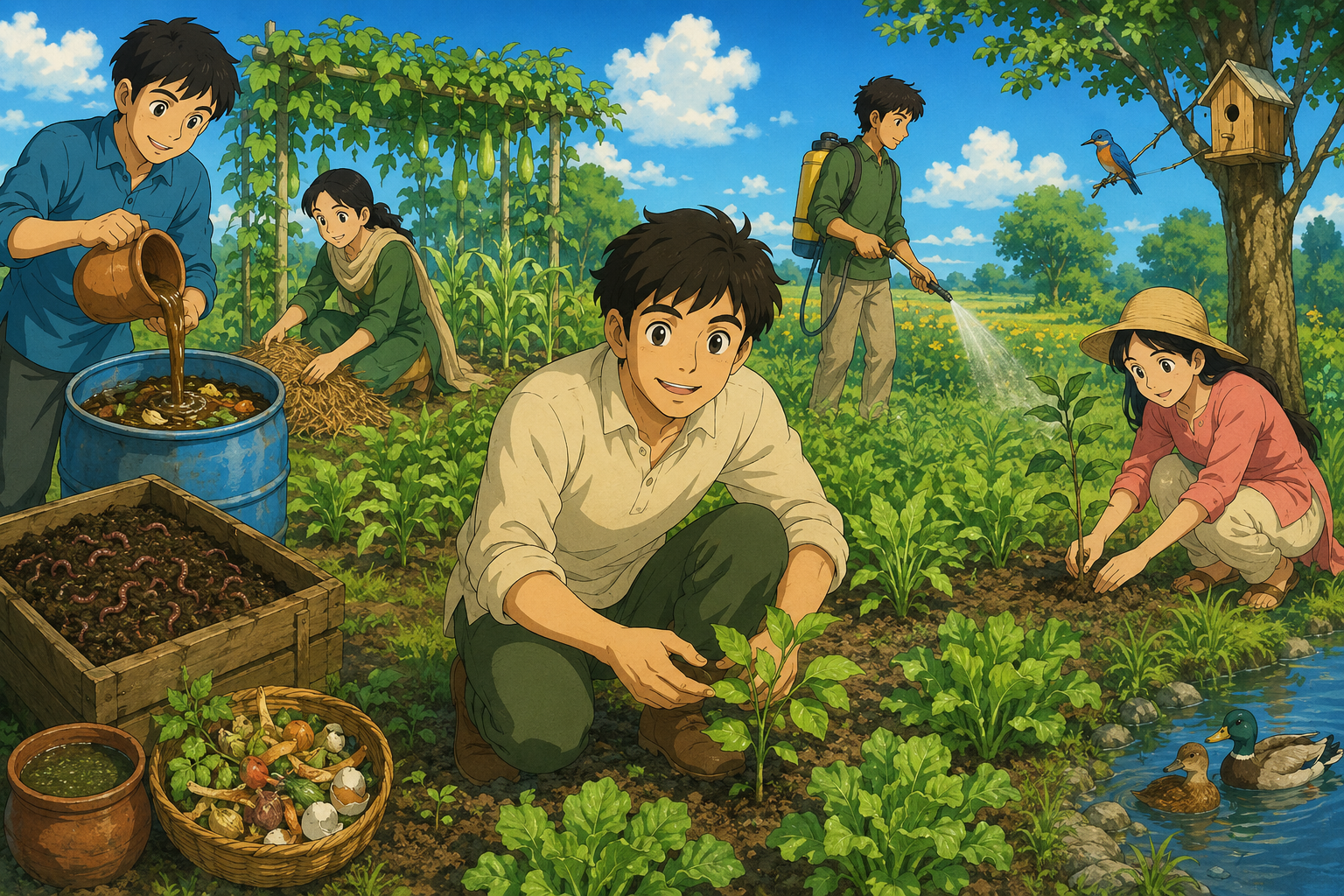
The soil beneath our feet is alive, yet decades of heavy chemical farming have left much of our agricultural land exhausted. As farmers and growers face unpredictable weather and rising costs, a powerful shift is happening. We are returning to nature, but with a modern twist.
Smart natural farming is not about stepping backward into the past; it is about combining ecological wisdom with careful observation and efficient practices. The goal is simple: maximize crop growth while actively repairing the environment.
For anyone looking to cultivate land today, whether managing a sprawling acreage or a dedicated community plot, understanding how to work with nature rather than against it is the ultimate key to resilient agriculture. This guide breaks down exactly how to implement smart natural farming techniques that boost your yields and protect the earth.
Understanding Smart Natural Farming
Natural farming relies on the principle that nature already knows how to grow things perfectly. In a natural forest, no one applies synthetic fertilizers or chemical pesticides, yet the ecosystem thrives. Plants, insects, soil microbes, and animals work together in a balanced cycle.
Smart natural farming takes this concept and applies it to commercial and domestic agriculture. It involves using targeted techniques to build rich, living soil, encourage beneficial biodiversity, and create a self-sustaining environment. The “smart” aspect comes into play when we use modern knowledge—such as precise crop rotation schedules, organic soil testing, and efficient water tracking—to support these natural processes.
By prioritizing soil health and environmental care, you reduce your dependence on expensive external inputs. Your farm becomes more self-sufficient, and your crops become naturally more resistant to disease and drought.
Practical Tips You Can Apply Today
Transitioning to natural methods requires a shift in daily habits. Here are several practical strategies you can start using immediately to improve your crop growth safely.
- Embrace Cover Cropping: Never leave your soil bare. Planting cover crops like clover, rye, or vetch during off-seasons protects the soil from erosion, suppresses weeds, and naturally adds nitrogen back into the earth when the plants decompose.
- Make the Most of Mulch: A thick layer of organic mulch—such as straw, dry leaves, or wood chips—acts like a protective blanket. It retains essential moisture, regulates soil temperature, and slowly breaks down to feed the microscopic life in your soil.
- Encourage Beneficial Insects: Instead of spraying broad-spectrum pesticides that kill everything, plant companion flowers like marigolds, sunflowers, and yarrow. These attract ladybugs, predatory wasps, and bees, which will naturally manage your pest populations and pollinate your crops.
- Implement Smart Water Harvesting: Catch and store rainwater using swales, ponds, or simple barrel systems. Natural farming relies on holding water in the landscape. Combining this with drip irrigation ensures that water goes directly to the plant roots without waste.
Real-Life Example: The Resilient Multi-Crop Farm
To see the impact of these methods, consider the story of a conventional wheat farmer who decided to transition to natural farming after years of declining profits and degraded soil. His land had become hard and dusty, requiring more chemical fertilizer each year just to maintain average yields.
He decided to start small. On a ten-acre test plot, he stopped using synthetic chemicals entirely. Instead, he planted a diverse mix of cover crops, introduced earthworms, and applied natural compost tea to wake up the dormant soil bacteria. He also planted rows of nitrogen-fixing trees between his main crops.
Within three years, the transformation was remarkable. The soil turned dark, crumbly, and sponge-like, holding water long after the rain stopped. While his neighbors suffered massive crop losses during a particularly dry summer, his natural plot thrived because the healthy soil retained deep moisture. His yields stabilized, his input costs dropped drastically, and the local wildlife returned to the area.
Step-by-Step Guide to Transitioning Your Land
Moving away from conventional farming does not happen overnight. It requires patience and a structured approach. Follow these steps to begin your transition safely.
Step 1: Assess Your Soil Health Before changing anything, understand your starting point. Dig into your soil. Is it hard and compacted? Are there earthworms present? Get a biological soil test to see what nutrients and microbes are missing.
Step 2: Gradually Phase Out Synthetics Going “cold turkey” on chemical fertilizers can shock your plants if the soil biology is not ready to support them. Slowly reduce your synthetic inputs over a season or two while simultaneously increasing the application of organic compost and natural manures.
Step 3: Introduce Plant Diversity Monoculture (growing only one crop) drains the soil. Start rotating your crops. If you grew heavy feeders like corn or tomatoes in a bed this year, follow up with nitrogen-fixers like beans or peas next season.
Step 4: Monitor and Adapt Use simple farm management apps or digital journals to track your progress. Note which natural pest controls worked, how much water you saved using mulch, and the overall yield of your harvest. Let data guide your next natural farming decisions.
Common Mistakes to Avoid
When adopting natural farming, enthusiasm can sometimes lead to easily avoidable errors. Keep these common pitfalls in mind.
The biggest mistake is treating natural farming like a quick fix. Natural systems take time to rebuild. If you apply compost today, you might not see the full benefit until next season. Patience is absolutely vital.
Another common error is trying to treat symptoms rather than the root cause. For example, if you see aphids on your plants, spraying them with an organic soap mixture solves the immediate problem. But the smarter natural approach is to ask why the aphids are there. Usually, it indicates a lack of predatory insects or a stressed plant. Fix the environment, and the pests will manage themselves.
Finally, do not ignore your local climate. Copying a natural farming method that works in a wet, tropical region will likely fail in an arid, dry zone. Always adapt these principles to suit your specific local ecosystem.
Conclusion
Smart natural farming represents the best of both worlds: a deep respect for natural ecological cycles combined with the intelligent, observational strategies of modern agriculture. By focusing on building healthy soil, encouraging biodiversity, and managing resources wisely, we can grow food that is better for us and better for the planet.
The journey to natural farming is an ongoing learning process. There will be challenges along the way, but the reward of a thriving, resilient, and self-sustaining farm is well worth the effort. Start with small, practical steps today, and watch as nature works alongside you to bring your land back to life.
Frequently Asked Questions (FAQs)
Q: Does natural farming produce lower yields than chemical farming? A: In the very first year of transition, you might see a slight dip in yields as the soil recovers from chemical dependence. However, once the natural soil biology is restored, natural farming can match and often exceed conventional yields, especially during challenging weather years, because the plants are more resilient.
Q: How do I control weeds without chemical herbicides? A: Weed management in natural farming relies heavily on prevention. Using thick layers of organic mulch blocks the sunlight that weed seeds need to sprout. Additionally, growing dense cover crops leaves no physical space for weeds to establish themselves.
Q: Is smart natural farming expensive to start? A: No, it is generally much cheaper than conventional farming. While there might be some initial costs for sourcing good compost or setting up rainwater harvesting, you are eliminating the recurring, expensive costs of synthetic fertilizers, pesticides, and heavy machinery fuel.
Q: Can I use technology in natural farming? A: Absolutely. Natural farming is about ecological principles, but technology can support it beautifully. Using soil moisture sensors to ensure you aren’t overwatering your mulch beds, or using software to plan complex crop rotations, are excellent ways to merge tech with nature.
Q: Do I need a massive farm to practice these methods? A: Not at all. The principles of soil health, mulching, and companion planting apply whether you are farming a thousand acres or growing tomatoes in raised beds in your backyard. Nature’s rules work exactly the same on any scale.