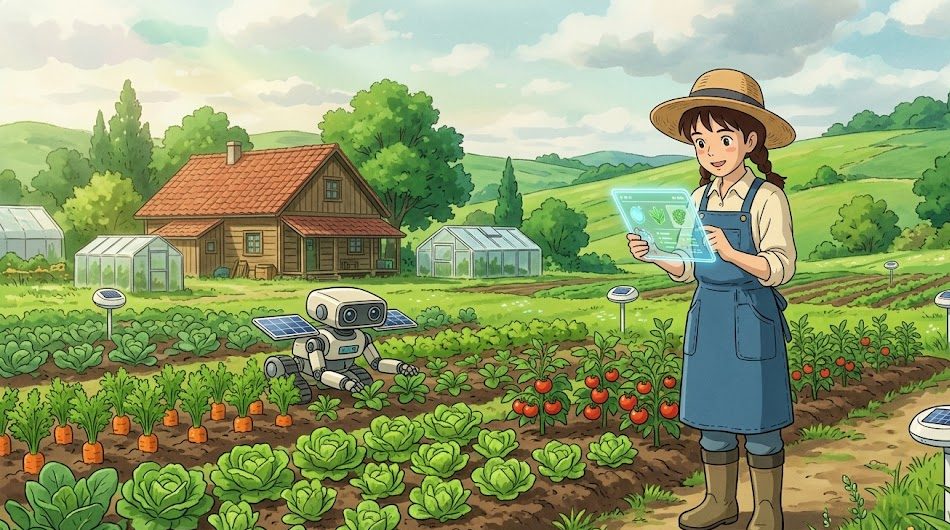
For centuries, small-scale farming has been synonymous with manual labor, traditional intuition, and a heavy reliance on unpredictable weather patterns. However, we are currently witnessing a seismic shift. The narrative is changing from “back-breaking labor” to “intelligent precision.”
Smart technologies, once reserved for massive industrial agribusinesses, are now becoming accessible, affordable, and transformative for small-scale farmers worldwide. This revolution is not just about adopting fancy gadgets; it is about reclaiming profitability, ensuring sustainability, and securing food sovereignty.
The Paradigm Shift: Why Technology Matters for Small Farms
For the smallholder, every resource counts. A failed crop due to pests, poor irrigation, or soil nutrient depletion can be financially devastating. Smart technology provides a safety net by replacing guesswork with data-driven insights.
By integrating IoT (Internet of Things) devices, drones, and AI-powered mobile applications, small farmers can optimize their inputs—water, fertilizer, and seeds—thereby reducing costs and increasing yields. This is the cornerstone of Precision Agriculture at a Micro Level.
Key Technologies Powering the Change
1. Smart Irrigation Systems
Water scarcity is one of the biggest challenges for small-scale farmers. Traditional flood irrigation often leads to massive water wastage.
- Sensor-Based Automation: Soil moisture sensors placed in the root zone communicate with a controller to provide water only when the plants actually need it.
- Drip Irrigation: When paired with smart timers, these systems ensure that water is delivered directly to the base of the plant, minimizing evaporation and runoff.
2. IoT-Enabled Crop Monitoring
With the help of low-cost sensors, farmers can monitor their field conditions remotely from their smartphones.
- Environmental Monitoring: Sensors measure ambient temperature, humidity, and soil pH levels in real-time.
- Early Warning Systems: If conditions become favorable for pest outbreaks or fungal diseases, the farmer receives an alert on their phone, allowing them to take preventive action rather than reactive damage control.
3. AI and Computer Vision for Pest/Disease Diagnosis
One of the most impressive advancements is the use of image recognition. Many apps now allow farmers to simply snap a photo of a struggling leaf or an unknown bug. Using vast databases, AI algorithms analyze the image and provide:
- An accurate identification of the pest or disease.
- Suggested organic or chemical treatments.
- Advice on how to prevent the issue from spreading to healthy crops.
4. Drone Technology (UAVs)
While once expensive, smaller agricultural drones are becoming increasingly cost-effective. They allow farmers to perform “bird’s-eye” inspections of their fields, identifying areas that are water-stressed or nutrient-deficient long before the damage is visible to the naked eye. This allows for localized treatment rather than spraying an entire field.
The Economic and Environmental Impact
The beauty of this revolution lies in the Triple Bottom Line:
- Economic Viability: By reducing waste and optimizing inputs, farmers see a direct increase in their profit margins. Furthermore, data-backed farming practices often lead to higher-quality produce, which can fetch premium prices in local markets.
- Environmental Sustainability: Precision farming is, by definition, environmentally friendly. By applying chemicals only where needed and using water judiciously, small farmers can significantly reduce their chemical footprint and conserve vital water resources.
- Social Empowerment: Smart technology connects small farmers to the global digital economy. They gain access to real-time market prices, weather forecasts, and agricultural experts, leveling the playing field against larger commercial entities.
Overcoming the Digital Divide
Despite the benefits, challenges remain. High initial costs, the need for reliable internet connectivity, and the learning curve associated with new devices can be barriers. However, the rise of “Agri-Tech as a Service” models—where tools are rented or shared within a community—is making these technologies more inclusive.
Furthermore, many NGOs and governments are now prioritizing digital literacy programs, ensuring that the technology is designed with the actual needs and limitations of small-scale farmers in mind.
The Road Ahead
The future of farming is not about replacing the human element; it is about enhancing it. A small-scale farmer’s intuition, honed by years of experience, combined with the precision of AI and sensor data, creates a powerful synergy.
As technology continues to become more affordable and intuitive, we can expect to see a resurgence in small-scale farming. It is becoming a viable, profitable, and modern career choice for the next generation of farmers. The revolution is here, it is digital, and it is growing from the roots up.