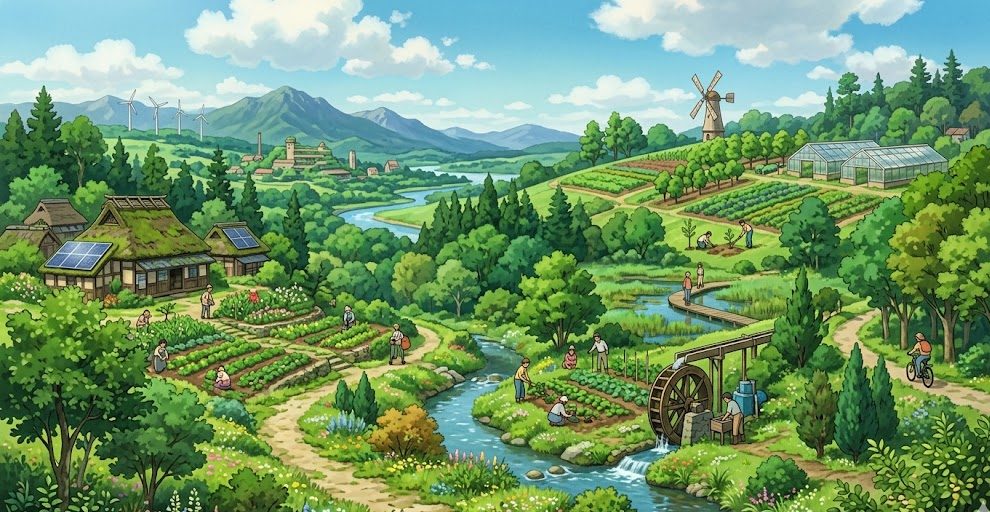
For decades, the global narrative of “progress” was synonymous with industrial expansion, concrete jungles, and the exploitation of natural resources. However, as we witness the escalating frequency of climate-driven disasters, biodiversity loss, and resource scarcity, the paradigm is shifting. We are entering an era where true growth is no longer measured by how much we can extract from nature, but by how well we can integrate with it.
Nature-Focused Solutions (NFS)—often referred to as Nature-based Solutions (NbS)—represent a fundamental pivot in strategy. They involve working with ecosystems rather than against them to address societal challenges. This article explores how these sustainable strategies provide a blueprint for modern growth that protects the planet while fostering economic resilience.
The Philosophy of Nature-Focused Solutions
At its core, a nature-focused approach recognizes that the environment is not a “cost center” or a hurdle to development, but the very infrastructure upon which all human activity depends. While traditional engineering (often called “gray infrastructure”) relies on man-made materials like steel and concrete, NFS utilizes “green” and “blue” infrastructure—forests, wetlands, peatlands, and oceans.
The goal is twofold:
- Mitigation: Using nature to absorb carbon and reduce the impact of climate change.
- Adaptation: Enhancing the resilience of human settlements against environmental shocks.
Key Strategies for Modern Growth
1. Regenerative Urbanism: The Sponge City Concept
Modern cities are often heat-traps with impermeable surfaces that lead to flash flooding. Nature-focused urbanism seeks to transform cities into “sponges.” By integrating permeable pavements, rooftop gardens, and urban wetlands, cities can naturally manage stormwater, reduce the “urban heat island” effect, and improve air quality.
This isn’t just about aesthetics; it’s about economic protection. A city that doesn’t flood is a city where businesses stay open and infrastructure maintenance costs plummet.
2. Agrivoltaics and Regenerative Agriculture
Food security is a pillar of growth. Traditional industrial farming often depletes soil health, making it a finite resource. Nature-focused solutions promote Regenerative Agriculture, which focuses on soil health through cover cropping, no-till farming, and polycultures.
Furthermore, the rise of Agrivoltaics—the simultaneous use of land for both solar energy production and agriculture—shows how we can maximize land efficiency. The shade from solar panels can reduce water evaporation for crops, while the plants keep the panels cool, increasing their energy efficiency.
3. Blue Carbon and Coastal Protection
Mangroves, seagrasses, and salt marshes are among the most effective carbon sinks on the planet. For coastal economies, these ecosystems act as natural breakwaters, protecting inland infrastructure from storm surges and rising sea levels.
Investing in “Blue Carbon” initiatives allows nations to protect their coastlines more cheaply than building massive sea walls, while simultaneously supporting local fisheries and ecotourism industries.
The Economic Case: Why Nature is Good for Business
There is a persistent myth that environmental protection kills jobs. On the contrary, the transition to a nature-positive economy is a massive engine for job creation. According to the World Economic Forum, nature-positive transitions could generate up to $10.1 trillion in annual business value and create 395 million jobs by 2030.
| Sector | Nature-Focused Opportunity | Economic Benefit |
|---|---|---|
| Energy | Ecosystem restoration around dams | Extends lifespan of hydro-power by reducing siltation |
| Finance | Green Bonds & Biodiversity Credits | Lowers risk profiles and attracts ESG-focused investors |
| Real Estate | Biophilic Design | Increases property values and reduces cooling costs |
| Insurance | Natural Buffer Zones | Reduces payouts for flood and storm damage |
Export to Sheets
Environmental Protection and Biodiversity
Growth cannot be sustained on a dying planet. We are currently facing the “Sixth Mass Extinction,” with species disappearing at rates hundreds of times higher than the historical average. Nature-focused solutions prioritize Biodiversity Corridors—strips of protected land that connect fragmented habitats.
Protecting biodiversity is not just about saving charismatic wildlife; it is about maintaining the “ecosystem services” we take for granted, such as pollination, water purification, and nutrient cycling. Without bees, our agricultural systems collapse; without healthy forests, our watersheds dry up.
Challenges to Implementation
Despite the clear benefits, the path to nature-focused growth is not without obstacles:
- Short-termism in Policy: Political cycles often favor quick, visible “gray” projects (like a new highway) over long-term “green” projects (like forest restoration) that take years to mature.
- Funding Gaps: While interest in ESG (Environmental, Social, and Governance) investing is high, there is still a significant gap in funding for small-scale nature projects in developing nations.
- Measurement Standards: Quantifying the exact “ROI” of a mangrove forest compared to a concrete wall can be complex, though new carbon accounting and biodiversity metrics are improving this.
The Way Forward: A Symbiotic Future
To achieve a future where growth and protection coexist, we must move toward Circular Bio-economies. This means designing products that are bio-based and biodegradable, ensuring that the “waste” of one process becomes the “nutrient” for another.
Governments must lead by integrating nature into national accounting. When we calculate GDP, we must account for the depletion of natural capital. If a country cuts down a forest to sell timber, its GDP goes up, but its total wealth (natural capital) goes down. True modern growth requires a balance sheet that respects the Earth’s limits.
Conclusion
Nature-focused solutions are not a retreat to a primitive past; they are a sophisticated leap into a high-tech, high-resilience future. By mimicking the wisdom of natural systems, we can build cities that breathe, farms that heal the earth, and economies that are immune to the volatility of a changing climate.
The “Modern Growth” of the 21st century must be green, or it simply won’t last. Protecting nature is no longer an act of charity—it is the ultimate strategy for self-preservation and prosperity. We don’t have to choose between the economy and the environment; we just have to choose a smarter way to grow.