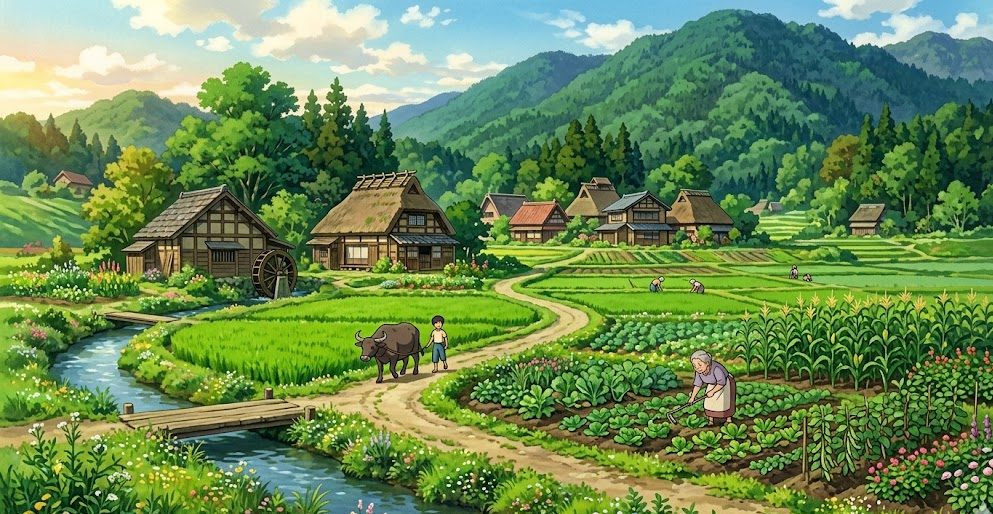
Introduction: Unlocking the Genetic Potential of Your Crops
In the modern agricultural ecosystem, farming is no longer just about planting a seed and praying for rain. It is a precise science driven by data, soil biology, and strategic resource allocation. Every crop has a genetic ceiling—a maximum potential yield it can achieve under perfect conditions. However, due to poor soil management, incorrect irrigation frequencies, and untargeted nutrient distribution, most traditional farms only achieve 40% to 50% of this potential.
“The Green Blueprint” is a comprehensive operational guide designed to change that. Whether you are managing high-value cash crops, vertical indoor hydroponic racks, or large open-field rows, executing an exact agronomic strategy is the only way to scale profit margins. This guide breaks down the core technical phases of crop management to help you hit maximum yield efficiency while safeguarding your farm’s environmental future.
1. Soil Optimization: The Base of the Blueprint
Before a seed even touches the ground, the battlefield for maximum yield is decided in the soil. High yields are structurally impossible without an active, thriving soil micro-ecosystem. Years of heavy chemical fertilizer application have depleted organic carbon matter globally, turning living soil into sterile dust.
Micro-Nutrient Management and pH Balancing
To unlock maximum yield, farmers must treat soil as a live bank account:
- The pH Factor: Most high-yielding crops thrive in a slightly acidic to neutral pH range (6.0 to 7.0). If your soil pH is off, plants face a “nutrient lockout,” meaning they cannot absorb fertilizers even if they are present in the soil. Applying agricultural lime to acidic soil or sulfur to alkaline soil is a mandatory pre-planting corrective measure.
- Organic Matter Integration: Incorporating high-grade biological inputs like vermicompost, biochar, and aged livestock manure returns essential trace minerals back to the earth, creating a porous soil structure that retains moisture and oxygen.
2. Strategic Crop Selection and Rotational Blueprinting
Monoculture—growing the exact same crop on the same plot of land year after year—is a financial and environmental trap. It exhausts specific nutrient bands in the soil and allows crop-specific pests to establish permanent breeding cycles.
Implementing a High-Yield Crop Rotation Wheel:
To break pest cycles and naturally enrich the soil micro-ecosystem, modern farms must follow a strict multi-tier rotation schedule:
- The Nitrogen Fixers (Legumes): Begin your rotation phase with crops like soybeans, peas, or alfalfa. These plants form symbiotic relationships with rhizobia bacteria in the soil, naturally trapping atmospheric nitrogen and fixing it into the root zone for the next crop cycle.
- The Heavy Feeders (Cereal/Cash Crops): Follow up the leguminous phase with heavy-feeding crops like corn, wheat, or commercial vegetables. These crops thrive on the residual nitrogen left behind, translating it directly into dense vegetative and fruit growth.
- The Deep-Rooted Cleaners (Tuber/Root Crops): Conclude the cycle with taproot crops like potatoes or carrots. These crops break up compacted subsurface soil layers naturally, scavenging for deep nutrients that shallow-rooted crops missed.
3. Precision Nutrient Delivery and Water Automation
Water and fertilizer are expensive resources. Broadcasting nutrients equally across a field leads to massive financial waste and chemical runoff. Modern crop guides rely heavily on targeted, automated systems.
The Power of Fertigation and Drip Infrastructure
- Drip Irrigation Integration: Traditional flood irrigation wastes up to 60% of water through evaporation and surface runoff. Implementing low-pressure drip irrigation lines delivers water directly to the plant’s root zone drop by drop, keeping soil moisture levels uniform and preventing fungal diseases caused by wet leaves.
- Precision Fertigation: Fertigation is the process of dissolving water-soluble fertilizers directly into the drip irrigation stream. This allows the farmer to deliver micro-doses of precise NPK (Nitrogen, Phosphorus, Potassium) ratios adjusted perfectly for the crop’s specific growth phase (vegetative vs. flowering).
- Smart Sensors: Linking your drip lines to digital soil moisture sensors ensures that water valves turn on automatically only when the root zone hits a specific dryness threshold, dropping your water bill while maximizing crop hydration efficiency.
4. Integrated Pest Management (IPM): Protecting the Canopy
An incredible vegetative growth phase can be wiped out in less than 48 hours by a severe pest infestation or fungal outbreak. However, heavy chemical spraying is not the solution; it kills beneficial predatory insects and creates chemical-resistant super-pests.
The Three Tiers of IPM:
- Biological Controls: Introduce and protect natural predatory insects like ladybugs, lacewings, and parasitic wasps. These beneficial insects act as a permanent, zero-cost security force that keeps harmful pest populations (like aphids and mites) below economic damage levels.
- Mechanical Controls: Utilizing physical sticky traps, pheromone traps, and row covers prevents adult insects from laying eggs on your primary cash crops without introducing toxic chemical residues.
- Targeted Botanical Applications: When pest thresholds cross a dangerous level, use organic, targeted botanical extracts like cold-pressed neem oil or horticultural soaps. These compounds destroy target pests without leaving long-term toxic residues on the harvest.
5. Controlled Environment Subsystems for Specialty Yields
For progressive farmers looking to maximize output per square meter in high-density or urban zones, open-field parameters can be limiting. Shifting high-value crop production into vertical hydroponic racks or greenhouse CEA (Controlled Environment Agriculture) systems provides total climate insulation.
By eliminating soil constraints and utilizing automated LED light spectrums tailored specifically for plant photosynthesis, vertical indoor setups can trigger up to 10 to 12 harvest cycles annually compared to just 2 or 3 in standard open fields. This sub-blueprint is the ultimate scaling mechanism for premium herbs, medicinal flora, and exotic berries.
Conclusion: Driving Profitability Through the Green Blueprint
Achieving maximum yield is not a matter of luck; it is the execution of an optimized system where every variable is managed. By combining the natural wisdom of soil regeneration and crop rotation with modern data-backed automated irrigation and IPM workflows, you turn your farm from a manual labor chore into a streamlined production machine.
As agricultural markets become more competitive, the growers who treat their fields like an ecosystem and their deployment strategies like a financial blueprint will be the ones harvesting the highest profits.