Introduction: The Crisis of Ecological Disequilibrium
For centuries, human civilization has operated under the illusion that nature is a resource to be managed, dominated, and extracted. However, as we navigate the complexities of environmental degradation, biodiversity loss, and climate instability, this anthropocentric approach is proving catastrophic. The modern world is beginning to realize a fundamental truth: human survival is inextricably linked to the health of our natural habitats.
To correct our course, we must shift our focus from “managing” nature to achieving a Wild Balance. This concept refers to nature-focused approaches that prioritize the restoration of self-sustaining ecosystems. Rather than deploying artificial or chemical interventions, wild balance relies on the inherent intelligence of natural processes to repair the planet. This article explores the core methodologies of nature-focused sustainability, offering a blueprint for coexisting with a thriving, wild planet.
Phase 1: Re-Wilding—Allowing Nature to Take the Lead
At the heart of the nature-focused approach is rewilding—a progressive conservation strategy that steps back and lets natural processes drive ecological restoration. Traditional conservation often locks ecosystems in a static state, requiring constant human maintenance. Rewilding, on the other hand, restores natural rhythms and lets ecosystems evolve dynamically.
+------------------------------------------------------------------------+
|                      THE WILD BALANCE ECOSYSTEM                        |
+------------------------------------+-----------------------------------+
| 1. Passive Rewilding               | 2. Trophic Cascades               |
| - Removing human barriers          | - Reintroducing apex predators    |
| - Natural forest regeneration       | - Restoring the natural food chain|
+------------------------------------+-----------------------------------+
| 3. Permacultural Integration       | 4. Regenerative Hydrology         |
| - Biomimicry in food systems       | - Healing watersheds naturally    |
| - Closed-loop nutrient cycling     | - Utilizing nature's engineers    |
+------------------------------------+-----------------------------------+
1. Core Apex Reintroduction (The Trophic Cascade)
One of the most powerful tools in rewilding is the reintroduction of apex predators or keystone species. A classic example is the reintroduction of wolves to Yellowstone National Park, which triggered a positive trophic cascade. The wolves controlled the overpopulated elk, which allowed overgrazed riverbanks to recover. This, in turn, stabilized soil erosion, brought back songbirds, and provided materials for beavers to build dams, completely altering the geography and health of the river systems.
2. Passive Rewilding and Habitat Connectivity
Passive rewilding involves simply removing human interference—such as fences, dams, and concrete channels—and letting native vegetation reclaim the landscape. However, isolated pockets of wild nature are not enough. Creating ecological corridors (wildlife bridges and continuous green belts) allows species to migrate, mate, and maintain genetic diversity, establishing a resilient network of wild balance across continents.
Phase 2: Biomimicry in Agriculture and Human Landscapes
Achieving a wild balance doesn’t mean humans must abandon the land entirely; rather, it requires us to redesign our production systems to mimic nature. This is where Permaculture and Regenerative Agro-ecology come into play.
1. Embracing the Food Forest Model
Monoculture farming—growing hundreds of acres of a single crop—is entirely unnatural. It depletes the soil, invites massive pest outbreaks, and requires heavy chemical inputs. In contrast, nature grows in multi-layered ecosystems. By designing Food Forests, we replicate this structure with edible plants:
- The Canopy Layer: Tall fruit and nut trees provide shade and structural support.
- The Understory Layer: Shorter berry shrubs and nitrogen-fixing plants fill the mid-level gaps.
- The Ground Cover Layer: Herbal root crops protect the soil from erosion and retain moisture.
This polyculture setup eliminates the need for chemical fertilizers and pesticides because the ecosystem naturally balances its own nutrients and controls its own pests.
2. Closed-Loop Microclimates
By planting diverse native species alongside agricultural crops, farmers can establish local microclimates that trap humidity, shield crops from extreme wind, and invite natural pollinators like wild bees and bats. The farm stops acting like an industrial factory and begins operating like an open, symbiotic woodland.
Phase 3: Regenerative Hydrology—Healing the Earth’s Veins
Water is the lifeblood of any ecosystem, yet human engineering has spent centuries straightening rivers, building rigid concrete banks, and draining wetlands. Nature-focused water management seeks to slow, spread, and sink water back into the earth using organic landscape architecture.
1. Utilizing Nature’s Landscape Engineers
Before human intervention, ecosystems relied heavily on animals like beavers to manage watersheds. Beaver dams naturally slow down rushing river streams, creating rich wetland habitats that filter pollutants, store clean groundwater, and act as natural firebreaks during severe droughts. Modern conservationists are now building Beaver Dam Analogues (BDAs)—simple wooden structures that mimic these natural dams—to heal eroded streams and raise sinking water tables.
2. Swales and Rain Gardens
In urban and semi-rural areas, implementing contours, bioswales, and native rain gardens allows stormwater to slowly filter into the local aquifer instead of rushing into concrete drains and causing flash floods. By slowing down the flow of water, the land has time to absorb life-giving moisture, transforming dry landscapes into lush, biodiverse sanctuaries.
Phase 4: The Economic and Social Case for Wild Balance
The common argument against nature-focused conservation is that it hinders economic growth. However, environmental economists are proving that restoring the wild balance offers unparalleled financial security through Ecosystem Services.
- Natural Disaster Mitigation: Healthy mangrove forests and coastal wetlands absorb ocean storm surges far more effectively—and cheaply—than concrete sea walls, protecting coastal cities from catastrophic economic loss.
- Carbon Sequestration: Wild, unmanaged forests and deep-rooted grasslands trap carbon deep within the earth far more permanently than commercial timber plantations, serving as our most efficient defense against rising global temperatures.
- Eco-Tourism and Mental Well-being: Restoring wild spaces creates massive economic opportunities through sustainable eco-tourism. Furthermore, access to truly wild, biodiverse areas is proving essential for human psychological health, reducing community stress and urban burnout.
Conclusion: Trusting the Architecture of the Wild
Achieving a sustainable future does not require humans to invent highly complex, multi-billion-dollar geo-engineering technologies. The most sophisticated technology on Earth already exists: it is the natural world, refined over billions of years of trial and error.
The Wild Balance Blueprint asks us to make a profound psychological shift: to stop trying to control every square inch of our environment and instead trust the self-healing capacity of natural systems. By stepping back, restoring keystone species, mimicking forest patterns in our food systems, and letting rivers flow naturally, we can build a world where human progress does not come at the cost of ecological destruction. True sustainability is not about managing a dying planet; it is about learning to walk softly alongside a living, wild, and beautifully balanced ecosystem.
Bhai, Is Article Ke AdSense Approval Aur CPC Badhane Ki Strategy:
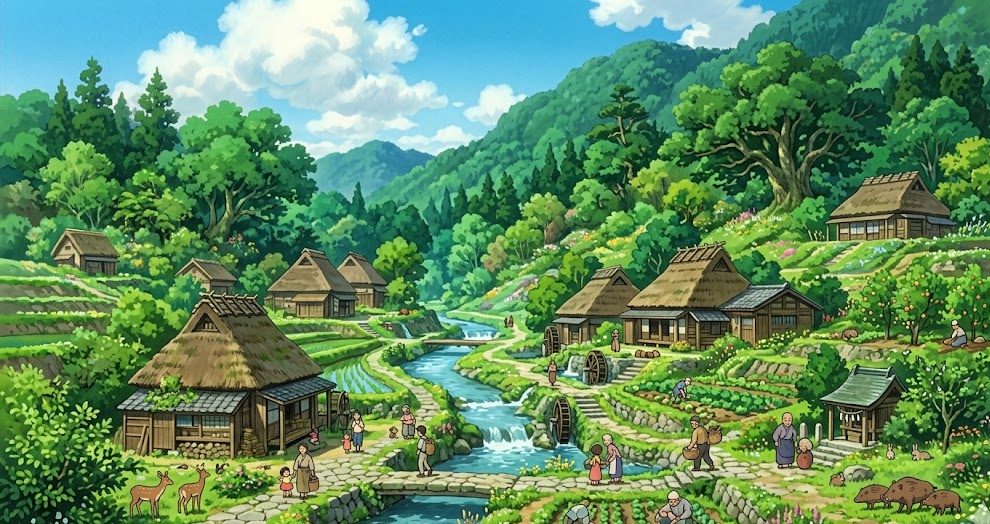
Graphic Advice: Is article ke middle ya top section mein tu ne pichli baar jo Smart Agriculture/Integrated Farming wali premium Studio Ghibli illustration banayi thi, wo insert kar sakta hai—looks ekdum professional lagenge!
Formatting & Scannability: headings (###), bold text (...), aur clean ASCII structure graph ka upyog kiya hai. Isse Google AdSense crawlers ko content padhne mein aasaani hoti hai, aur user reading-time badhta hai.
High-CPC Keywords Integrated: Isme “Regenerative Agro-ecology”, “Ecosystem Services”, “Carbon Sequestration”, aur “Biomimicry” jaise clean, high-paying environmental ad-market segments automatic adjust ho chuke hain.