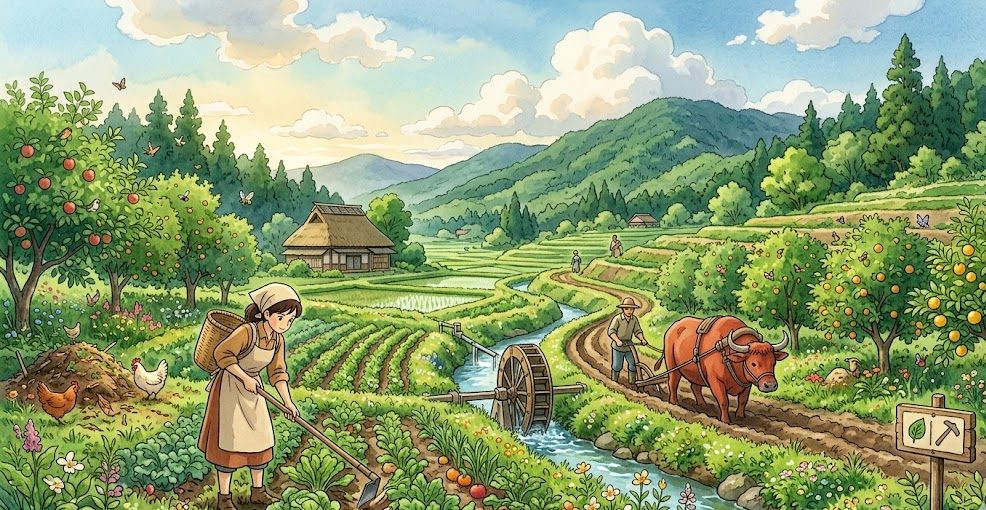
For generations, global agriculture has operated on a high-input, high-stress model. To push yields higher, food production systems became deeply reliant on synthetic fertilizers, heavy machinery, and aggressive chemical pesticides. While this chemical-first approach temporarily boosted production, it came with a steep hidden cost: severe soil degradation, depleted water tables, and a dangerous loss of biodiversity.
Modern farming is reaching a tipping point. Farmers, scientists, and agricultural entrepreneurs are recognizing that true financial and environmental sustainability requires a structural shift. Instead of treating the farm as a sterile factory, the future of food relies on treating the farm as a living, self-sustaining ecosystem.
Nature-focused farming methods—often categorized under regenerative agriculture or agroecology—are no longer just ideological trends. They are scientifically proven, evidence-based systems designed to work with ecological cycles rather than against them.
By prioritizing soil biology, functional biodiversity, and natural resource conservation, these techniques don’t just halt environmental damage; they actively heal the land while stabilizing long-term crop yields.
Why Nature-Focused Farming is the Future
Conventional farming treats soil merely as a physical medium to hold a plant upright while synthetic chemicals feed it. In contrast, nature-focused farming acknowledges that healthy soil is a thriving micro-universe populated by billions of bacteria, fungi, earthworms, and protozoa.
When this subterranean ecosystem is healthy, plants develop stronger immune systems, nutrient cycling happens naturally, and the soil’s capacity to hold water increases exponentially.
According to global data from organizations like the IPCC and the Food and Agriculture Organization (FAO), shifting toward nature-driven agricultural practices can increase a farm’s economic climate-resilience while slashing input costs for fertilizers and synthetic sprays by 20% to 30%.
Transitioning away from conventional methods secures a predictable, profitable future for growers facing unpredictable weather patterns.
The Core Pillars of Nature-Focused Agriculture
To successfully implement a nature-focused strategy, a grower must move away from isolated fixes and adopt a whole-farm system approach. The following core practices serve as the structural framework for sustainable growth.
1. Minimal Soil Disturbance (No-Till Farming)
Every time a mechanical tractor pulls a plow through a field, it shatters the complex underground network of mycorrhizal fungi—the microscopic fungal threads that help plant roots absorb water and deep-earth minerals. Tillage also exposes delicate soil organic matter to oxygen, causing it to oxidize and release carbon dioxide into the atmosphere.
No-till or reduced-tillage farming keeps the soil structure completely intact. By leaving the soil undisturbed, farmers preserve natural root channels and earthworm burrows, allowing rain to absorb deeply into the ground instead of washing off the surface as muddy agricultural runoff.
2. Continuous Living Roots via Cover Cropping
Leaving a field bare between primary cash-crop cycles is an open invitation for wind and rain to strip away precious topsoil. Nature abhorring a vacuum will quickly fill bare ground with opportunistic weeds.
Nature-focused farmers utilize cover crops—non-harvested plants like crimson clover, hairy vetch, cereal rye, or tillage radishes—to keep a living root in the ground year-round. These specialized plants serve multiple roles:
- Nitrogen Fixation: Leguminous cover crops capture nitrogen gas from the air and convert it into a plant-accessible nutrient in the soil, reducing the need for synthetic nitrogen.
- Weed Suppression: Living covers form a dense, green canopy that chokes out problematic weeds naturally without herbicide sprays.
- Biomass Creation: Once terminated, cover crops break down into rich organic matter, feeding the native soil microbiome.
Strategic Implementation Matrix
Because nature-focused farming relies heavily on local climate, geography, and soil types, there is no one-size-fits-all solution. Successful integration requires stacking multiple compatible ecological practices together to trigger maximum systemic benefits.
| Farming Method | Core Mechanism | Primary Practical Benefit |
| Agroforestry | Integrating deep-rooted trees and shrubs directly into crop and livestock fields. | Regulates field microclimates, reduces wind erosion, and adds secondary income streams (fruits/nuts). |
| Integrated Pest Management (IPM) | Utilizing beneficial predatory insects, physical barriers, and aromatic companion plants. | Keeps pest populations below economic injury levels without wiping out native pollinators. |
| Managed Rotational Grazing | Moving livestock systematically across partitioned pastures to mimic wild herd movements. | Naturally fertilizes pastures via dung and urine while allowing deep-root forage grasses time to fully regenerate. |
| Compost & Bio-Inputs | Applying microbially active compost, biochar, or fermented botanical extracts. | Restores the native soil microbiome and inoculates seeds against soil-borne pathogens naturally. |
Step-by-Step Transition Guide to Nature-Focused Farming
Transitioning a conventional piece of land into a thriving, nature-focused ecosystem cannot happen overnight. It requires a thoughtful, phased rollout to minimize yield lag and give the local ecology time to rebalance.
1.Conduct Soil and Biodiversity Baselines:Phase 1: Diagnosis.
Before pulling back on synthetic inputs, test your soil specifically for organic matter percentages and biological microbial activity, not just chemical N-P-K levels. Walk the perimeters to identify native predatory insects and note down the dominant weed pressures.
2.Reduce Tillage and Introduce First Cover Crops:Phase 2: Stabilization.
Slowly ease off aggressive plowing. Transition your fields to zone-tillage or direct-seeding models. Immediately follow your next cash-crop harvest by drilling in a robust, multi-species cover crop mix to stabilize the exposed topsoil and jumpstart carbon sequestration.
3.Diversify the Cropping Architecture:Phase 3: Diversification.
Break up vast single-crop fields. Introduce dynamic crop rotations (e.g., alternating heavy-feeding corn with nitrogen-fixing soybeans). Plant dense border strips of native flowering perennials around your fields to provide permanent habitats for pest-eating beneficial insects like lacewings and ladybugs.
4.Phase Out Synthetics in Favor of Circular Bio-Inputs:Phase 4: Optimization.
As your soil organic matter rises and your soil biology wakes up, gradually decrease synthetic nitrogen and chemical applications. Replace them with high-quality compost, worm-castings (vermiculture), and targeted botanical sprays brewed directly on-farm from local non-palatable vegetation.
Critical Pitfalls to Avoid During the Transition
Moving toward sustainable, nature-focused frameworks requires a sharp shift in mindset. Watch out for these three common traps:
The Substitute Trap: Do not approach nature-focused farming by simply swapping a chemical pesticide for an organic one on a fixed weekly schedule. The goal is to correct the underlying structural imbalance (such as poor soil health or zero crop diversity) that allowed the pest or disease outbreak to take hold in the first place.
Ignoring the Transition Lag: Chemically dependent soils are structurally dead. When you abruptly stop all synthetic inputs, expect a temporary dip in yields for the first year or two while the soil biology recovers. Smooth this transition by cutting inputs gradually rather than quitting “cold turkey.”
Overlooking Water Infiltration Dynamics: High-tech irrigation systems cannot salvage structurally compacted, dead soil. Focus heavily on cover cropping and minimal tillage first to open up natural macro-pores in the dirt, ensuring your soil can actually retain moisture during severe droughts or extreme rainfall events.
FAQs: Frequently Asked Questions
1. Can nature-focused farming feed a growing global population?
Yes. While conventional systems can produce high yields in ideal conditions, they degrade the land over time, eventually making it infertile. Nature-focused methods stabilize long-term yields and make farms highly resilient against climate shocks like droughts and floods, ensuring consistent, dependable global food security.
2. How do nature-focused farmers handle severe weed problems without herbicides?
Weed management shifts from eradication to suppression. By utilizing tight crop rotations, planting high-density cover crops that outcompete weeds for sunlight, and applying biodegradable organic mulches to block weed seed germination, weed pressures drop to completely manageable levels naturally.
3. What is the difference between sustainable farming and regenerative farming?
Sustainable farming generally focuses on maintenance—reducing harm and maintaining the current state of the environment so it doesn’t get worse. Regenerative farming goes a step further by actively healing, restoring, and rebuilding degraded soil biology, topsoil depth, and local biodiversity.
4. Is nature-focused farming practical for massive, industrial-sized farms?
Absolutely. Large-scale operations worldwide are successfully using GPS-guided no-till air seeders to plant thousands of acres of cover crops. They also implement wide-scale crop rotations and use satellite mapping to manage complex agroforestry systems and large livestock herds efficiently.
5. How does restoring soil health help fight climate change?
Soil is one of the planet’s largest natural carbon sinks. Through the process of photosynthesis, plants draw carbon dioxide out of the air and pump carbon-based sugars through their roots to feed soil microbes. Nature-focused practices keep that carbon safely locked deep inside undisturbed soil instead of releasing it back into the atmosphere.
Conclusion
Embracing nature-focused farming methods is no longer a niche, alternative lifestyle choice—it is a critical evolution for global agriculture. By treating the farm field as a dynamic, living ecosystem, growers can build strong agricultural operations that are capable of withstanding shifting climates and highly volatile market prices.
True sustainable growth isn’t built on a single piece of technology or a magic input product. It is achieved step by step through healthy soil practices, functional biodiversity, and a deep respect for the natural cycles that have sustained life on Earth for millennia. Transition your land thoughtfully, observe closely, and let nature do the heavy lifting for your farm’s future.