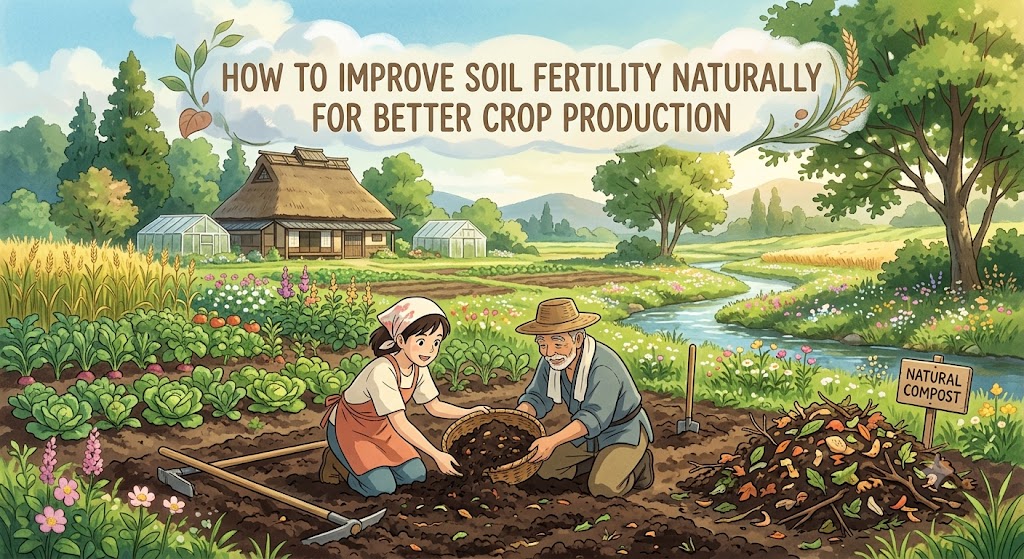
Healthy soil is the foundation of successful farming. No matter what crops you grow, their growth, yield, and quality depend heavily on the condition of the soil. Over time, intensive farming, excessive use of chemical fertilizers, erosion, and poor land management can reduce soil fertility, making it difficult for plants to access the nutrients they need.
Fortunately, there are many natural ways to improve soil fertility without relying heavily on synthetic products. Natural soil management not only boosts crop production but also supports long-term sustainability, protects the environment, and improves soil health for future growing seasons.
Whether you are a small-scale gardener or a commercial farmer, understanding how to build fertile soil naturally can help you achieve healthier crops and better harvests while reducing production costs.
Understanding Soil Fertility
Soil fertility refers to the soil’s ability to provide essential nutrients, water, and a suitable environment for plant growth. Fertile soil contains a balanced combination of nutrients, organic matter, beneficial microorganisms, air, and moisture.
When soil loses fertility, plants often show signs such as poor growth, yellow leaves, weak roots, and lower yields. Improving soil fertility naturally focuses on restoring these essential components rather than simply adding nutrients.
Add Organic Matter Regularly
One of the most effective ways to improve soil fertility is by increasing organic matter content.
Organic matter helps:
- Improve soil structure
- Increase water retention
- Enhance nutrient availability
- Support beneficial microorganisms
- Reduce soil erosion
Materials such as compost, decomposed leaves, crop residues, animal manure, and grass clippings can be incorporated into the soil.
Farmers who consistently add organic matter often notice healthier plants and improved soil texture within a few growing seasons.
Use Compost for Long-Term Soil Health
Compost is often called “black gold” because of its ability to enrich soil naturally.
Compost contains a wide range of nutrients and beneficial microbes that help plants grow stronger. It also improves soil aeration and water-holding capacity.
A good compost pile can include:
- Vegetable scraps
- Fruit peels
- Dry leaves
- Grass clippings
- Coffee grounds
- Crop waste
Applying compost before planting or during soil preparation can significantly improve fertility without harming the environment.
Grow Cover Crops
Cover crops are plants grown primarily to improve soil rather than for harvest.
Popular cover crops include:
- Clover
- Alfalfa
- Rye
- Mustard
- Vetch
These plants help prevent erosion, suppress weeds, improve soil structure, and add organic matter when incorporated into the soil.
Leguminous cover crops are especially valuable because they can fix atmospheric nitrogen and naturally enrich the soil.
Benefits of Cover Crops
- Reduce nutrient loss
- Improve moisture retention
- Increase microbial activity
- Enhance soil structure
- Add natural nitrogen
Many farmers use cover crops between growing seasons to maintain productive soil year after year.
Practice Crop Rotation
Growing the same crop repeatedly in the same field can deplete specific nutrients and increase pest and disease problems.
Crop rotation helps break this cycle by alternating crops with different nutrient requirements.
For example:
- Follow corn with legumes
- Plant root vegetables after leafy crops
- Rotate cereals with nitrogen-fixing plants
This practice helps balance nutrient use and improves overall soil health.
Simple Crop Rotation Example
Year 1: Corn
Year 2: Beans
Year 3: Vegetables
Year 4: Cover Crops
After the cycle, the soil often remains healthier and more productive.
Apply Well-Rotted Animal Manure
Animal manure has been used for centuries to improve soil fertility naturally.
Common sources include:
- Cow manure
- Sheep manure
- Goat manure
- Poultry manure
- Horse manure
However, fresh manure should generally be composted or aged before application because it may contain harmful pathogens or excessive nitrogen levels.
Well-rotted manure supplies valuable nutrients and improves soil structure while encouraging beneficial microbial activity.
Encourage Beneficial Soil Microorganisms
Healthy soil contains billions of microorganisms that play an important role in nutrient cycling.
These organisms help:
- Break down organic matter
- Release nutrients
- Improve soil structure
- Protect plants from certain diseases
You can encourage microbial activity by:
- Adding compost
- Avoiding excessive chemical use
- Keeping soil covered
- Maintaining adequate moisture
The more active the soil biology, the more fertile and productive the soil becomes.
Mulch the Soil Surface
Mulching is a simple but powerful technique for improving soil fertility naturally.
Organic mulches include:
- Straw
- Dry leaves
- Grass clippings
- Wood chips
- Crop residues
Mulch helps:
- Reduce moisture loss
- Control weeds
- Regulate soil temperature
- Prevent erosion
- Add organic matter as it decomposes
Over time, mulch breaks down and contributes valuable nutrients to the soil.
Reduce Soil Disturbance
Excessive tilling can damage soil structure and reduce beneficial microbial populations.
Conservation practices such as reduced tillage or no-till farming help preserve soil health.
Benefits include:
- Better moisture retention
- Reduced erosion
- Improved soil structure
- Increased organic matter
- Enhanced microbial activity
Many successful farmers combine reduced tillage with cover cropping for long-term fertility improvements.
Maintain Proper Soil pH
Even nutrient-rich soil can perform poorly if the pH level is not suitable for crop growth.
Most crops grow best in slightly acidic to neutral soil.
Regular soil testing helps identify pH imbalances and nutrient deficiencies.
Natural ways to adjust soil pH include:
- Agricultural lime to raise pH
- Organic matter to improve soil balance
- Sulfur-based amendments to lower pH when necessary
Maintaining the proper pH ensures nutrients remain available to plants.
Protect Soil from Erosion
Soil erosion removes valuable topsoil that contains most of the nutrients and organic matter.
To reduce erosion:
- Keep soil covered
- Plant windbreaks
- Use contour farming on slopes
- Grow cover crops
- Maintain vegetation around fields
Preventing soil loss is often easier and less expensive than restoring damaged land.
Integrate Livestock with Farming Systems
In many traditional farming systems, livestock and crops work together naturally.
Animals contribute manure that enriches the soil, while crop residues can be used as feed.
Integrated systems often improve nutrient recycling and reduce dependence on external inputs.
When managed properly, livestock can play an important role in maintaining healthy and fertile soil.
Monitor Soil Health Regularly
Improving soil fertility is an ongoing process.
Regular observation helps identify problems before they affect crop yields.
Important indicators include:
- Soil texture
- Organic matter content
- Earthworm activity
- Water infiltration
- Plant growth performance
Periodic soil testing provides valuable information about nutrient levels and helps guide management decisions.
Frequently Asked Questions
1. What is the fastest natural way to improve soil fertility?
Adding high-quality compost and organic matter is one of the fastest natural methods. These materials quickly improve nutrient availability and support beneficial soil organisms.
2. How often should compost be added to soil?
Many farmers and gardeners apply compost once or twice a year, typically before planting and after harvest.
3. Can cover crops replace fertilizers?
Cover crops can significantly improve soil fertility, especially nitrogen levels, but they are often most effective when combined with other organic soil-building practices.
4. Why is crop rotation important for soil fertility?
Crop rotation prevents nutrient depletion, reduces disease pressure, and helps maintain a healthier balance of nutrients in the soil.
5. How do earthworms help improve soil fertility?
Earthworms break down organic matter, improve soil structure, enhance aeration, and increase nutrient availability for plants.
Conclusion
Natural soil fertility improvement is one of the best investments farmers can make for long-term agricultural success. Practices such as adding compost, growing cover crops, rotating crops, applying organic manure, mulching, and protecting soil from erosion help create healthier and more productive growing conditions.
Unlike short-term solutions that focus only on feeding plants, natural fertility management builds a strong foundation that benefits the entire farming system. Healthier soil supports stronger roots, better nutrient uptake, improved water retention, and higher crop yields over time.
By adopting these sustainable practices, farmers and gardeners can maintain fertile soil, reduce dependence on synthetic inputs, and enjoy more reliable harvests for years to come.
Explore more helpful articles on our website for additional farming tips, sustainable agriculture practices, and crop management strategies.