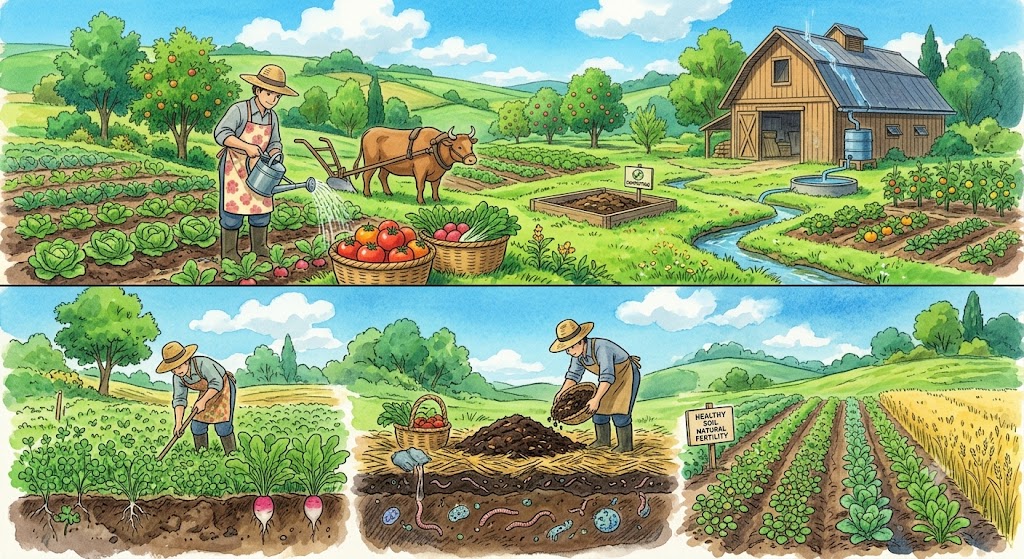
Healthy soil is the foundation of productive agriculture. Every successful harvest begins with soil that can provide crops with the water, nutrients, oxygen, and biological activity they need to thrive. However, many farms experience declining soil quality due to intensive cultivation, erosion, nutrient depletion, compaction, and other environmental challenges.
Poor soil conditions can reduce yields, increase production costs, and make crops more vulnerable to pests, diseases, and drought stress. Fortunately, many soil problems can be corrected using natural and sustainable methods that improve long-term fertility without excessive reliance on synthetic inputs.
By understanding common soil issues and implementing natural solutions, farmers can restore soil health, improve productivity, and build more resilient farming systems.
Why Soil Health Matters
Soil is much more than a growing medium.
Healthy soil provides:
- Nutrient storage and release
- Water retention
- Root support
- Beneficial microbial activity
- Air circulation
- Natural disease suppression
When soil health declines, crop performance often suffers as well.
Improving soil conditions helps increase productivity while reducing dependence on costly external inputs.
Signs of Unhealthy Soil
Farmers should regularly monitor fields for indicators of soil problems.
Common warning signs include:
- Poor crop growth
- Yellowing leaves
- Reduced yields
- Waterlogging
- Excessive runoff
- Soil crusting
- Hard soil layers
- Increased weed pressure
Early identification allows corrective actions before problems become severe.
Soil Problem 1: Low Organic Matter
Organic matter is essential for soil fertility and structure.
Many agricultural soils gradually lose organic matter due to:
- Continuous cultivation
- Crop residue removal
- Excessive tillage
- Erosion
Low organic matter can result in:
- Reduced water retention
- Poor nutrient availability
- Weak soil structure
Natural Solution
Farmers can increase organic matter by:
- Applying compost
- Growing cover crops
- Returning crop residues
- Using animal manure
- Adding mulch
Regular organic matter additions help rebuild soil fertility naturally.
Soil Problem 2: Soil Compaction
Compaction occurs when soil particles become compressed, reducing pore space.
Causes may include:
- Heavy machinery
- Repeated traffic
- Livestock pressure
- Wet soil operations
Compacted soil often leads to:
- Restricted root growth
- Poor drainage
- Reduced oxygen availability
Natural Solution
Methods for reducing compaction include:
- Deep-rooted cover crops
- Reduced machinery traffic
- Controlled grazing
- Organic matter incorporation
Plants such as radishes and certain legumes can naturally help break up compacted soil layers.
Soil Problem 3: Soil Erosion
Erosion removes valuable topsoil and nutrients.
Common causes include:
- Wind
- Heavy rainfall
- Bare soil exposure
- Improper land management
Consequences include:
- Fertility loss
- Reduced productivity
- Water quality issues
Natural Solution
Farmers can reduce erosion through:
- Cover cropping
- Mulching
- Contour farming
- Windbreaks
- Conservation tillage
Protecting soil surfaces helps prevent valuable topsoil from being lost.
Soil Problem 4: Nutrient Deficiencies
Crop growth depends on adequate nutrient availability.
Common deficiencies may involve:
- Nitrogen
- Phosphorus
- Potassium
- Calcium
- Magnesium
Deficient soils often produce weak and unproductive crops.
Natural Solution
Natural fertility improvement methods include:
- Compost application
- Legume cultivation
- Animal manure
- Green manures
- Crop rotation
These practices help replenish nutrients while improving overall soil health.
Soil Problem 5: Poor Water Retention
Some soils struggle to hold moisture effectively.
This is common in:
- Sandy soils
- Degraded soils
- Low-organic-matter soils
Poor water retention can increase drought stress and irrigation requirements.
Natural Solution
Improve moisture retention by:
- Adding compost
- Applying mulch
- Increasing organic matter
- Using cover crops
Organic-rich soils can store significantly more water than depleted soils.
Soil Problem 6: Poor Drainage
Excess water can be just as harmful as insufficient moisture.
Poor drainage may cause:
- Root diseases
- Nutrient loss
- Oxygen deficiency
- Reduced crop growth
Natural Solution
Farmers can improve drainage through:
- Raised beds
- Organic matter additions
- Deep-rooted crops
- Proper field grading
Healthy soil structure naturally improves water movement.
Soil Problem 7: Soil Acidity
Acidic soils can limit nutrient availability and crop performance.
Common symptoms include:
- Stunted growth
- Nutrient deficiencies
- Poor root development
Natural Solution
Depending on soil test results, farmers may use:
- Agricultural lime
- Compost
- Organic amendments
Regular soil testing helps determine appropriate corrective measures.
Balanced soil pH supports nutrient uptake and healthy crop growth.
Soil Problem 8: Loss of Beneficial Soil Biology
Healthy soils contain billions of beneficial microorganisms.
These organisms contribute to:
- Nutrient cycling
- Disease suppression
- Organic matter decomposition
Excessive chemical use and soil disturbance can reduce biological activity.
Natural Solution
Support soil biology by:
- Reducing excessive tillage
- Applying compost
- Growing cover crops
- Avoiding unnecessary chemical inputs
Healthy microbial communities contribute to long-term soil fertility.
Soil Problem 9: Excessive Weed Pressure
Persistent weed problems often indicate underlying soil issues.
Contributing factors may include:
- Bare soil
- Poor crop competition
- Nutrient imbalances
Natural Solution
Weed management strategies include:
- Cover cropping
- Mulching
- Crop rotation
- Timely cultivation
Maintaining healthy crops often reduces weed competition naturally.
Soil Problem 10: Declining Soil Structure
Soil structure influences:
- Root growth
- Water movement
- Air circulation
Poor structure often results from:
- Excessive tillage
- Compaction
- Organic matter loss
Natural Solution
Improve soil structure through:
- Organic matter additions
- Reduced tillage
- Cover crops
- Diverse crop rotations
Good soil structure supports healthier and more productive crops.
The Role of Cover Crops in Soil Restoration
Cover crops are among the most effective natural tools for improving soil health.
Benefits include:
- Erosion control
- Nutrient retention
- Organic matter improvement
- Weed suppression
- Soil structure enhancement
Popular cover crops include:
- Clover
- Rye
- Vetch
- Oats
Regular use of cover crops supports long-term soil restoration.
Compost as a Natural Soil Builder
Compost provides multiple benefits simultaneously.
Advantages include:
- Nutrient supply
- Improved water retention
- Enhanced microbial activity
- Better soil structure
Well-made compost serves as one of the most valuable natural amendments available to farmers.
Crop Rotation for Soil Health
Rotating crops helps prevent many common soil problems.
Benefits include:
- Improved nutrient cycling
- Reduced disease pressure
- Better pest management
- Enhanced soil structure
Diversified rotations support healthier and more resilient farming systems.
Long-Term Soil Management Strategies
Successful soil improvement requires ongoing commitment.
Important practices include:
- Regular soil testing
- Organic matter management
- Cover cropping
- Crop rotation
- Conservation tillage
- Water management
- Erosion control
Combining multiple strategies often produces the best results.
Economic Benefits of Healthy Soil
Improved soil health can lead to:
- Higher yields
- Better crop quality
- Reduced input costs
- Improved drought resilience
- Greater long-term profitability
Healthy soils often reduce dependence on expensive external inputs while supporting sustainable production.
Conclusion
Soil problems can significantly affect farm productivity, but many issues can be corrected naturally through sustainable management practices. By improving organic matter, reducing compaction, controlling erosion, enhancing biological activity, and adopting practices such as cover cropping and crop rotation, farmers can restore soil health while maintaining environmental sustainability.
Healthy soil is one of the most valuable assets on any farm. Farmers who invest in long-term soil improvement are building stronger, more productive agricultural systems capable of supporting reliable harvests and sustainable profitability for generations to come.