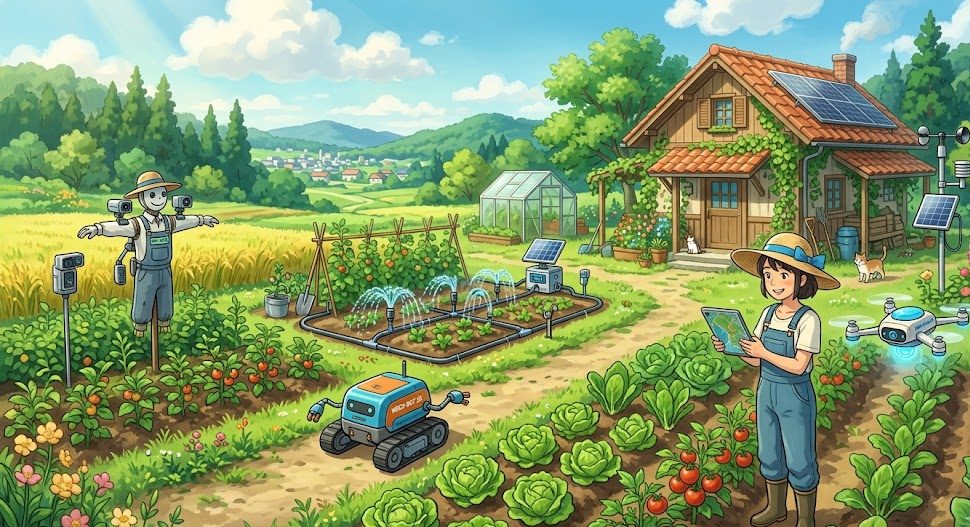
The landscape of agriculture is undergoing a profound transformation. In 2026, the term “agri-tech” is no longer reserved for massive corporate plantations; it has become accessible, affordable, and essential for the modern small-scale farmer. For those managing smaller plots, the goal is simple: maximize yield, minimize waste, and streamline decision-making.
The secret to competitiveness in today’s market is not working more hours, but using data and automation to work smarter. Here are the top five agri-tech tools that every small-scale farmer should integrate into their operation this year.
1. IoT-Enabled Soil & Moisture Sensors
The days of manual soil testing or “guessing” when to irrigate are over. IoT (Internet of Things) sensors act as your “digital eyes” underground.
- How it works: These small, solar-powered devices are placed in representative zones of your farm. They transmit real-time data on soil moisture, temperature, and nutrient levels directly to a smartphone app.
- The Advantage: You move from reactive to proactive irrigation. By knowing exactly when your soil hits a specific moisture threshold, you avoid over-watering (saving costs) and underwatering (preventing yield loss). It is the most reliable way to maintain consistent crop health.
2. Drone-Based Scouting Platforms
Once an expensive luxury, drone technology has become a practical asset for small-scale operations.
- How it works: Equipped with multispectral cameras, these drones provide an aerial map of your field. They can detect plant stress, nutrient deficiencies, or pest outbreaks long before they are visible to the naked eye.
- The Advantage: Instead of scouting every single bed by foot, you can identify specific “stress zones.” This allows you to apply fertilizer or pesticides only where needed, drastically reducing input costs and environmental impact while protecting your high-value crops.
3. Farm Management Software (FMS)
If you are still tracking your inventory, expenses, and harvest schedules on paper or spreadsheets, you are losing valuable time and clarity.
- How it works: An FMS is your digital command center. It integrates your planting schedule, task management, team workflows, and financial records into one dashboard.
- The Advantage: Modern FMS platforms in 2026 offer AI-driven insights. They can predict optimal harvest windows based on weather patterns and help you track which crops are actually profitable versus those that are just “costing” you time. It transforms your farm from a plot of land into a data-driven business.
4. Automated Precision Irrigation Systems
Water is one of the most critical inputs in farming. With climate patterns becoming more unpredictable, managing water with precision is a necessity.
- How it works: These systems pair your sensor data with automated valves. When the sensors detect dry soil, the irrigation system turns on for the exact duration required to reach the root zone.
- The Advantage: Precision irrigation can reduce water waste by up to 70%. Furthermore, it ensures that your plants receive nutrients at the optimal time if you are using fertigation (applying fertilizer through the irrigation system), which directly correlates to healthier, faster-growing yields.
5. Digital Marketplace & Traceability Platforms
Producing high-quality food is only half the battle; getting it to the right buyer at the right price is the other.
- How it works: These platforms connect you directly to local buyers, high-end restaurants, and retail markets, bypassing inefficient middlemen. They also include blockchain-based traceability, which allows you to “certify” the origin and quality of your produce to the consumer.
- The Advantage: Consumers in 2026 are willing to pay a premium for transparency. By using these tools, you can prove your farming practices (organic, sustainable, local), build brand loyalty, and capture a higher share of the retail price rather than accepting rock-bottom wholesale rates.
Why These Tools Matter for Your Bottom Line
The transition to these technologies isn’t about complexity; it’s about ROI (Return on Investment).
- Reduce Input Costs: Precision application means you buy fewer chemicals and use less water.
- Labor Efficiency: Automation replaces repetitive, manual data-logging or scouting, freeing you up to focus on high-value business development.
- Risk Mitigation: Real-time data and predictive analytics help you pivot quickly when weather or market conditions change.
Final Thought: Start Small, Scale Smart
You do not need to adopt all five technologies at once. The most successful modern farmers start with the tool that solves their biggest “pain point.” If water management is costing you money, start with IoT sensors. If your records are a mess, start with an FMS.
The future of small-scale agriculture is bright, but it belongs to those who embrace the “digital-first” approach. By turning your farm into a connected, data-rich environment, you are not just growing crops—you are building a resilient, profitable, and sustainable enterprise.