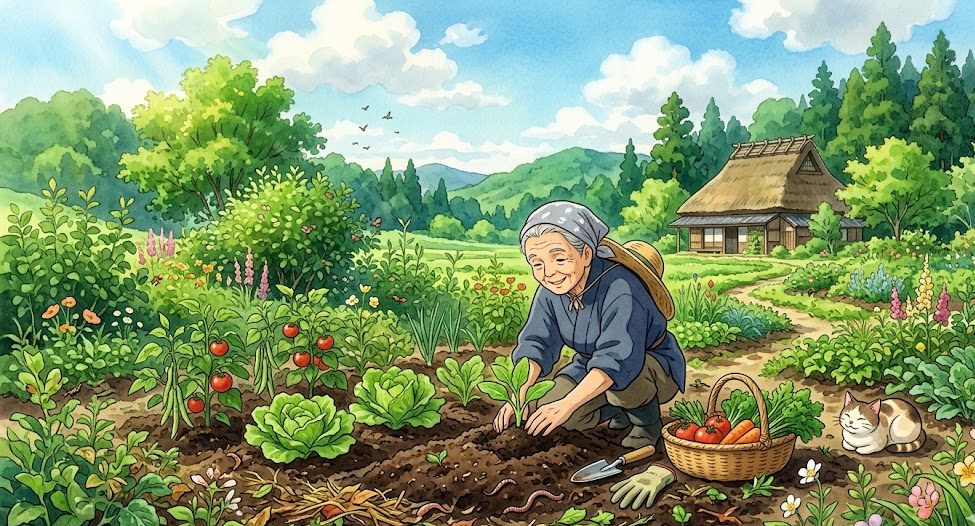
In the world of commercial agriculture, the reliance on synthetic NPK (Nitrogen, Phosphorus, and Potassium) fertilizers has become a double-edged sword. While they provide an immediate boost in plant size, they often leave the soil depleted, acidic, and devoid of the complex microbial life that is the true engine of plant health. For the modern, conscious farmer, the goal is to shift from “feeding the plant” to “building the soil.”
Natural farming is not just about abandoning chemicals; it is about replicating the intelligence of a forest floor. When you build healthy, living soil, you create a self-sustaining ecosystem that is more resilient to pests, more drought-tolerant, and capable of producing nutrient-dense crops that command premium market prices.
1. The Microbial Foundation: Understanding Soil Biology
The heart of natural farming is the Soil Food Web. Healthy soil is a living community of bacteria, fungi, protozoa, and nematodes. These organisms perform the essential work of breaking down organic matter into forms that plants can actually absorb.
When you apply chemical fertilizers, you effectively “numb” this community. The plants become lazy, relying on man-made inputs, and the soil structure collapses. To build fertility, you must nurture the biology:
- Fungal Dominance: Fungi are crucial for breaking down woody organic matter and creating stable soil structure.
- Bacterial Balance: Bacteria help fix nitrogen and cycle nutrients.
- The Strategy: Stop tilling. Excessive tilling shatters the fungal networks (mycorrhizae) that act as a communication and transport system for plant roots.
2. Compost: The “Black Gold” of Natural Farming
Compost is the most effective, non-negotiable tool in your arsenal. It is not just decomposed waste; it is a concentrated injection of microbial life.
- Thermophilic Composting: By balancing “browns” (carbon-rich matter like dry leaves/straw) and “greens” (nitrogen-rich matter like manure/kitchen scraps), you create the heat required to kill weed seeds and pathogens.
- Vermicompost: Adding earthworms to your composting process creates “worm castings,” which are arguably the most potent organic fertilizer available. They contain enzymes and growth hormones that synthetic fertilizers cannot replicate.
- Application: Use compost as a top dressing. Let the rain and the earthworms work it into the soil profile naturally.
3. Green Manures and Cover Cropping
Nature never leaves the soil bare. In a natural farming setup, “living mulch” is your best defense against soil erosion and nutrient leaching.
- The Nitrogen Fixers: Planting legumes (like clover, beans, or vetch) acts as a natural nitrogen factory. These plants host bacteria on their roots that take nitrogen from the air and store it in the soil.
- The Dynamic Accumulators: Deep-rooted plants like daikon radish or comfrey act as “biological drills.” They pull minerals and nutrients from the subsoil, bringing them to the surface, where they become available to shallower-rooted crops.
- The Chop-and-Drop Method: Instead of harvesting these crops, mow them down and leave them on the surface. This adds a layer of organic mulch that feeds the soil and suppresses weeds simultaneously.
4. Fermented Plant Extracts and Bio-Inputs
You don’t need a factory to create potent fertilizers. Fermentation is a low-cost, high-impact strategy for creating liquid fertilizers that boost plant immunity.
- Fermented Plant Juice (FPJ): By mixing fast-growing green shoots with jaggery (brown sugar) and letting it ferment for a week, you create a liquid rich in plant growth hormones and enzymes. Diluted in water, this serves as a powerful foliar spray.
- Fish Amino Acids: For an nitrogen boost, fermenting fish waste creates an amino acid-rich solution that is readily absorbed by plants. It is one of the most effective ways to accelerate vegetative growth without burning the roots.
5. Integrating Permaculture Principles
To master natural farming, stop looking at your farm as a set of separate rows and start looking at it as an integrated system.
- Companion Planting: Plant nitrogen-fixing peas next to heavy feeders like tomatoes. Use aromatic herbs like marigolds or basil to naturally deter pests.
- No-Till Methods: Adopt “no-dig” gardening. By adding layers of cardboard, compost, and mulch, you smother weeds and create a perfect habitat for worms. As these layers decompose, they turn into rich, dark loam that can support high-density planting year after year.
6. Monitoring and Scaling: The Data-Driven Natural Farmer
“Natural” does not mean “unscientific.” To be profitable, you must track your soil health like you track your profits.
- Soil Testing: Regularly test for pH and organic matter percentage. Aim to increase your organic matter by 0.5–1% annually. This is the single best indicator of long-term productivity.
- Observation: The most important tool is your own eyes. Look at the leaves. Check the soil aggregation. Watch for the return of beneficial insects and earthworms. These are the indicators that your soil is “waking up.”
Why Consumers Will Pay More
In 2026, the market is shifting. Consumers are increasingly discerning and are willing to pay a premium for produce that is certified “organically grown” or “naturally farmed.” When you market your produce, emphasize the nutrient density that comes from healthy, chemical-free soil.
You aren’t just selling vegetables; you are selling food that has been grown with integrity, harvested from soil that is actually better today than it was yesterday.
Conclusion: Patience as an Investment
Building soil without chemicals is a marathon, not a sprint. In the first year, you are building the foundation. By the third year, you will see a dramatic reduction in your input costs and an increase in the resilience and flavor of your crops.
By embracing these natural, regenerative strategies, you effectively remove the dependency on expensive, fossil-fuel-based fertilizers. You become a steward of your own ecosystem, and in doing so, you create a business model that is not only environmentally sustainable but financially robust for the long term.