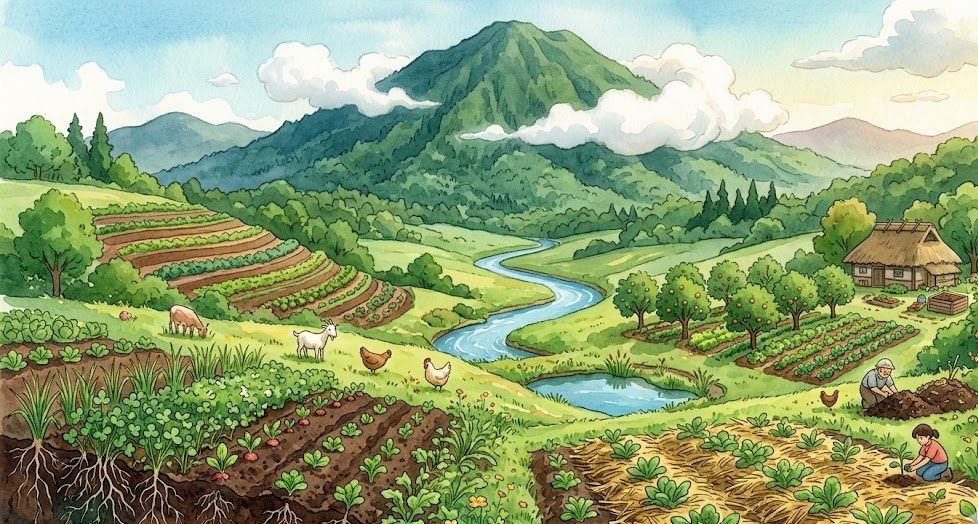
As we navigate the agricultural challenges of 2026, the focus has shifted from merely extracting from the land to actively healing it. The increasing unpredictability of global weather patterns has made “Climate-Resilient Farming” a necessity for survival and profitability. The secret to a farm that can withstand droughts, floods, and extreme heat lies beneath your feet: the soil.
This guide provides a comprehensive “Practical Farming” blueprint to transform your land into a resilient ecosystem that yields high-value harvests while restoring the planet.
1. The Living Soil: Beyond Physical Dirt
The first step in healing the earth is recognizing that soil is a living, breathing biological system. In traditional farming, chemical dependency often kills the very microbes that plants need to thrive.
- The Power of Mycorrhizae: These beneficial fungi form a symbiotic relationship with plant roots, extending their reach to find water and nutrients deep in the earth. By stopping heavy tilling, you preserve these delicate networks, allowing them to act as a natural nutrient delivery system.
- Microbial Recharge: “Healing the soil naturally” involves using fermented organic matter, which acts as a probiotic for your land. These bio-inputs accelerate the return of earthworms and beneficial bacteria, which are the true engines of soil fertility.
2. Strategic Mulching: A Climate Shield
In an era of rising temperatures, protecting the soil surface is one of the most effective “water-saving techniques” available to a modern farmer.
- Thermal Regulation: Bare soil can reach temperatures that literally cook soil life. A thick layer of organic mulch (straw, leaves, or crop residues) acts as insulation, keeping the soil cool in the summer and warm in the winter.
- Moisture Lockdown: Mulching reduces evaporation by up to 60%. This ensures that even during dry spells, the moisture remains at the root zone where it is needed most.
- Erosion Prevention: During heavy rains, mulch absorbs the impact of raindrops, preventing the topsoil—your most valuable asset—from washing away.
3. Smart Crop Rotation and Biodiversity
Monoculture makes a farm vulnerable to climate-specific pests and total crop failure. Biodiversity is the ultimate “Survival Farming” strategy.
- High-Value Cash Crops and Legumes: Integrating crops like broccoli or kale with nitrogen-fixing legumes (beans or peas) creates a natural fertilization cycle. The legumes pull nitrogen from the air and deposit it into the soil for the next crop to use.
- Cover Cropping: Never leave your soil naked. “Green manure” crops planted between main seasons prevent nutrient leaching and keep the soil’s “biological engine” running year-round.
4. Precision Irrigation and Water Management
Climate resilience requires “Smart Farming” innovations that treat water as a precious commodity.
- Drip and Sensor Integration: Moving away from flood irrigation to precision drip systems significantly reduces water waste. When paired with smart soil sensors, you provide water only when the plant is under stress, optimizing every drop.
- Rainwater Harvesting: Creating small ponds or swales on your property allows you to capture runoff during heavy rains, storing it in the soil itself for use during drier months.
5. Integrated Livestock: Closing the Loop
To achieve “Zero Chemical Costs,” you must look at your farm as a closed-loop system.
- The Animal Factor: Integrating poultry, sheep, or goats provides a natural source of high-quality manure. This livestock waste is the raw material for your bio-inputs, eliminating the need for synthetic NPK fertilizers.
- Rotational Grazing: Moving livestock systematically across the land ensures that they fertilize the soil without overgrazing, which promotes deeper root growth and better carbon sequestration.
6. Micro-Farming and Innovation Hubs
Resilience doesn’t always require vast acreage. “Micro Farming” techniques have proven that intensive, well-managed small plots can be more resilient than massive industrial farms.
- Space Optimization: By using vertical structures and intensive planting, micro-farmers can create a highly managed micro-climate that is easier to protect from extreme weather events.
- Digital Tools: Utilizing “Farming Innovation Hubs”—online communities and digital monitoring tools—allows farmers to stay updated on emerging trends and weather warnings in real-time.
Conclusion: The Path to Financial Freedom
Healing the earth is not just an environmental goal; it is the most practical way to secure your financial future. By adopting “Smart Farming” and climate-resilient soil strategies, you reduce your dependency on expensive external inputs like chemicals and excessive irrigation.
As you restore the vitality of your land, you create a “digital goldmine” of productivity that can sustain your family and your business for generations to come. The future of agriculture is natural, resilient, and deeply rooted in healthy soil.