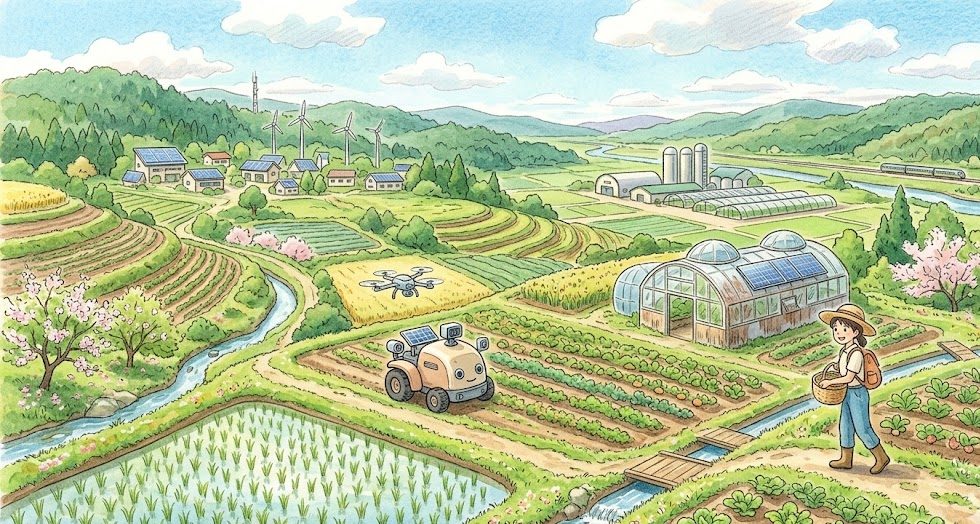
The agricultural landscape is undergoing a massive digital transformation. As we move through 2026, the integration of technology into the field is no longer a luxury—it is a necessity to meet global food demands while maintaining profitability. “Smart Farming” is the bridge between traditional wisdom and the digital future, turning the average farm into a high-tech data center.
For the modern grower, these innovations represent a “digital goldmine” that maximizes efficiency, reduces labor, and ensures “Financial Freedom” by optimizing every resource.
1. Artificial Intelligence and Machine Learning
AI is the brain of the modern farm. By analyzing years of weather patterns, soil data, and crop performance, AI models can now predict the best day to plant or harvest with incredible accuracy.
- Predictive Analytics: AI helps farmers anticipate pest outbreaks before they happen, allowing for targeted natural pest management instead of blanket chemical spraying.
- Yield Estimation: Using computer vision, AI can estimate harvest volumes by analyzing fruit size and color directly from smartphone photos or drone feeds.
2. Precision Irrigation and Water-Saving Tech
Water is the most precious resource in agriculture. 2026 has seen a surge in “water-saving techniques” that ensure not a single drop is wasted.
- Smart Sensors: IoT-enabled soil moisture sensors send real-time data to a farmer’s dashboard, triggering irrigation systems only when the soil reaches a specific dryness threshold.
- Automated Drip Systems: These systems deliver water and liquid bio-fertilizers directly to the root zone, reducing evaporation and runoff significantly.
3. Autonomous Machinery and Robotics
Labor shortages have accelerated the adoption of robotics. Today’s “Smart Farming” includes machines that can work around the clock without human fatigue.
- Autonomous Tractors: GPS-guided tractors can plow, seed, and mulch with centimeter-level precision, ensuring that “Micro Farming” and large-scale operations alike are perfectly optimized.
- Weeding Robots: Laser-guided robots identify and zap weeds between crop rows, providing a “low-maintenance” alternative to manual weeding and herbicides.
4. Drones and Aerial Imaging
Drones have become the “eyes in the sky” for 2026’s agricultural innovation hubs.
- Multispectral Mapping: Drones equipped with specialized cameras can see “stress” in plants—such as nutrient deficiencies or dehydration—long before it is visible to the human eye.
- Targeted Spraying: Instead of treating the whole field, drones can hover and spray organic bio-inputs only on the plants that need them, keeping costs at near-zero.
5. Blockchain for Traceability and Market Access
Transparency is a major trend in 2026. Consumers want to know exactly where their “High-Value Cash Crops” come from.
- Farm-to-Table Tracking: Blockchain technology allows farmers to record every stage of a crop’s life—from seed quality to the “Zero Chemical” inputs used.
- Smart Contracts: Digital platforms allow farmers to sell directly to global markets, ensuring fair pricing and immediate payments, which is a key pillar of “Financial Freedom”.
6. Controlled Environment Agriculture (CEA)
As the climate becomes more unpredictable, moving crops indoors has become a vital “Survival Farming” skill.
- Hydroponics and Aeroponics: Growing plants in nutrient-rich water or mist eliminates the need for traditional soil management while doubling the growth rate.
- Vertical Farming: By stacking crops, farmers can produce massive yields in tiny urban footprints, making “Micro Farming” a highly profitable venture for city dwellers.
7. The Integrated Data Ecosystem
The ultimate innovation of 2026 is the “Farming Innovation Hub”—a centralized platform where all these technologies talk to each other.
- Cloud Connectivity: Data from the livestock barn, the hydroponic shed, and the open fields are all synced. This allows the farmer to manage the entire “Closed-Loop” system from a single device.
Conclusion: Embracing the Future
Smart Farming is not just about fancy gadgets; it is a “Practical Farming Guide” for the modern world. By adopting these AgriTech innovations, you move closer to a high-yield, low-effort harvest that respects the environment and secures your financial future.
Whether you are focusing on “High-Value Cash Crops” or building a self-sufficient “Survival Farm,” these tools are your greatest allies in the 2026 agricultural revolution.
Visual Suggestion: For your blog, use Studio Ghibli-inspired watercolor art to depict these high-tech machines working in lush, green fields. This contrast between “Smart Tech” and “Natural Beauty” creates a very professional and aesthetic brand image.