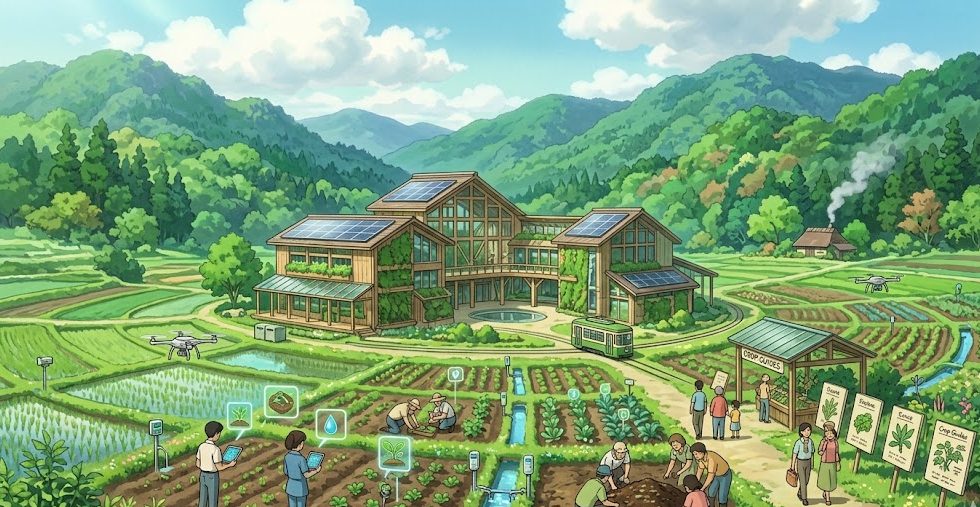
The face of global agriculture is changing faster than ever before. For the modern farmer, the challenge is no longer just about planting seeds and waiting for the rain; it is about managing a complex, data-driven ecosystem. Welcome to the Modern Agriculture Hub, where we bridge the gap between cutting-edge technology, fundamental soil health, and expert-level crop management.
Whether you are scaling a commercial enterprise or managing a high-value niche farm, this guide serves as your roadmap to maximizing efficiency, sustainability, and profitability in today’s competitive market.
The Intersection of AgriTech and Traditional Wisdom
We are currently living through the “Fourth Agricultural Revolution.” By integrating AgriTech—the intersection of software, hardware, and biology—farmers can now make decisions based on real-time data rather than guesswork.
What is Modern AgriTech?
AgriTech isn’t just for massive industrial farms. It encompasses scalable solutions that any entrepreneur can adopt:
- Precision Irrigation: Using soil moisture sensors to automate water delivery, ensuring that crops receive exactly what they need, minimizing waste and electricity costs.
- Smart Monitoring: AI-driven camera systems or drone surveys that can detect early signs of nutrient deficiency or pest infestation before they become visible to the naked eye.
- Digital Farm Management: Utilizing cloud-based apps to track labor, material costs, and yield per square meter, providing the granular data needed to optimize for maximum ROI.
Soil Health: The Foundation of Profitability
Regardless of how much technology you implement, the health of your soil remains the single most important factor in your yield quality. A farm with poor soil is like a business with a broken infrastructure—no amount of marketing or management can save it.
Why “Healing the Soil” Matters
Healthy soil is a complex living organism. It acts as a natural carbon sink, a reservoir for water, and a home for beneficial microorganisms that fight off plant diseases.
- Organic Matter Enrichment: Increasing the carbon content of your soil through compost, biochar, or cover crops directly translates to higher nutrient availability.
- Microbial Biodiversity: Modern farming often uses “synthetic sterilizers” that kill the good with the bad. By switching to organic, biological stimulants, you foster a healthy soil biome that protects roots naturally.
Practical Action Plan: Every season, perform a comprehensive soil test. Do not apply fertilizer based on a generic schedule; apply it based on the specific deficiencies revealed by your laboratory analysis. This targeted approach saves money and prevents soil degradation.
Expert Crop Guides: Optimizing for High-Value Markets
In the modern market, growing what everyone else is growing often leads to thin profit margins. To truly succeed, you must focus on high-value cash crops and precise production schedules.
How to Select Your Next Crop
- Market Demand Analysis: Use keyword research and local market trends to identify crops with high demand but low local supply.
- Climate-Smart Choices: Align your crop selection with your local climate, but utilize greenhouses or vertical setups to extend your growing season.
- Yield Optimization: Focus on “intensive farming” techniques. Even on a small plot of land, you can achieve massive output if you master high-density planting and vertical space usage.
Integrated Farming: The Modern Multi-Revenue Model
One of the most effective strategies for a modern agriculture entrepreneur is Integrated Farming. This involves diversifying your revenue streams so that your farm is never dependent on a single crop or market price.
Building Your Integrated System:
- Aquaponics/Fish Farming: Combine aquaculture with plant production. The waste produced by fish provides an organic, nitrogen-rich fertilizer for your plants, creating a closed-loop system.
- Livestock & Crop Synergy: If you are running a poultry or sheep operation, use the manure to fuel your composting and soil health initiatives.
- Agro-Tourism & Education: Your farm can serve as a “Hub.” If your operations are data-backed and efficient, they can become a model for others, creating secondary income streams through consulting or content creation.
Scaling Your Farming Business
To transition from a “farmer” to an “agricultural entrepreneur,” you must think in terms of systems and scalability.
- Standardize Processes: Create a “Session Plan” for every crop. From seed germination to harvest, document every step. This makes it easier to train labor or delegate tasks.
- The 80/20 Rule in Farming: Identify the 20% of your activities that produce 80% of your profit, and double down on them.
- Leverage Analytics: Use your digital logs to compare the performance of different seeds, fertilizers, and planting dates. Data is your most valuable asset in the modern market.
Conclusion: Embracing the Future
The future of agriculture belongs to those who are willing to innovate. By combining the precision of AgriTech, the biological wisdom of Soil Management, and the strategic foresight of Crop Guides, you are creating a farm that is not only profitable but also resilient enough to withstand the challenges of a changing world.
Sustainable farming is not just about environmental protection—it is about economic longevity. By focusing on your soil, staying current with technology, and constantly refining your crop selection, you position yourself as a leader in the agricultural space.