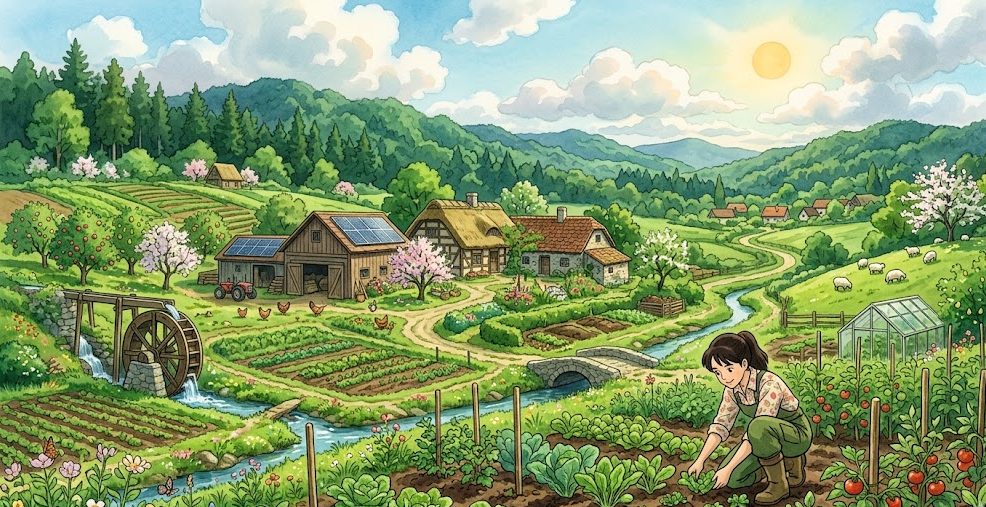
The global agricultural landscape is at a pivotal turning point. As climate change reshapes weather patterns and population growth puts unprecedented pressure on our food systems, the traditional ways of farming are no longer sufficient. Today, the most successful agriculturalists are those who adopt Sustainable Farming Mastery—a strategy that balances high-tech innovation with a deep, intuitive understanding of nature.
Whether you are managing a small-scale plot or an automated commercial facility, the goal remains the same: to produce maximum yields while regenerating the land rather than depleting it.
1. The Climate-Resilient Farm: Preparing for Tomorrow
Climate volatility is the single greatest risk to agricultural profitability. Sustainable mastery begins by insulating your operation against unpredictable weather.
Embracing Regenerative Practices
Regenerative farming is not just a trend; it is a risk-mitigation strategy. By focusing on soil health, you create a “sponge” effect. Soil rich in organic matter can absorb excess rainfall during floods and retain moisture during droughts, protecting your crops from extreme fluctuations.
- Cover Cropping: Never leave soil exposed to the elements. Cover crops (like clover or rye) protect against erosion and fix atmospheric nitrogen back into the soil, reducing your dependence on synthetic fertilizers.
- No-Till Farming: Tilling disrupts the delicate fungal networks that help plants absorb nutrients. By minimizing soil disturbance, you maintain the structural integrity of the earth, leading to more resilient crops.
2. Innovation: The Tech-Driven Edge
Profitability in modern farming relies on precision. You cannot manage what you do not measure. Integrating technology allows you to do more with less, which is the cornerstone of sustainable efficiency.
IoT and Sensor-Based Irrigation
Water is becoming the most expensive input on the farm. Smart irrigation systems, powered by IoT sensors, provide real-time data on soil moisture levels. Instead of watering on a fixed schedule, your system triggers irrigation only when the plant actually needs it. This simple shift can reduce water consumption by up to 40% while simultaneously increasing crop quality.
LED Lighting and Vertical Control
For those in controlled environments or vertical farming, the evolution of LED technology has been transformative. By adjusting the light spectrum, you can manipulate plant growth rates, flavor profiles, and even nutritional density. This allows for year-round production, insulating your revenue stream from seasonal market drops.
3. Nature-Focused Pest and Disease Management
The “burn it all” approach to pest control with broad-spectrum chemicals is a relic of the past. It is also an economic disaster, as it kills off beneficial predators and leads to chemical-resistant “super-pests.”
The Strategy of Integrated Pest Management (IPM)
Mastery in farming requires shifting from reactive spraying to proactive prevention:
- Encouraging Beneficials: Create habitats for ladybugs, lacewings, and predatory wasps. These natural allies can suppress aphid and mite populations far more effectively than any synthetic pesticide.
- Trap Cropping: Plant a “decoy” crop that attracts pests away from your main cash crop. By managing the trap crop, you control the pest population without ever touching your primary harvest with chemicals.
4. The Economics of Sustainability: Profit Ratios
To achieve a high return on investment (ROI), sustainable farming must be viewed as a business, not just a lifestyle.
Maximizing Yield per Square Meter
Efficiency is the key to profitability. By utilizing high-density planting and vertical systems, you increase the “revenue per square meter.” This is essential for urban or high-rent land.
Reducing External Inputs
Every dollar spent on synthetic inputs (fertilizers, pesticides, imported seeds) is a dollar taken directly from your net profit. Sustainable mastery focuses on closing the loop:
- On-site Composting: Turn crop residues and organic waste back into soil amendments.
- Seed Saving: Develop your own seed stock that is specifically adapted to your local climate, reducing the need for costly commercial inputs.
5. Diversification: The Ultimate Risk Buffer
Just as in a financial portfolio, diversification is your best defense against market failure. If your entire operation relies on one crop, a single pest outbreak or a sudden price crash can wipe out your annual profit.
- Poly-culture Systems: Grow multiple varieties of crops together. This mimics natural ecosystems, making your farm less attractive to pests and ensuring that if one crop struggles, others thrive.
- Value-Added Products: Don’t just sell the raw produce. Convert your harvest into high-margin products like dried herbs, organic powders, or jarred preserves. This captures a larger share of the value chain.
6. Scaling with Integrity
As you grow, the temptation to revert to “industrial” shortcuts will be strong. Resist this. The premium market—restaurants, health-conscious consumers, and specialty markets—will pay significantly more for products that are verified as sustainable and high-quality.
Sustainable Farming Mastery is not a destination; it is a process of constant iteration. It requires you to be a scientist, a business manager, and a steward of the land all at once. By focusing on soil vitality, technological efficiency, and biological intelligence, you build an operation that is not only profitable today but viable for decades to come.