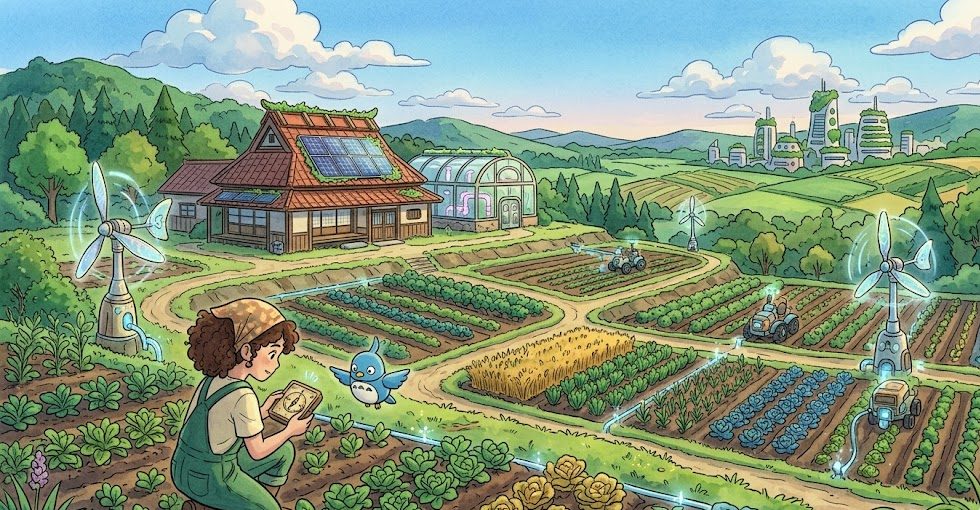
The face of agriculture is changing rapidly. For generations, farming relied almost entirely on seasonal intuition, manual labor, and uniform field management. While these traditional methods fed the world for decades, today’s farmers face modern pressures: unpredictable weather patterns, rising input costs, and shifting environmental challenges.
To thrive in this new landscape, growers are turning to smart technology systems. Often called precision agriculture, this modern approach swaps guesswork for real-time data. The goal isn’t to replace the farmer’s experience, but rather to give them high-tech eyes and ears across every acre.
Whether you manage a small family plot or a expanding commercial operation, this guide highlights practical, beginner-friendly modern farming guides and technology systems you can start using to increase efficiency and maximize profits.
What is Smart Farming?
At its core, smart farming uses digital tools like sensors, automation, and data analytics to optimize crop health and resource management. Instead of treating an entire 100-acre field exactly the same, smart technology allows you to give each individual row or zone precisely what it needs—no more, no less.
By applying water, fertilizer, and pest controls with pinpoint accuracy, you save money on raw inputs while giving your plants the ideal environment to achieve maximum yields.
1. The Internet of Things (IoT) and Field Sensors
The backbone of any smart tech system is the Internet of Things (IoT). In simple terms, this means connecting everyday physical tools to the internet so they can send and receive real-time data.
Soil Moisture and Nutrient Sensors
Instead of digging into the earth to guess if your soil is dry, small, battery-powered soil sensors can be placed directly in the crop root zone. These tools constantly monitor:
- Moisture Levels: Tells you exactly when to irrigate. Journal of Diversity Studies
- Temperature: Helps determine the perfect planting window for seeds. Journal of Diversity Studies
- EC (Electrical Conductivity): Tracks nutrient levels so you don’t over-fertilize. Frontiers
Weather Micro-Stations
Weather apps provide generic data for your zip code, but micro-climates on a large farm can vary wildly. On-site digital weather stations track wind speed, humidity, and rainfall on your exact coordinates. This helps you predict local frost risks or determine if the wind is too high to spray safely.
2. Automated Smart Irrigation
Water scarcity is a major concern globally, and traditional flood or standard sprinkler systems waste massive amounts of water through evaporation and runoff.
+------------------------+--------------------------------------------------------+
| Technology             | How it Saves Money & Resources                         |
+------------------------+--------------------------------------------------------+
| Automated Valves       | Shuts off water completely when target soil moisture is reached. |
| Weather-Linked Timers  | Delays watering cycles automatically if rain is forecasted. |
| Drip Line Integration  | Delivers water straight to the root, curbing weed growth.   |
+------------------------+--------------------------------------------------------+
When you link your IoT soil sensors directly to an automated irrigation system, the setup manages itself. When the soil moisture drops below a specific threshold, the smart system opens the water valves. As soon as the roots are perfectly hydrated, it shuts off. This continuous, balanced moisture level prevents plant stress and can cut water usage by up to 30%.
3. Drones and Aerial Scouting
Walking miles of crop rows to look for pests, diseases, or nutrient deficiencies is exhausting and time-consuming. By the time a human eye spots a problem from the ground, the damage has often already spread.
Visual Crop Mapping
Affordable agricultural drones allow you to scout hundreds of acres in a matter of minutes. Equipped with specialized cameras (called multispectral sensors), these drones fly autonomous paths and capture bird’s-eye imagery of your fields.
Catching Problems Early
Healthy plants reflect light differently than stressed or diseased plants. Drone software processes these image maps to display “hotspots” where crops are struggling. This allows you to walk directly to the trouble spot, diagnose the insect or fungal issue immediately, and treat it before it compromises your entire harvest.
4. Farm Management Information Systems (FMIS)
Data is only valuable if it is easy to understand and act upon. Farm Management Information Systems (FMIS) are simple software dashboards—accessible via smartphone or laptop—that bring all your tech pieces together.
- Centralized Tracking: View your sensor data, drone maps, and weather alerts in one clean interface.
- Expense & Yield Logging: Track exactly how much fuel, seed, and fertilizer you use per field, mapping those costs directly against your final harvest revenue.
- Task Delegation: If a drone detects a pest outbreak in Zone B, you can drop a digital pin on the map and assign a treatment task directly to a worker’s mobile application.
Practical Tips for Transitioning to Smart Tech
Moving away from traditional farming can feel overwhelming, but you don’t have to overhaul your operation overnight. Use these practical strategies for a smooth, affordable transition:
Start Small and Scale Up
You do not need an autonomous tractor or multi-thousand-dollar drone to get started. Begin by purchasing two or three basic IoT soil moisture sensors for your most problematic field. Learn how to read the data, adjust your watering schedule based on the numbers, and see the savings firsthand before buying more gear.
Prioritize Mobile-Friendly Tools
When selecting software or sensors, choose companies that offer robust, simple mobile apps. As a farmer, your work happens out in the dirt, not behind an office desk. You need a system that sends text alerts directly to your phone when something goes wrong.
Check Local Connectivity
Many smart devices rely on Wi-Fi, cellular data, or long-range radio networks (like LoRaWAN) to transmit data. Before investing in field tech, verify your farm’s cellular coverage to ensure your new devices can successfully talk to your dashboard.
Conclusion
Embracing modern farming guides and smart technology systems isn’t about replacing the timeless, hands-on wisdom of farming. It is about empowering yourself with clear, accurate data to make better daily decisions. By installing simple field sensors, automating your watering, and tracking your progress on digital dashboards, you protect your land, reduce physical burnout, and build a highly resilient, profitable business for years to come.
Frequently Asked Questions (FAQs)
1. Is smart farming technology too expensive for small farms?
Not at all. While high-end machinery is expensive, basic smart tools like soil sensors and field mapping apps are highly accessible and budget-friendly. Starting small with just a few sensors delivers a quick return on investment through water and fertilizer savings.
2. Do I need advanced computer skills to run a smart farm?
No. Modern agricultural technology is designed specifically for everyday farmers. Most software features clean, visual dashboards with color-coded maps, simple charts, and automated text alerts that require zero coding or tech expertise.
3. How do smart systems help cut down on fertilizer costs?
Instead of applying a uniform layer of fertilizer across your entire land, smart sensors and drone mapping show you exactly which zones are nutrient-deficient. This allows you to apply fertilizer only where it is strictly needed, preventing waste.
Frontiers
4. Can automated irrigation systems operate without internet?
Yes. Many smart irrigation setups use localized radio frequencies (like LoRaWAN) or offline controllers to talk to nearby soil sensors. While an internet connection is needed to send alerts to your smartphone, the physical watering loops can run safely on their own local network.
5. What is the average lifespan of an outdoor agricultural sensor?
Most high-quality field sensors are built with rugged, weatherproof housing designed to withstand extreme sun, heavy rain, and frost. On average, a well-maintained sensor battery lasts between 2 to 5 years before needing a simple replacement.