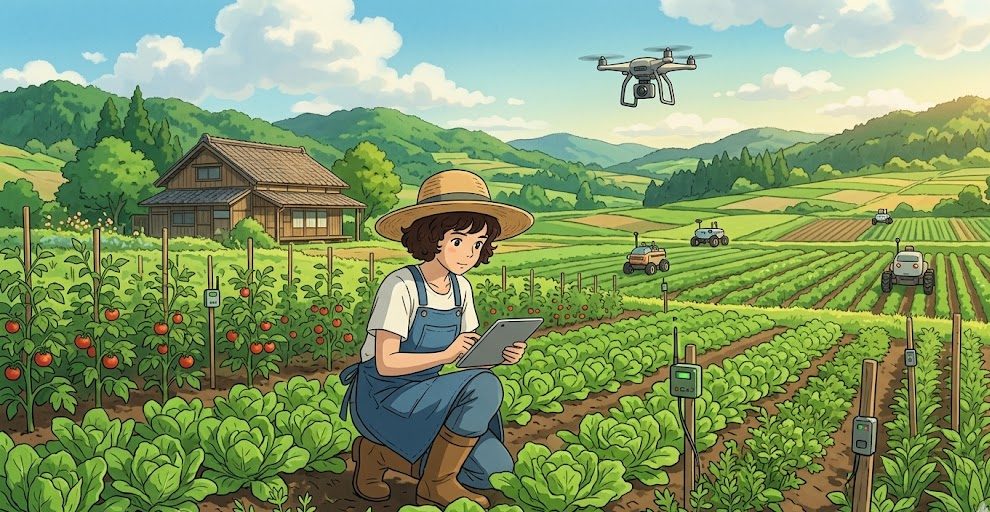
The global population is growing at a rapid pace, and with it, the demand for food is skyrocketing. At the same time, farmers face unprecedented challenges: unpredictable weather patterns due to climate change, depleting water resources, and a shrinking availability of arable land.
How can the agricultural sector produce more food with fewer resources?
The answer lies in Smart Farming. By merging traditional agricultural wisdom with the Internet of Things (IoT) and cutting-edge sensor technology, modern farming is undergoing a digital revolution. Agriculture is shifting away from guesswork and moving toward precise, data-driven management.
Let’s explore how IoT and smart sensors are transforming fields into connected, highly efficient ecosystems, and what this means for the future of food production.
What is Smart Farming?
Smart Farming, often referred to as precision agriculture, is the practice of using modern information and communication technologies to optimize both the quantity and quality of agricultural products.
Instead of treating an entire 100-acre field as a single unit, smart farming allows farmers to micro-manage their land down to the square meter—or even individual plants. By collecting real-time data from the field, farmers can make highly informed decisions, automate routine tasks, and predict issues before they cause devastating crop losses.
At the heart of this revolution is the Internet of Things (IoT)—a network of physical objects (sensors, machinery, drones) embedded with electronics, software, and connectivity that allows them to collect and exchange data.
The Core Components: Smart Sensors at Work
To understand how IoT changes agriculture, we have to look at the sensors deployed across modern farms. These tiny, durable devices act as the eyes and ears of the farmer, working 24/7.
1. Soil Moisture and Nutrient Sensors
Watering crops used to depend on historical schedules or manually feeling the soil. Today, soil sensors placed at various root depths measure volumetric water content and electrical conductivity in real time.
- Precision Irrigation: Farmers know exactly when the soil is drying out and can trigger automated irrigation systems to turn on, turning off the moment the optimal moisture level is reached.
- Nutrient Management: These sensors track nitrogen, phosphorus, and potassium (NPK) levels, ensuring fertilizers are only applied when and where the soil actually needs them, preventing chemical runoff into local water systems.
2. Weather and Microclimate Stations
While macro weather forecasts give a general idea of the regional outlook, microclimates within a single massive farm can vary wildly. On-farm IoT weather stations monitor:
- Air temperature and relative humidity.
- Wind speed and direction.
- Solar radiation and rainfall.
This localized data helps farmers protect crops from sudden frosts, plan harvest schedules during dry windows, and predict disease outbreaks, as many fungal pathogens thrive only in specific temperature and humidity ranges.
3. Crop Health and Growth Sensors
Optical sensors mounted on tractors, drones, or satellites use automated imaging to assess crop health. By measuring the reflection of visible and near-infrared light from plant leaves—a metric known as the Normalized Difference Vegetation Index (NDVI)—these sensors can detect chlorophyll levels.
- Early Warning Signs: If a section of a field shows dropping chlorophyll levels, the system alerts the farmer to a potential pest infestation or disease days before the human eye can spot physical damage.
4. Livestock Tracking and Health Monitoring
IoT isn’t just for crops; it is revolutionizing livestock management. Wearable collars or ear tags equipped with GPS, accelerometers, and temperature sensors allow ranchers to track animal health and location.
- Sick Animal Detection: Changes in an animal’s movement patterns, rumination behavior, or body temperature can signal illness early, allowing for isolation and treatment before a disease spreads to the entire herd.
- Calving Alerts: Sensors can detect when a pregnant cow goes into labor, sending an automated SMS to the farmer so they can assist if needed.
How IoT Drives Efficiency and Sustainability
The data collected by these sensors is transmitted via wireless networks (like LoRaWAN, cellular, or satellite) to centralized cloud platforms. From there, powerful software translates raw data into actionable insights, providing several massive benefits.
Maximizing Resource Efficiency
Water scarcity is one of the biggest crises facing global agriculture. IoT-driven smart irrigation systems reduce water waste by up to 30% to 40% by delivering water exclusively when plants require it. Similarly, variable-rate application technology allows tractors to apply seeds, fertilizers, and pesticides at varying rates across a field based on sensor data, drastically cutting input costs.
Automation and Remote Management
With connected machinery, farmers can monitor and control operations from anywhere in the world via a smartphone app. Greenhouses can automatically open ventilation windows, activate misting systems, or adjust LED growth lights based on real-time sensor readings without requiring a human to be physically present.
Enhanced Supply Chain and Storage
The IoT journey doesn’t end at harvest. Smart sensors track conditions inside grain silos and cold storage units. If the temperature or moisture level rises inside a berry storage container during transport, an alert is triggered, preventing spoilage and ensuring higher-quality food reaches the grocery store shelves.
Traditional vs. Smart Farming: A Quick Comparison
| Feature | Traditional Farming | Smart Farming (IoT) |
|---|---|---|
| Decision Making | Based on intuition, experience, and general regional forecasts. | Driven by real-time, hyper-local sensor data and analytics. |
| Water Usage | Fixed schedules; often leads to over-watering or under-watering. | Precision irrigation triggered by real-time soil moisture levels. |
| Pest Control | Broad-spectrum chemical spraying across entire fields. | Targeted application focused precisely on affected zones. |
| Labor Requirement | High manual labor for monitoring crop health and soil conditions. | Automated tracking, freeing up labor for strategic tasks. |
| Environmental Impact | Higher risk of fertilizer runoff, chemical waste, and water depletion. | Highly sustainable; minimizes chemical footprints and conserves resources. |
Challenges to Widespread Adoption
While the benefits of smart farming are undeniable, the transition isn’t happening overnight. Several hurdles must be overcome for widespread global adoption:
- High Initial Investment: Purchasing IoT infrastructure—including hardware, sensors, drones, and software subscriptions—can be prohibitively expensive for small-scale or family-owned farms.
- Connectivity Issues: Many rural farming communities lack the robust cellular or internet coverage required to transmit data seamlessly from remote fields to the cloud.
- Data Literacy: Farmers must adapt to interpreting data graphs and managing software interfaces, creating a learning curve for those used to traditional hands-on methods.
- Interoperability: Sensors from one manufacturer often don’t communicate well with machinery from another, making it difficult to build a fully unified smart farm network.
Fortunately, as technology advances, sensor costs are dropping, long-range low-power networks (like LoRaWAN) are bridging the connectivity gap, and tech companies are designing more intuitive, user-friendly farm management apps.
Frequently Asked Questions (FAQs)
1. Is smart farming only suitable for large commercial farms?
No. While large farms were early adopters due to their budgets, the technology is scaling down rapidly. Small-scale farmers, urban greenhouse operators, and vertical indoor farms are increasingly using affordable, compact IoT sensor kits to optimize their smaller growing spaces.
2. How do IoT sensors get power out in remote fields?
Most outdoor agricultural sensors are designed to consume very little power. They are typically equipped with long-lasting internal batteries that can run for several years, often supplemented by small, integrated solar panels.
3. Can IoT technology help reduce the use of chemical pesticides?
Absolutely. By using crop health sensors and drones to pinpoint the exact location of a pest outbreak, farmers can spot-treat a specific 10-foot radius rather than spraying an entire 50-acre field with chemicals.
4. What is the role of AI in smart farming?
While IoT sensors collect raw data, Artificial Intelligence (AI) acts as the brain. AI algorithms analyze historical and real-time sensor data to predict future trends, such as estimating exact harvest yields weeks in advance or identifying specific weed species from drone imagery.
5. Does smart farming mean robots will replace human farmers?
Not at all. Smart farming is about empowering human farmers, not replacing them. The technology removes repetitive, time-consuming monitoring tasks and gives farmers the precise data they need to make better, more impactful management decisions.
Conclusion
The marriage of agriculture and technology is no longer a futuristic concept; it is an active reality that is redefining how the world grows food. Smart farming powered by IoT and sensors transforms agriculture from an industry vulnerable to nature’s whims into an exact science.
By conserving water, slashing chemical waste, optimizing fuel consumption, and maximizing crop yields, smart farming provides a practical roadmap toward sustainable food security. As these technologies become more affordable and accessible, they will play a vital role in protecting our planet’s resources while feeding a hungry world. The future of farming is smart, connected, and incredibly green.