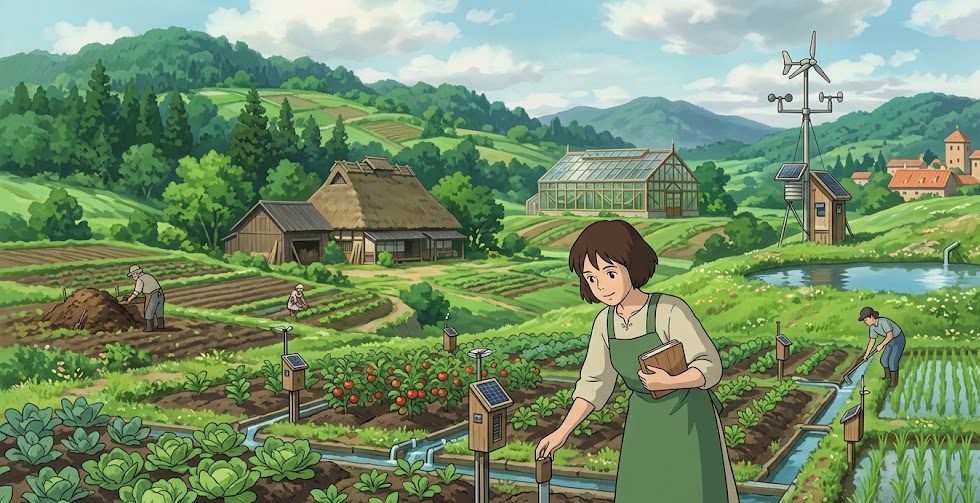
Global agriculture faces an unprecedented double challenge: feeding a rapidly growing population while weathering volatile shifts in global climate patterns. Traditional farming methods—reliant on uniform schedules and heavy synthetic chemicals—are struggling to cope with unpredictable rainfall, prolonged heatwaves, and declining soil fertility.
When extreme weather events hit, degraded and over-tilled topsoil cannot hold water or resist erosion. This leaves crops vulnerable and cuts potential harvest yields.
To achieve consistent, high-yield harvests today, progressive growers must look beyond conventional approaches. True agricultural resilience relies on advanced climate and soil management strategies. By treating the soil as a living ecosystem and adapting field management to match climate realities, farmers can secure high yields while protecting the natural environment for future generations.
The Dynamic Link Between Climate Shifts and Soil Integrity
Climate change alters more than just local air temperatures; it directly shapes the physical, chemical, and biological stability of the soil. Rising global temperatures accelerate the breakdown of Soil Organic Matter (SOM), which quickly depletes the natural carbon stocks that keep soils structurally sound and fertile.
Conventional Heavy Tillage:
[Frequent Plowing] ──> [Oxidized Organic Matter] ──> [Erosion & Soil Compaction] ──> [Low Nutrient Retention & Weak Yields]

Advanced Climate-Smart Soil Management:
[Zero/Minimal Till] ──> [Preserved Soil Carbon] ──> [Stable Aggregate Structure] ──> [High Water Retention & Maximized Yields]
When heavy, unpredictable rain hits vulnerable, low-carbon soils, the vital topsoil easily washes away. This triggers severe nutrient leaching and leaves behind compact, oxygen-starved fields. To counter these systemic threats, growers must shift toward integrated, climate-smart strategies that actively regenerate soil ecosystems.
Core Strategies for Advanced Climate and Soil Management
Building a climate-resilient farm requires blending long-term soil restoration with proactive, modern field management. These four proven strategies work together to protect soil structure and stabilize crop yields under environmental stress.
1. Conservation Agriculture and Minimal Disturbance
Traditional deep plowing might offer a clean seedbed in the short term, but it systematically breaks down natural soil structure and accelerates carbon loss. Conservation Agriculture (CA) counteracts this damage through three core principles: minimal soil disturbance, permanent organic ground cover, and diverse crop rotations.
- Zero-Till and Direct Seeding: Avoiding mechanical plowing preserves the complex subterranean pathways created by earthworms and old root systems. This practice keeps soil organic carbon securely in the ground, reduces greenhouse gas emissions, and improves overall soil stability.
- Surface Mulching: Leaving crop residues on the field acts as a natural shield against the elements. A protective layer of mulch lowers surface temperatures during intense heatwaves, minimizes water evaporation, and cushions the soil against the impact of heavy rain.
2. Tailored Cover Cropping and Structural Diversity
Leaving fields bare between commercial growing seasons invites weed invasion and accelerates nutrient loss. Incorporating targeted cover crops keeps the soil active, covered, and biologically diverse year-round.
- Biomass and Nutrient Builders: Deep-rooted legumes like sunn hemp or crimson clover work naturally with soil microbes to fix atmospheric nitrogen, significantly reducing the need for synthetic fertilizers.
- Biological Plowing: Fast-growing forage radishes feature aggressive taproots that drill deep into dense subsoil layers. As these roots break down, they leave behind open channels that allow air, water, and future crop roots to easily penetrate deep into the earth.
3. Precision Nutrient Management and Microbiome Support
Blindly applying blanket chemical fertilizers often backfires during climate disruptions. For instance, heavy synthetic nitrogen applications can leach out during unexpected downpours or scorch crops during sudden droughts, all while disrupting beneficial soil microbiology.
| Management Approach | Specific Field Practice | Main Climate Advantage | Primary Resource Savings |
| Site-Specific Diagnostics | Utilizing localized soil testing cards and regular lab assays. | Allows for precise matching of nutrient inputs to real-time soil deficiencies. | Cuts unnecessary chemical fertilizer application by 8% to 10%. |
| Microbiome Engineering | Applying targeted bio-inoculants, mycorrhizal fungi, and Rhizobium strains. | Helps crops adapt to salinity, heat stress, and severe water scarcity. | Lowers dependence on synthetic growth stimulants. |
| Organic Amendments | Integrating high-quality compost, well-rotted manure, and stable biochar. | Permanently improves soil structural integrity and long-term water-holding capacity. | Reduces supplemental irrigation demands during dry spells. |
4. Smart Moisture Conservation and Water Harvesting
As rainfall patterns become more unpredictable, a farm’s success depends on its ability to capture and store every drop of water. Relying solely on groundwater reserves is no longer a viable long-term strategy.
- Micro-Irrigation Systems: Shifting to drip irrigation or targeted micro-sprinklers delivers water directly to the plant’s root zone, cutting down on evaporation losses and weed growth.
- On-Farm Water Catchment: Constructing swales, contour bunds, and dedicated farm ponds helps capture heavy runoff during sudden storms. This recharges local aquifers and provides a reliable water reserve for dry periods.
Implementing an Advanced Climate and Soil Management Framework
Transitioning a conventional farm into a highly resilient, climate-smart system requires a structured, step-by-step approach to ensure long-term success.
1.Step 1: Baseline Site and Soil Profiling:Timeframe: Pre-Season / Initial Audit.
Conduct thorough soil testing across all management zones to measure organic carbon levels, baseline pH, and key nutrient balances. Pair this data with historical weather records to identify your farm’s primary climate risks, such as frequent early-season droughts or recurring late-season flooding.
2.Step 2: Tillage Reduction and Residue Retention:Timeframe: Crop Transition Windows.
Gradually phase out heavy plowing in favor of strip-tillage or full zero-till seeding machinery. Ensure that at least 30% to 50% of your previous crop’s residue remains on the soil surface to jumpstart moisture retention and shield vital soil microbes from extreme surface heat.
3.Step 3: Seeding Targeted Multi-Species Cover Crops:Timeframe: Off-Season Maintenance.
Plant a diverse mix of cover crops tailored to your specific soil needs directly into the harvested cash crop fields. Use a calculated blend of brassicas to break up compacted soil layers, legumes to boost natural nitrogen fixation, and hardy grasses to build stable organic biomass.
4.Step 4: Systemic Crop Rotation Modeling:Timeframe: Continuous Multi-Year Cycle.
Design a dynamic multi-year crop rotation schedule that breaks up pest cycles and alternates nutrient demands. Ensure you regularly alternate heavy-feeding cash crops with restorative legumes or deep-rooted cover crops to maintain structural diversity and long-term soil health.
The Role of Biochar in Long-Term Adaptation: Applying biochar—a porous, carbon-rich material produced by heating biomass without oxygen—serves as a permanent tool for soil remediation. Biochar acts like a microscopic sponge within the soil, locking away carbon for centuries while creating a permanent network that stores moisture and shelters beneficial soil microbes.
Frequently Asked Questions (FAQs)
How long does it take to see a noticeable improvement in crop yields after shifting to conservation agriculture?
While soil structure improvements start immediately, visible yield enhancements typically stabilize within two to three seasons. As the natural soil microbiome recovers and organic carbon builds up, fields become far more resilient, delivering stable, high-quality yields even during tough weather years.
Does zero-till farming increase weed pressure over time?
Weed dynamics do shift when you stop tilling, as buried weed seeds are no longer brought to the surface. Any initial weed pressure is managed by maintaining a thick layer of cover crop mulch, which naturally blocks sunlight and prevents weed seeds from germinating.
Can small-scale farmers implement precision nutrient management without expensive equipment?
Yes. Precision management is about accuracy, not just high-tech gear. Smallholders can achieve excellent results by using affordable regional soil health cards, applying organic fertilizers directly to the plant roots rather than broadcasting them, and utilizing simple, targeted drip irrigation kits.
Are bio-inoculants effective in all types of agricultural soils?
Bio-inoculants perform best in soils that contain adequate organic matter, which provides the carbon and moisture the beneficial microbes need to survive. Combining microbial treatments with organic amendments like compost ensures the introduced biology thrives and supports the crop effectively.
Conclusion
Maximizing crop yields in an unpredictable climate requires moving away from rigid, chemically dependent farming methods. True agricultural resilience comes from understanding and working with the soil ecosystem.
By adopting advanced climate and soil management strategies—such as reducing tillage, utilizing diverse cover crops, practicing precision nutrition, and protecting the soil microbiome—growers can shield their crops from environmental stress. These practices do more than just safeguard against extreme weather; they restore the land, lower input costs, and build a productive, sustainable foundation for high-yield farming.