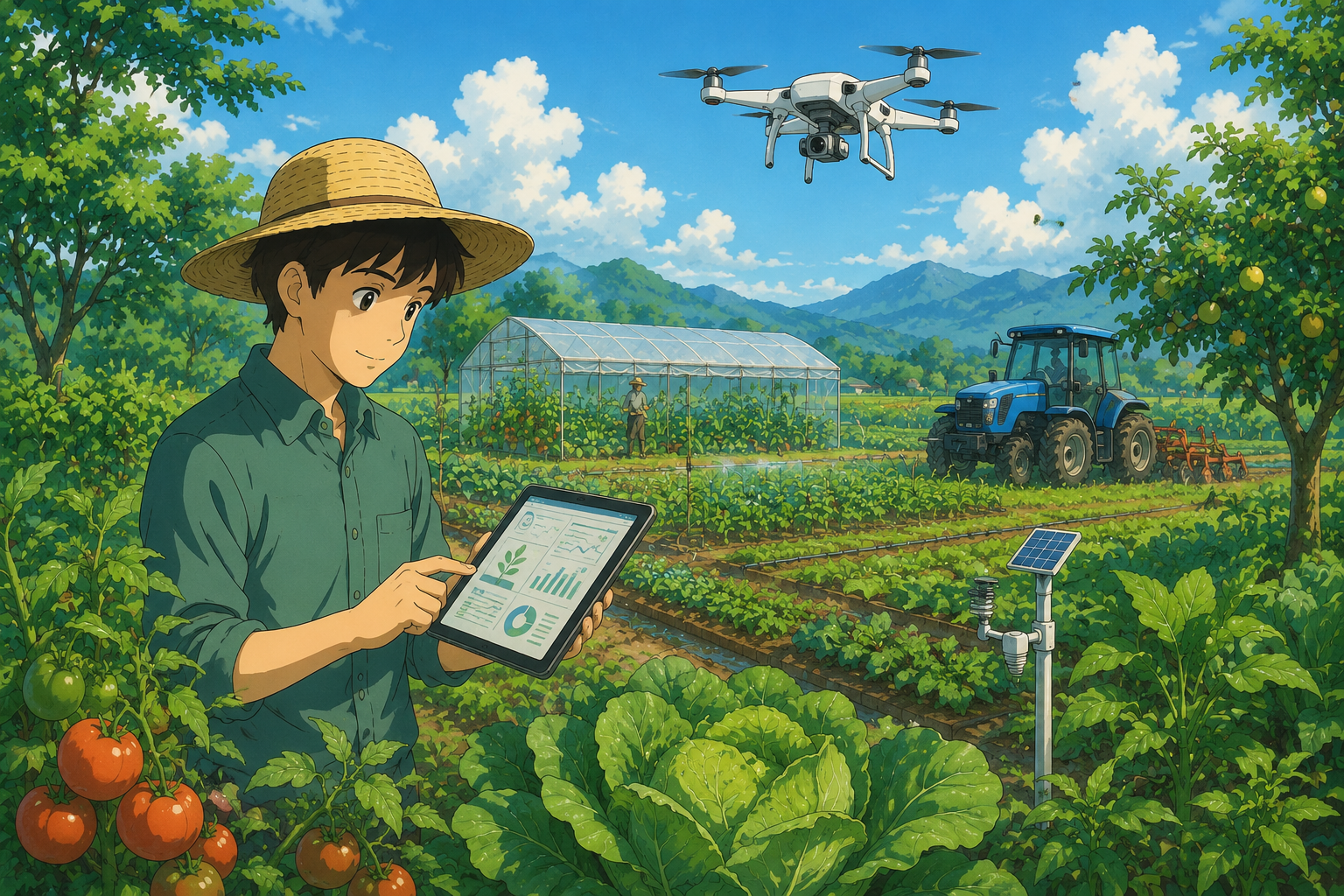
For centuries, farming was a game of predictability mixed with a heavy dose of luck. Farmers looked at the sky, felt the soil with their hands, and hoped for the best. Today, the script is completely flipping. The modern farm is becoming a hub of advanced technology, where data chips, satellites, and automation work alongside the tractor.
With a growing global population and increasingly unpredictable weather patterns, traditional farming methods alone are no longer enough to keep up. Farmers are facing pressure to grow more food using less land, less water, and fewer chemicals. This is where Agricultural Technology, or AgriTech, steps in. Far from being futuristic concepts, these innovations are practical, real-world tools that help farmers maximize their yields, cut unnecessary costs, and build a more sustainable business.
Smart Irrigation and IoT Soil Sensors
Water is one of the most precious resources on any farm, but managing it correctly has historically been difficult. Overwatering wastes money and leaches nutrients from the soil, while underwatering stresses the crop and destroys yield potential. Internet of Things (IoT) soil sensors have fundamentally changed this equation.
These small, durable devices are placed directly into the soil at various depths across a field. They constantly measure parameters like volumetric water content, soil temperature, and electrical conductivity (which indicates salinity and nutrient levels). The data is sent wirelessly to a farmer’s smartphone or computer in real time.
Instead of irrigating on a rigid calendar schedule, farmers can now apply water only when and where the soil actually needs it. Some advanced systems connect these sensors directly to automated irrigation valves. When the moisture drops below a specific threshold, the pumps turn on automatically and shut off the moment the soil is perfectly saturated. This targeted approach saves massive amounts of water and pumping energy while keeping plants in their optimal growing zone.
Drones and Satellite Imagery for Precision Crop Health
Evaluating the health of a 500-acre field by walking it is nearly impossible. By the time a disease or pest infestation is visible from the cab of a tractor, the damage is often already widespread. Drones and high-resolution satellite imagery give farmers a bird’s-eye view of their fields, turning reactive crop protection into proactive management.
Modern agricultural drones are equipped with multispectral sensors. These cameras capture light wavelengths that are invisible to the human eye, specifically near-infrared light. Healthy plants reflect a high amount of near-infrared light, while stressed or diseased plants absorb more of it.
By analyzing these light reflections, specialized software generates Normalized Difference Vegetation Index (NDVI) maps. These color-coded maps show exactly which parts of a field are thriving and which zones are under stress from pests, nutrient deficiencies, or poor drainage. A farmer can pinpoint a problem in a single 10-foot patch of a massive field, allowing them to apply fertilizer or pesticide only to that specific spot rather than spraying the entire crop.
Controlled Environment Agriculture (CEA) and Smart Greenhouses
Farming has always been at the mercy of seasonal changes, frosts, droughts, and heatwaves. Controlled Environment Agriculture (CEA) aims to eliminate environmental unpredictability by bringing the growing process indoors. This includes everything from high-tech automated greenhouses to vertical indoor farms.
Smart greenhouses use automated systems to manage the entire microclimate. Sensors monitor ambient temperature, relative humidity, carbon dioxide levels, and light intensity. If the afternoon sun gets too hot, automated shade cloths roll out, and cooling fans turn on. If the light drops on a cloudy day, specialized LED grow lights activate to give the plants the exact spectrum of light they need for photosynthesis.
Vertical farming takes this a step further by stacking crops in vertical layers inside warehouse-style facilities. These systems frequently use hydroponics (growing plants in water solutions) or aeroponics (misting roots with nutrient-rich water). Because the environment is completely sealed, pests are rarely an issue, eliminating the need for chemical pesticides. This method allows crops like leafy greens and herbs to be grown year-round, right next to major urban centers, significantly reducing transportation emissions.
Mobile Applications for Diagnostics and Market Access
Not all AgriTech requires heavy machinery or expensive setups. One of the most impactful revolutions is happening right inside the smartphone in a farmer’s pocket. Mobile applications are democratizing access to expert agronomic advice and transparent marketplace data.
Farmers can now use their phone cameras to photograph a strange spot on a leaf or a mysterious insect. Diagnostic apps scan the image against massive, verified databases of plant pathogens and pests to provide an instant identification and recommend safe, targeted treatment options. This stops outbreaks before they ruin an entire harvest.
Furthermore, digital marketplaces connect small-holder and independent farmers directly with buyers, seed suppliers, and logistics providers. By cutting out predatory middlemen, farmers get real-time price transparency, allowing them to sell their produce at fair market value and buy high-quality inputs without inflated markups.
A Real-Life Example: Transformation on a Family Farm
To understand the tangible impact of these technologies, consider the case of a mid-sized corn and soybean farm in America’s Midwest. For decades, the family applied a uniform amount of nitrogen fertilizer across their entire 800 acres every spring, based on general regional guidelines.
Three years ago, they invested in a combination of grid soil sampling, satellite NDVI mapping, and a variable-rate fertilizer spreader. The satellite data revealed that about 30% of their acreage featured highly fertile soil that required less added nitrogen, while 20% consisted of clay-heavy soil that needed a different nutrient blend to produce well.
By shifting to precision application, they reduced their overall fertilizer purchase by 15% in the first year alone. At the same time, their average corn yield increased by 8 bushels per acre because the nutrients were delivered exactly where the plants could utilize them best. The technology paid for itself within a single harvest cycle.
Step-by-Step Guide to Adopting AgriTech
Transitioning to tech-driven farming doesn’t have to happen all at once. Taking a calculated, step-by-step approach keeps risks low and rewards high.
- Identify Your Biggest Bottleneck: Look at your farm’s ledger and daily operations. Are you spending too much on water? Is weed control eating up your profits? Identify the one major problem you want technology to solve first.
- Start with Software and Mobile Tools: Before buying expensive hardware, download reputable agronomy and weather apps. Use free or low-cost satellite mapping services to get familiar with analyzing data maps of your land.
- Run a Small-Scale Pilot: If you want to introduce soil sensors or smart irrigation, test them on a single plot or field section first. Compare the yield and input costs of that test plot against your traditionally managed fields.
- Upgrade Equipment Gradually: When it is time to replace older machinery, look for implements that are compatible with GPS guidance and variable-rate applications.
- Invest in Training: Technology is only as good as the person operating it. Take the time to attend manufacturer webinars, read guides, or work with a certified digital crop consultant to fully understand how to interpret your data.
Common Mistakes to Avoid
- Buying Technology for the Sake of Trend: Do not purchase a high-end drone or a complex sensor system just because it sounds advanced. If the tool does not directly solve a problem that increases your efficiency or yield, it is a liability, not an asset.
- Ignoring Data Calibration: Sensors and automated machinery require regular cleaning and calibration. Out-of-calibration soil probes will give incorrect readings, leading to poor watering decisions.
- Overlooking Data Security and Ownership: Before signing up for a digital farm management platform, read the terms of service. Ensure that you retain full ownership of your farm’s yield and soil data, and understand how the provider protects that information.
- Failing to Have a Backup Plan: Technology can fail, batteries die, and wireless networks sometimes drop out. Always maintain enough basic farming knowledge to manage your crops manually if a system goes offline unexpectedly.
Practical Tips for Modern Farmers
- Utilize Free Government and Academic Resources: Many agricultural universities and extension offices provide free, localized data clearinghouses, soil mapping tools, and objective reviews of commercial AgriTech tools.
- Focus on Soil Health Records: Use digital tools to keep a multi-year history of your soil tests. Tracking how your organic matter and nutrient profiles change over time is key to long-term land productivity.
- Prioritize Battery Life and Durability: When purchasing field hardware like sensors, look for ruggedized enclosures with high IP (Ingress Protection) ratings and solar-assisted or long-life batteries that can withstand harsh weather and field cultivation.
Conclusion
AgriTech is not about replacing the timeless wisdom, intuition, and hard work of traditional farmers. Instead, it is about empowering them with clear, actionable insights. By replacing guesswork with precise data, these innovations allow farmers to protect their margins, preserve natural resources, and grow healthier, more abundant crops. The future of agriculture belongs to those who can marry practical field experience with the power of modern technology.
Frequently Asked Questions
1. Is AgriTech too expensive for small-scale independent farmers?
Not at all. While large autonomous tractors and factory-sized vertical farms involve major capital investments, many innovations are highly accessible. Mobile diagnostic apps, basic smartphone-connected soil probes, and cloud-based satellite mapping are affordable and offer a rapid return on investment for farms of any size.
2. Do I need an advanced degree in IT or computer science to use these tools?
No. Most modern AgriTech companies design their software with simple, user-friendly interfaces. If you can use a smartphone, check online banking, or navigate a GPS map, you can easily learn to use agricultural dashboards and sensor tools.
3. How do drones help save money on pesticides?
Instead of blanket-spraying an entire field with chemicals, drones create highly detailed health maps that show the exact location of weed patches or pest outbreaks. This allows farmers to perform spot-treatments, reducing chemical usage by up to 50% or more, which cuts input costs and protects the local environment.
4. Can smart irrigation systems work in areas with poor cellular connectivity?
Yes. Many field sensor networks utilize low-power, long-range wireless protocols (like LoRaWAN) to transmit data over several miles to a single gateway located at the main farm farmstead. This gateway can then sync to the internet via satellite or standard broadband, bypassing poor cellular coverage in remote fields.
5. Will indoor vertical farming completely replace traditional open-field farming?
It is highly unlikely. Vertical farming is excellent for high-value, fast-growing crops like leafy greens, herbs, and certain berries. However, large-scale staple crops like wheat, corn, rice, and soybeans require massive amounts of acreage and sunlight that are not economically or physically practical to replicate indoors. The two systems will continue to complement each other.