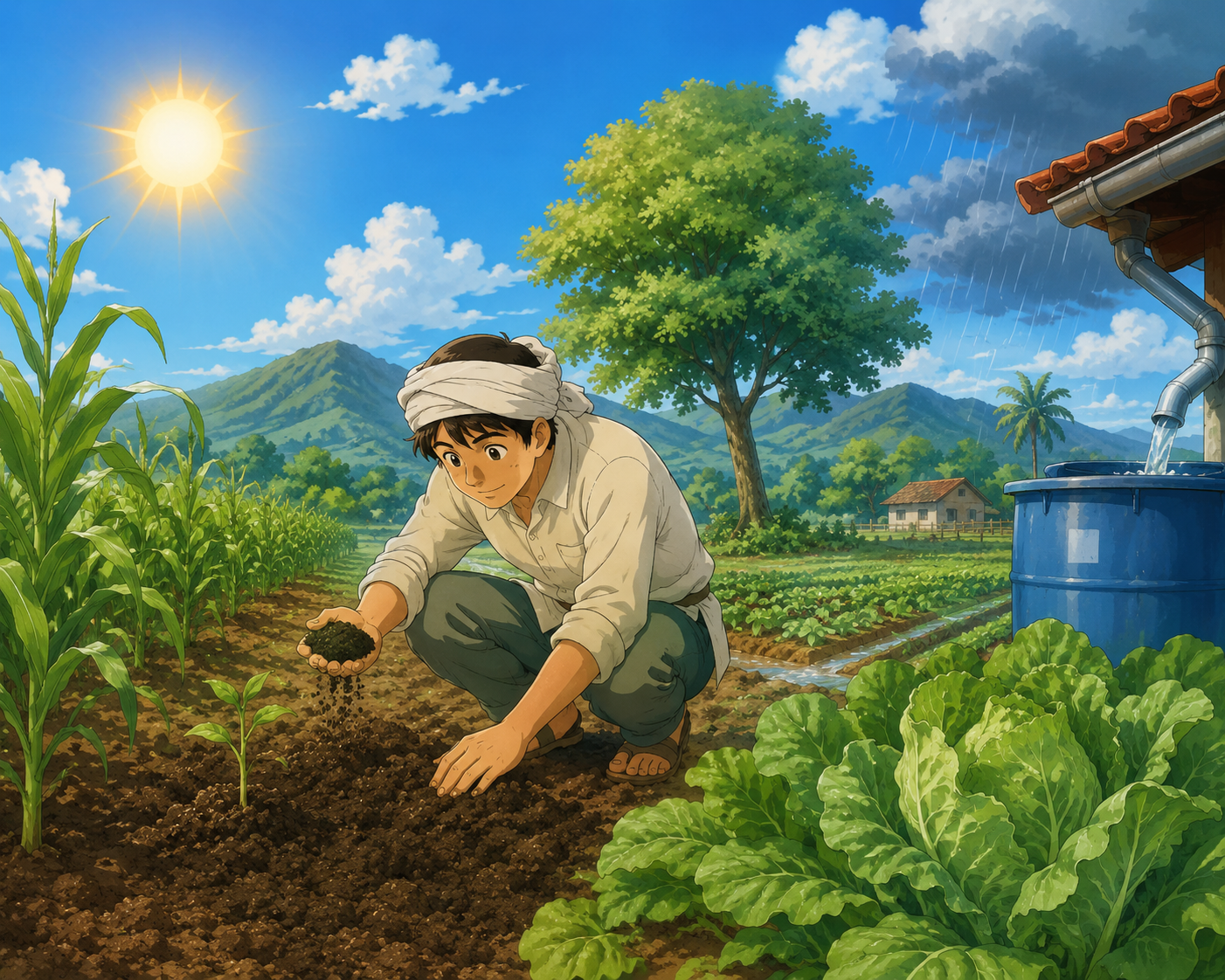
Farming is fundamentally a partnership with nature. But for many growers today, it feels like nature keeps changing the rules. Unpredictable weather patterns, sudden droughts, heavy unseasonal rains, and degraded earth are making it harder to secure a reliable harvest. The days of simply planting seeds and hoping for the best are long gone.
To succeed in modern agriculture, you have to actively manage both the ground beneath your feet and the elements above it. Understanding how to adapt to local climates and rebuild soil health is no longer just an option; it is the foundation of profitable, sustainable farming. This guide breaks down practical, proven strategies to protect your land, adapt to changing weather, and ultimately achieve better farming results year after year.
The Vital Connection Between Soil and Climate
Soil and climate are not separate issues; they are deeply connected. Healthy soil acts like a giant sponge. During heavy rains, it absorbs excess water, preventing runoff and erosion. During dry spells, it holds onto moisture, keeping plant roots hydrated long after the rain has stopped.
When soil is depleted of organic matter, it turns hard and lifeless. Water simply washes over the top, taking valuable topsoil with it. By managing your soil properly, you are essentially building an insurance policy against extreme climate events.
Practical Tips for Managing Soil Health
Improving your soil does not require expensive chemicals or massive equipment. It requires working with biological processes to bring the earth back to life.
Keep the Ground Covered
Bare soil is vulnerable soil. When the hot sun beats down on exposed dirt, it bakes the life out of the top layer and evaporates precious moisture. Planting cover crops—like clover, rye, or vetch—during the off-season protects the ground. These plants suppress weeds, prevent erosion, and naturally add nitrogen back into the earth when they are eventually cut down and left to decompose.
Minimize Tillage
Deep plowing used to be standard practice, but we now know it destroys the natural structure of the soil. Tilling breaks up the complex networks of beneficial fungi and earthworms that help plants access nutrients. It also exposes carbon stored in the soil to the air. Shifting to minimum or no-till farming preserves these underground ecosystems, leading to better water retention and healthier crops.
Feed the Soil, Not Just the Plant
Synthetic fertilizers give plants a quick boost, but they do very little to improve the long-term health of the soil. Focus on adding high-quality organic matter. Compost, well-aged animal manure, and crop residues feed the billions of microorganisms living in the dirt. When these microbes are well-fed, they break down minerals and make them easily available to your crop roots.
Adapting to Changing Climate Patterns
You cannot control the weather, but you can control how your farm responds to it. Adapting your daily practices makes your entire operation more resilient.
Upgrade Your Water Management
With rainfall becoming less predictable, every drop counts. Transitioning from overhead sprinklers to drip irrigation systems delivers water directly to the plant base. This drastically reduces water loss through evaporation. Additionally, consider shaping your land to capture runoff. Creating simple swales or digging small catch-ponds can store rainwater during heavy downpours for use during dry weeks.
Diversify Your Planting Strategy
Relying entirely on a single crop is a massive financial risk. If a sudden frost or specific disease hits, you could lose everything. Plant a wider variety of crops with different maturity dates and stress tolerances. If a heatwave damages your early summer vegetables, a heat-tolerant late-season crop can still provide a strong income.
A Real-Life Example: Breaking the Hardpan
Consider the story of a regional vegetable farmer who was struggling with severe drought conditions. His soil had developed a “hardpan”—a compacted layer of earth just below the surface caused by years of heavy tractor use. When it rained, water pooled on top and evaporated. When it was dry, his plant roots could not push deep enough to find moisture.
Instead of buying a larger tractor to rip up the soil, he changed his management strategy. He planted a specific cover crop known as “tillage radish.” These radishes grow deep, thick taproots that naturally drill through compacted soil. Over the winter, the radishes died and rotted in the ground, leaving behind deep channels. The following spring, water easily penetrated the soil, soaking deep into the earth. When a regional drought hit that summer, his fields stayed green and productive because his crops could finally access the deep water reserves, while neighboring farms suffered heavy losses.
Step-by-Step Guide: The At-Home Soil Texture Test
Before you can manage your soil, you need to know what kind of soil you have. You do not need a laboratory for this basic assessment. You can do the “Mason Jar Test” right at home.
Step 1: Dig down about six inches into your field and collect a handful of soil. Remove any large rocks, roots, or debris. Step 2: Fill a clear, straight-sided glass jar (like a mason jar) about one-third full with your soil sample. Step 3: Fill the rest of the jar with clean water, leaving an inch of space at the top. Add one drop of liquid dish soap to help the particles separate. Step 4: Cap the jar tightly and shake it vigorously for three solid minutes. Step 5: Set the jar on a flat surface where it will not be disturbed. Step 6: Watch the layers settle. Sand is the heaviest and will settle to the bottom within a minute. Silt will settle over the next few hours to form the middle layer. Clay is the finest particle and may take a few days to settle at the top. Step 7: Measure the thickness of each layer. This will tell you your exact soil texture (percentage of sand, silt, and clay), allowing you to make smarter decisions about watering and planting.
Common Mistakes to Avoid
Even experienced growers can fall into traps when trying to improve their land. Watch out for these frequent errors:
- Treating fertilizer as a cure-all: Adding more nitrogen won’t fix a soil structure problem. If your soil is compacted and lacks organic matter, plants cannot efficiently absorb the fertilizer you apply.
- Ignoring farm microclimates: The climate on the south-facing slope of your property is entirely different from the shaded, low-lying valley. Do not plant the same crops across varying microclimates and expect identical results.
- Overwatering to compensate for heat: When plants wilt in the afternoon sun, farmers often rush to water them. However, mid-day wilting is often a natural defense mechanism to conserve energy, not a sign of dry soil. Always check soil moisture below the surface before turning on the irrigation.
Moving Forward with Confidence
Improving your soil and adapting to climate shifts is not an overnight project. It takes patience, careful observation, and a willingness to try new methods. But the effort pays off. By keeping the ground covered, reducing heavy tillage, and managing water efficiently, you build an agricultural system that works with nature. Over time, your farm will require fewer expensive inputs, survive rough weather better, and produce higher-quality yields.
Frequently Asked Questions (FAQs)
How long does it take to see real improvements in soil health? While you might notice better water retention in just one season of using cover crops, truly rebuilding degraded soil takes time. Most farmers see significant, measurable changes in soil structure and crop resilience after three to five years of consistent organic management.
Can I improve my farm’s soil health on a tight budget? Absolutely. In fact, many soil-building practices save money. Reducing tillage cuts down on diesel fuel costs. Utilizing cover crops and locally sourced compost reduces the need to buy expensive synthetic fertilizers. The biggest investment is usually your time and attention, not cash.
Does a changing climate mean I have to stop growing my usual crops? Not necessarily, but you may need to adjust your timing or varieties. You might need to plant a few weeks earlier to avoid peak summer heat, or switch to a drought-resistant seed variety of the same crop. Adaptation is key.
What is the fastest way to add organic matter to depleted soil? The quickest method is applying a thick layer of high-quality, aged compost directly to the soil surface. Combining this with planting a fast-growing green manure crop (like buckwheat in the summer) will rapidly kickstart biological activity in the dirt.
Why is my soil forming a hard crust on top after it rains? Soil crusting happens when bare dirt is pounded by heavy raindrops, which breaks down the soil aggregates. As the sun dries the mud, it bakes into a hard crust that prevents seedlings from pushing through. You can prevent this entirely by keeping the soil covered with mulch or cover crops.