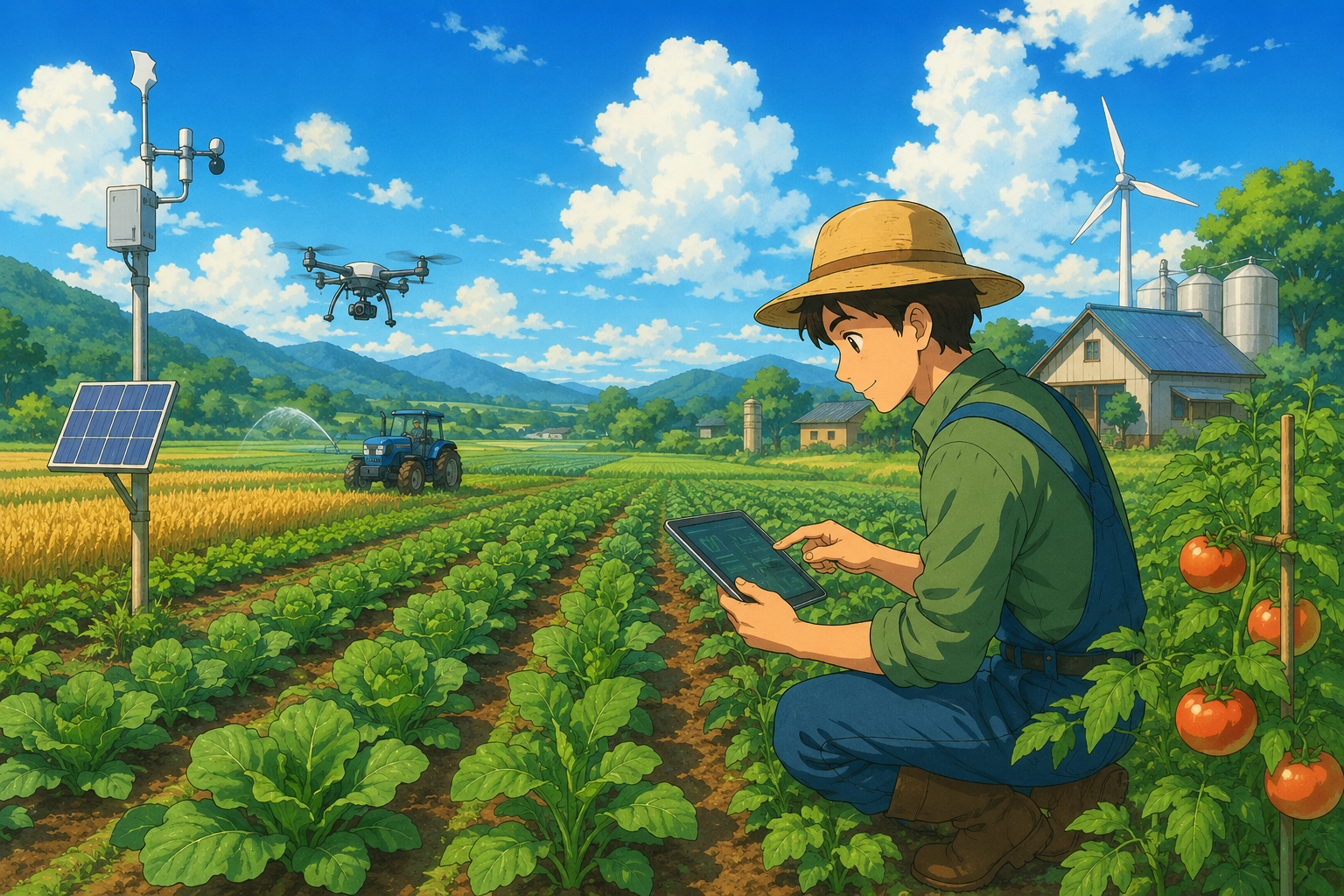
Farming has never been just about throwing seeds into the dirt and hoping for rain. Today, the stakes are higher than ever. With shifting weather patterns, rising input costs, and a growing consumer demand for clean food, the modern farmer is under immense pressure. We can no longer rely on the outdated methods of pouring endless chemicals and water onto fields. The future belongs to those who adapt and evolve.
Smart and sustainable farming is the bridge between traditional agricultural wisdom and modern technology. It is about working in harmony with nature, rather than fighting it, while using precise data to maximize your harvest. If you want to increase your crop yield, cut down on wasted resources, and leave vibrant, healthy soil for the next generation, you need a solid strategy. This guide will walk you through exactly how to combine smart technology with sustainable practices for a resilient, profitable farm.
The Core of Smart and Sustainable Agriculture
Many people mistakenly believe that sustainable farming means rejecting all modern tools, while others think smart farming requires spending millions on autonomous robots. Both views miss the mark.
At its heart, this approach is entirely about efficiency and balance. Sustainable farming focuses on building healthy soil, protecting local water sources, and promoting natural biodiversity. Smart farming provides the exact data and technology needed to make those sustainable practices highly effective. By combining the two, you stop guessing. You will know exactly when your crops need water, what nutrients your soil lacks, and how to defend against pests naturally before they become a massive problem.
Step-by-Step Guide to Upgrading Your Farm
Transitioning your farming methods does not happen overnight. It requires careful planning and a step-by-step approach to ensure your crops remain stable during the shift.
Step 1: Start with Deep Soil Analysis You cannot manage what you do not measure. Before planting a single seed, get a comprehensive soil test. Do not just look at the basic N-P-K (Nitrogen, Phosphorus, Potassium) levels. Look closely at your soil’s organic matter and microbial life. Smart farming starts with data, and your soil is the most critical database you possess.
Step 2: Choose Climate-Resilient Crops Stop trying to grow water-heavy crops in drought-prone areas. Select seed varieties that are naturally adapted to your specific local climate and soil type. Sustainable farming leans heavily on native resilience. By choosing the right crops from day one, you immediately reduce your reliance on artificial irrigation and heavy chemical support.
Step 3: Upgrade to Precision Irrigation Flooding fields is a massive waste of fresh water and washes away valuable topsoil. Install drip irrigation systems integrated with basic soil moisture sensors. This precise setup delivers water directly to the plant’s root zone only when the crop actually needs it, eliminating runoff and evaporation.
Step 4: Implement Integrated Pest Management (IPM) Instead of blanket-spraying strong pesticides, use a targeted approach. Introduce beneficial insects that naturally eat crop-destroying pests. Use smart traps that alert your phone when a specific pest population is rising. This allows you to treat only the affected rows, saving you money and protecting your local ecosystem.
Practical Tips You Can Apply Right Now
You do not need a massive budget to start making your farm smarter and more sustainable. Here are actionable steps you can implement immediately:
- Keep the soil covered: Never leave your topsoil exposed to the sun and wind. Plant cover crops like clover or rye during the off-season. They prevent erosion, fix free nitrogen into the soil, and suppress aggressive weeds.
- Rotate crops strategically: Planting the exact same crop in the exact same spot year after year drains specific nutrients and invites targeted pests. A strict rotation schedule breaks disease cycles naturally.
- Leverage localized weather data: Smart farming is about utilizing information. Use highly localized weather forecasting apps to time your planting, watering, and harvesting perfectly, minimizing weather-related losses.
- Start composting farm waste: Turn crop residue and animal manure into high-quality compost. This is a free, highly effective way to build soil organic matter and significantly reduce your annual fertilizer costs.
Real-Life Example: The Sensor-Driven Farm
Consider the difference between a traditional vegetable farm and a smart, sustainable one. A traditional grower might water the entire field on a fixed schedule—say, every Tuesday and Friday—regardless of the actual soil conditions. This habit often leads to overwatering, which causes root rot and leaches expensive nutrients deep away from the plants.
A smart grower takes a much more precise approach. By installing low-cost moisture sensors at different depths in the soil, the farmer monitors the exact hydration levels directly from a smartphone. In one real-life scenario, a tomato farmer noticed that the deeper soil layers were holding plenty of water, even when the surface looked incredibly dry. By adjusting the drip irrigation to run only when the deep root zone was actually thirsty, the farm cut its total water usage by 40%. The tomato plants were healthier, the roots grew deeper to find moisture, and the farmer saved thousands in electricity and pumping costs.
Common Mistakes to Avoid
Even experienced growers can stumble when adopting new methods. Keep an eye out for these frequent traps as you upgrade your farm:
Buying Tech Before Fixing the Soil The most advanced agricultural drone will not save a crop planted in dead, heavily compacted dirt. Always prioritize basic agronomy. Fix your soil health, improve your organic matter, and then bring in the technology to optimize your results.
Ignoring the Data Many farmers install expensive sensors or weather stations but never actually change their daily habits based on the readings. If a sensor tells you the soil is perfectly wet, but you turn on the pumps anyway simply because “it is watering day,” the technology is completely useless. You must learn to trust the data.
Over-Complicating the System Start small. You do not need to automate your entire farm in one single season. Implement one new sustainable practice or one piece of smart technology, master it thoroughly, and then move on to the next upgrade.
Conclusion
Farming is evolving rapidly. The old model of pushing maximum chemical inputs for maximum short-term yield is breaking down. The soil is getting tired, and the input costs are simply becoming too high to sustain.
Embracing smart and sustainable farming is not just about saving the environment; it is about fiercely protecting your own livelihood. By leveraging accurate data to make better decisions and relying on natural biological processes to build robust soil health, you create a farm that can survive harsh weather, market fluctuations, and rising costs. Start with your soil, observe your crops closely, and let technology help you work smarter, not harder.
Frequently Asked Questions (FAQ)
1. Is smart farming only for large, commercial operations? Not at all. While massive farms might use heavy machinery and satellite imaging, small farms can benefit just as much from affordable smart tools. Smartphone apps, simple drip irrigation timers, and basic soil sensors are highly effective and financially accessible for farms of any size.
2. How does sustainable farming actually improve profit margins? Sustainable farming drastically reduces your input costs over time. By improving soil health and relying on natural pest control, you spend far less money buying synthetic fertilizers, chemical pesticides, and electricity for excessive water pumping.
3. What is the best cover crop to start with? It depends heavily on your local climate and your primary cash crop, but legumes like clover, peas, or vetch are excellent starting points. They pull nitrogen directly from the air and fix it into the soil, acting as a natural, free fertilizer for your next planting season.
4. Can technology completely replace manual farm labor? No. Technology is a helpful tool, not a replacement for a farmer’s intuition and years of experience. Sensors can tell you if the soil is dry, but they cannot tell you if a plant looks stressed due to a subtle nutrient deficiency. The best results always come from combining smart data with a farmer’s trained eye.
5. How long does it take to see the benefits of sustainable practices? While you will save water and money almost immediately by using smart sensors, rebuilding natural soil health takes time. Most farmers see a significant, noticeable improvement in soil structure, earthworm activity, and overall crop resilience within two to three growing seasons.