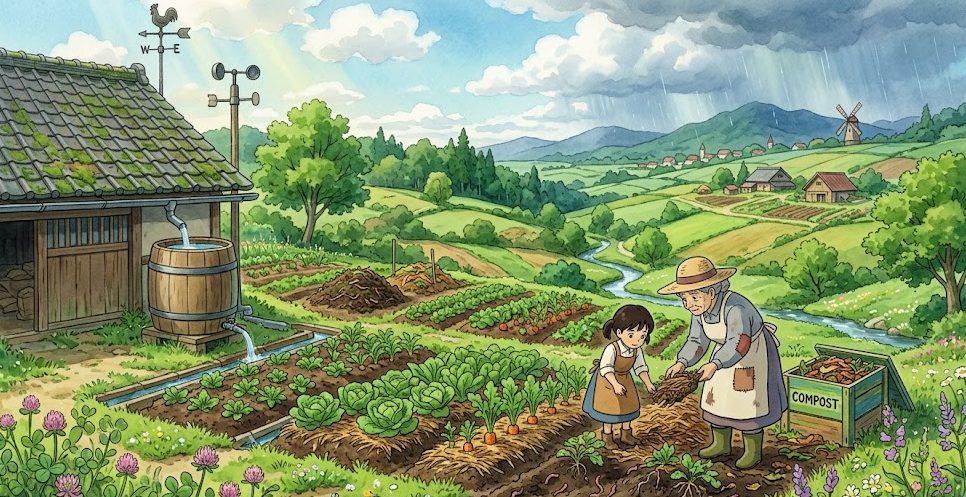
In the modern era of agriculture, farmers and commercial cultivators face a dual challenge: maintaining high crop yields while navigating the unpredictable realities of climate change. The days of relying solely on traditional farming methods are fading. Today, the most profitable and resilient agricultural operations are those that seamlessly integrate sustainable soil care with advanced weather adaptation strategies.
Understanding how to nurture the soil ecosystem while preparing for extreme weather events—be it severe droughts, unexpected frosts, or torrential downpours—is no longer just an environmental ideal; it is a critical business strategy. This comprehensive guide explores the advanced techniques required to build climate-resilient farms, optimize soil health, and ensure long-term agricultural profitability.
The Foundation of Resilient Farming: Sustainable Soil Care
Soil is not just dirt; it is a complex, living ecosystem teeming with microorganisms, fungi, and essential nutrients. Sustainable soil care revolves around “regenerative agriculture”—practices that restore the soil’s natural biology rather than depleting it through chemical overuse.
1. Organic Matter and the Soil Microbiome
The secret to high-yield farming lies in the organic matter content of the soil. Incorporating compost, organic manure, and biochar significantly boosts the soil microbiome. A healthy microbiome breaks down nutrients more efficiently, making them readily available to plant roots. Furthermore, increasing soil organic matter by just 1% can dramatically increase the soil’s water-holding capacity, which is crucial during dry spells.
2. Cover Cropping and Crop Rotation
Leaving soil bare between growing seasons exposes it to wind and water erosion. Implementing a robust cover cropping system (planting crops like clover, rye, or vetch) protects the topsoil, suppresses weed growth, and naturally fixes atmospheric nitrogen into the ground. When combined with strategic crop rotation, farmers can naturally disrupt pest life cycles and prevent the depletion of specific soil nutrients, reducing the need for expensive synthetic fertilizers.
3. No-Till and Reduced-Tillage Farming
Traditional plowing and deep tilling disrupt the delicate fungal networks (mycorrhizae) within the soil and release stored carbon into the atmosphere. Transitioning to no-till or reduced-tillage farming preserves soil structure, improves moisture retention, and drastically cuts down on diesel fuel costs for heavy machinery.
Advanced Weather Strategies for Climate Adaptation
Even with perfect soil, unpredictable weather can devastate a harvest. Modern weather strategies require a proactive approach, utilizing both physical infrastructure and data-driven technologies to shield crops from climatic extremes.
1. Precision Irrigation and Water Management
Water scarcity is one of the most pressing challenges in global agriculture. Transitioning from flood irrigation to precision systems—such as automated drip irrigation and micro-sprinklers—ensensures that water is delivered directly to the plant’s root zone with minimal evaporation.
- Rainwater Harvesting: Large-scale commercial farms are increasingly investing in sophisticated rainwater harvesting and retention ponds to secure an independent water supply during prolonged droughts.
- Soil Moisture Sensors: Integrating IoT (Internet of Things) soil moisture sensors allows farmers to irrigate only when necessary, preventing waterlogging and conserving vital resources.
2. Microclimate Modification
Farmers can physically alter the environment immediately surrounding their crops to protect against severe weather.
- Windbreaks and Shelterbelts: Planting strategic rows of trees or shrubs along the perimeter of a farm significantly reduces wind velocity, preventing physical damage to delicate crops and reducing topsoil erosion.
- Shade Nets and High Tunnels: As global temperatures rise, heat stress becomes a major threat to crop viability. Utilizing UV-filtering shade nets or cultivating high-value crops inside climate-controlled high tunnels protects plants from scorching sun, heavy hail, and unexpected frost.
3. Predictive Analytics and Smart Weather Forecasting
Gone are the days of relying on the farmer’s almanac. Today’s smart farming operations utilize hyper-local, AI-driven weather forecasting models. By subscribing to advanced meteorological services, farm managers receive real-time alerts regarding frost threats, incoming storms, or heat waves. This advance notice provides the crucial window needed to deploy protective covers, adjust irrigation schedules, or accelerate harvesting.
The Synergy: How Soil Health Mitigates Weather Extremes
The true power of modern agriculture is realized when sustainable soil care and weather strategies are integrated. They are not isolated concepts; they work in a powerful synergy.
- Drought Resilience: Soil that is rich in organic matter and protected by cover crops acts like a giant sponge. During periods of low rainfall, this soil retains moisture significantly longer than degraded, heavily tilled soil, allowing crops to survive and thrive even under drought conditions.
- Flood and Erosion Defense: Conversely, during extreme rainfall, healthy soil structure allows water to infiltrate deeply into the ground rather than running off the surface. The deep root systems of cover crops anchor the earth, preventing devastating topsoil erosion and nutrient leaching during heavy storms.
Conclusion: Investing in Agricultural Longevity
Transitioning to sustainable soil care and implementing advanced weather strategies requires an initial investment of time, education, and capital. However, the long-term Return on Investment (ROI) is undeniable. Farms that prioritize regenerative practices and climate adaptation benefit from lower chemical input costs, higher and more consistent crop yields, and a profound resilience against a changing global climate.
By treating the soil as a living asset and utilizing technology to outsmart unpredictable weather, the modern agricultural sector can ensure food security and financial profitability for generations to come.