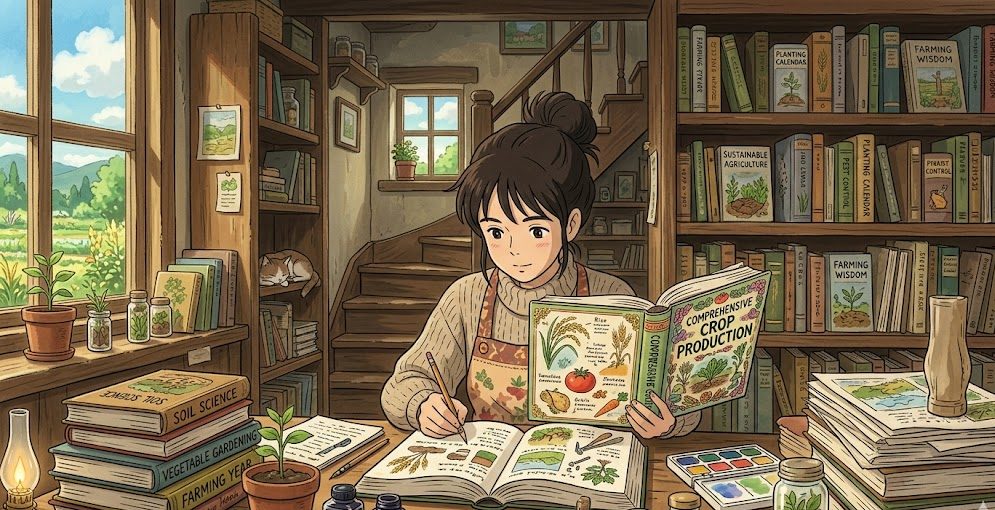
Farming has fundamentally transformed. What was once an industry reliant on generational intuition and unpredictable weather patterns has evolved into a highly precise, data-driven science. To navigate this complex landscape, modern agriculturalists, investors, and agritech developers rely on a critical tool: the Comprehensive Crop Production Manual.
Whether you are managing a sprawling traditional farm or exploring cutting-edge indoor systems, these manuals serve as the ultimate blueprint for success. In this comprehensive guide, we will explore what these manuals entail, why they are essential for profitability, and how they are adapting to the future of sustainable agriculture.
What is a Comprehensive Crop Production Manual?
A Comprehensive Crop Production Manual is an exhaustive, step-by-step document detailing the optimal agricultural practices required to cultivate a specific crop from seed to harvest. Think of it as the standard operating procedure (SOP) for farming.
These manuals are traditionally developed by agricultural universities, government research bodies, and agritech companies. They remove the guesswork from farming by providing scientifically backed guidelines tailored to specific climates, soil types, and technological setups.
The Core Components of a Standard Manual
While every crop requires a unique approach, a high-quality production manual generally covers the following critical phases:
- Site Selection and Preparation: Guidelines on optimal topography, climate requirements, and initial soil treatment (like tilling or leveling).
- Seed Selection and Sowing: Recommendations for high-yielding, disease-resistant seed varieties, alongside precise spacing and depth metrics for planting.
- Nutrient and Water Management: Detailed schedules for irrigation and fertilization, ensuring the crop receives exact nutritional values at specific growth stages without wasting resources.
- Integrated Pest Management (IPM): Strategies to identify, monitor, and control pests and diseases using a combination of biological, cultural, and chemical tools.
- Harvesting and Post-Harvest Protocols: Timing the harvest for maximum market value and safe storage techniques to prevent spoilage and secure profit margins.
The Evolution: Manuals for Next-Generation Farming
As the global demand for food increases alongside environmental constraints, agriculture is rapidly shifting toward highly controlled, sustainable environments. Consequently, Crop Production Manuals are no longer just about plows and tractors; they have evolved to cover sophisticated, non-traditional farming methods.
1. Precision Organic Farming
Modern manuals for organic crop production are incredibly detailed. Because synthetic fertilizers and pesticides are prohibited, these guides focus heavily on building resilient soil biomes. They provide precise instructions on crop rotation cycles, composting techniques, and cultivating beneficial insects to manage pests naturally, ensuring the final product meets strict organic certification standards.
2. Hydroponics and Vertical Farming
In soil-less systems, the margin for error is razor-thin. A production manual for a vertical hydroponic farm reads more like a chemistry and engineering textbook. It dictates exact pH levels, electrical conductivity (EC) parameters for nutrient solutions, water temperature, and optimal LED light spectrums. These manuals allow growers to maximize yields in minimal square footage, turning urban warehouses into high-production agricultural hubs.
3. Specialized Cultivation (e.g., Mushroom Farming)
Specialty crops require entirely different blueprints. For instance, mushroom cultivation manuals do not discuss sunlight or soil. Instead, they focus on substrate sterilization, precise humidity control, spore inoculation techniques, and managing carbon dioxide levels inside fruiting chambers. Having a comprehensive guide is the only way to successfully scale such environmentally sensitive operations.
Why are Crop Production Manuals Crucial for Agribusiness?
For anyone looking to build a profitable agricultural venture, operating without a comprehensive manual is a significant financial risk. Here is why these documents are the backbone of agricultural success:
1. Maximizing Yields and Profitability
By following optimized, scientifically proven steps, farmers can push a crop to its maximum genetic potential. Knowing exactly when to apply a specific nutrient can increase a harvest’s volume and quality, directly translating to higher market prices and increased revenue.
2. Resource Efficiency and Sustainability
Agriculture is incredibly resource-intensive. Comprehensive manuals promote sustainable practices by teaching farmers how to use exactly what is needed and nothing more. Precision irrigation schedules prevent water waste, while targeted fertilizer applications prevent chemical runoff into local water systems. This efficiency lowers operational costs while protecting the environment.
3. Risk Mitigation
Farming is inherently risky, but knowledge is the best insurance. Manuals prepare growers for worst-case scenarios, offering diagnostic charts to quickly identify plant diseases or nutrient deficiencies before they wipe out an entire crop. This rapid response capability is essential for safeguarding investments.
4. Standardization for Scaling
If an agribusiness wants to expand across multiple locations or hire new farm managers, standardized manuals ensure consistency. Regardless of who is running the day-to-day operations, the crop quality remains uniform because every team member is following the exact same playbook.
How to Utilize a Crop Production Manual Effectively
Simply having a manual is not enough; it must be implemented correctly. Here are best practices for utilizing these guides:
- Localize the Data: A manual written for agriculture in the American Midwest will need adjustments if applied in South Asia. Always cross-reference standard manuals with local weather data and soil tests.
- Keep it Updated: Agricultural science moves fast. Ensure your manual includes the latest research on climate-resilient seed varieties and new pest management technologies.
- Digitize and Automate: The most successful modern farms digitize their manuals, integrating the data into farm management software. This allows automated systems—like smart irrigation controllers—to execute the manual’s instructions flawlessly.
Conclusion
Comprehensive Crop Production Manuals are much more than just instructional booklets; they are the foundational software that runs successful agricultural hardware. From the expansive fields of traditional organic farming to the high-tech, climate-controlled rooms of vertical farming and hydroponics, these guides ensure that every drop of water, ray of light, and seed planted is optimized for success.
As the agricultural industry continues to innovate, those who diligently follow, adapt, and refine their production manuals will be the ones leading the charge toward a more sustainable, profitable, and food-secure future.