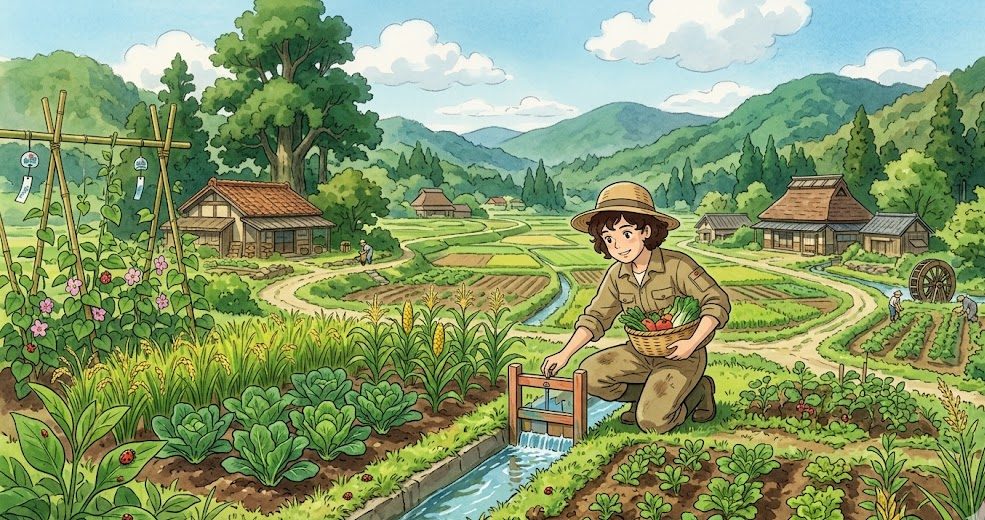
Water is quickly becoming the most valuable—and unpredictable—input in modern agriculture. With unpredictable weather patterns, shrinking aquifers, and rising utility costs, relying solely on heavy irrigation is no longer a viable long-term strategy for farmers.
The future of profitable farming belongs to those who know how to optimize every single drop.
Fortunately, choosing the right crops can mean the difference between a dry, empty wallet and a thriving, high-yield season. This ultimate guide breaks down the top high-profit, low-water crops, along with the smart management practices you need to maximize your financial returns while preserving your water resources.
The Economic Shift Toward Drought-Resilient Agriculture
For decades, the standard playbook for increasing agricultural profit was simple: apply more fertilizer and turn on the pumps. Today, that equation is broken. Pumping water requires energy, and energy costs money. Furthermore, strict water regulations in many agricultural zones mean that over-irrigation can result in heavy fines or depleted allocations.
When you switch to drought-tolerant or water-efficient crops, your overhead costs plummet. Even if these crops occasionally yield slightly less volume than water-guzzling varieties, the net profit margin per acre is often significantly higher because your input costs are so low.
Top High-Profit Crops for Low-Water Environments
When looking for crops that offer excellent financial returns without demanding a flooded field, you need to look at varieties with deep root systems, short growing cycles, or high market demand in specialized niches.
Here are the top contenders for maximizing profit with minimal water:
1. Grain Sorghum (Milo)
Often called the “camel of crops,” grain sorghum is an incredibly resilient alternative to corn. While corn requires consistent, heavy moisture during its pollination phase, sorghum can literally “go to sleep” during a dry spell and resume growth when it rains.
- Profit Potential: High demand for livestock feed, ethanol production, and gluten-free consumer food products.
- Water Requirement: Requires roughly 30% to 40% less water than traditional field corn.
2. Chickpeas and Lentils (Pulses)
The global rise in plant-based diets has caused the demand for pulses to skyrocket. Chickpeas and lentils are uniquely adapted to arid and semi-arid regions.
- Profit Potential: Premium pricing in health food markets and excellent rotational crop value.
- The Bonus: They are nitrogen-fixing crops. They pull nitrogen from the air and pump it into the soil, saving you thousands of dollars on synthetic fertilizer costs for your next crop rotation.
3. Lavender and Culinary Herbs
If you are operating on a smaller acreage or running a market garden, cash crops like lavender, rosemary, and thyme are goldmines. These plants originate from the Mediterranean and actually thrive in poor, sandy, and dry soils.
- Profit Potential: Extremely high value per acre. You can sell fresh bundles, dried flowers, or process them into high-value essential oils and value-added skincare products.
- Water Requirement: Once established, they require minimal supplemental watering and hate soggy roots.
4. Safflower and Sunflower (Oilseeds)
Both safflower and sunflowers feature massive, aggressive taproots that can reach deep into the subsoil profile to extract moisture that other crops cannot reach.
- Profit Potential: The market for healthy, high-oleic cooking oils is booming. Sunflowers also offer secondary revenue streams through agritourism (flower picking and photography passes).
- Water Requirement: Highly drought-tolerant once the root system is established in the early growth stages.
5. Amaranth and Quinoa (Ancient Grains)
Ancient grains are no longer a niche health-food fad—they are mainstream staples. Both amaranth and quinoa evolved in harsh, dry climates with poor soil quality.
- Profit Potential: Commands a much higher price per bushel than standard wheat or barley.
- Water Requirement: Exceptionally drought-resistant; over-watering can actually stunt their growth and lower your yields.
Smart Water Management Practices to Double Your Profits
Choosing the right crop is only half the battle. To truly maximize your profits, you must pair your crop selection with water-smart soil and field management techniques.
Implement No-Till or Minimum-Till Farming
Every time a tractor passes over a field with a disk or plow, the soil is turned over, exposing trapped moisture to the sun and wind. This causes immediate evaporation. By practicing no-till farming, you leave crop residue (like old stalks and leaves) on the surface. This acts as a natural blanket, keeping the soil cool and locking in moisture.
Focus Heavily on Soil Organic Matter (SOM)
Think of soil organic matter as a giant sponge beneath your fields. For every 1% increase in soil organic matter, an acre of land can hold roughly 20,000 gallons of additional water. You can build SOM by:
- Planting diverse cover crops during the off-season.
- Applying compost or well-rotted livestock manure.
- Avoiding excessive chemical inputs that degrade soil biology.
Transition to Precision Drip Irrigation
If you must irrigate, move away from high-pressure overhead sprinklers. On a hot, windy day, up to 30% of the water sprayed from an overhead pivot evaporates before it even touches the dirt. Drip irrigation, on the other hand, delivers water directly to the base of the plant root zone, achieving nearly 95% water-use efficiency.
Comparing the Numbers: High-Water vs. Low-Water Crops
To see the economic benefit clearly, let’s take a look at how low-water crops stack up against traditional high-water choices:
| Crop Type | Water Demand | Average Input Costs | Market Stability | Profit Margin Potential |
| Alfalfa / Corn | Extremely High | High (Pumping & Fertilizer) | Volatile | Moderate (Heavy Overhead) |
| Grain Sorghum | Low to Medium | Low | Steady | High (Low Overhead) |
| Chickpeas / Pulses | Low | Low (Fixes own Nitrogen) | Growing | Very High |
| Lavender / Herbs | Minimal | Low to Medium | Highly Profitable | Excellent (Niche Market) |
The Long-Term Financial Play: Drought Insurance and Incentives
In many regions, governments and environmental agencies offer financial grants, subsidies, and favorable insurance premiums to farmers who actively adopt water-conserving practices or transition to drought-resilient crops.
Before you plant your next field, check with your local agricultural extension office or environmental agency. You may qualify for cost-sharing programs that help pay for your cover crop seeds, drip irrigation setups, or no-till equipment conversions. This instantly boosts your bottom line before the harvest even begins.
Final Thoughts: The Future is Lean and Clean
Farming successfully with less water isn’t about giving up on high profits; it’s about farming smarter. By shifting your focus toward high-value, drought-tolerant crops like pulses, ancient grains, or niche herbs, and protecting your soil’s natural moisture, you shield your agribusiness from climate volatility.
The equation is simple: Lower your water usage, lower your input costs, target high-demand markets, and watch your profit margins grow.