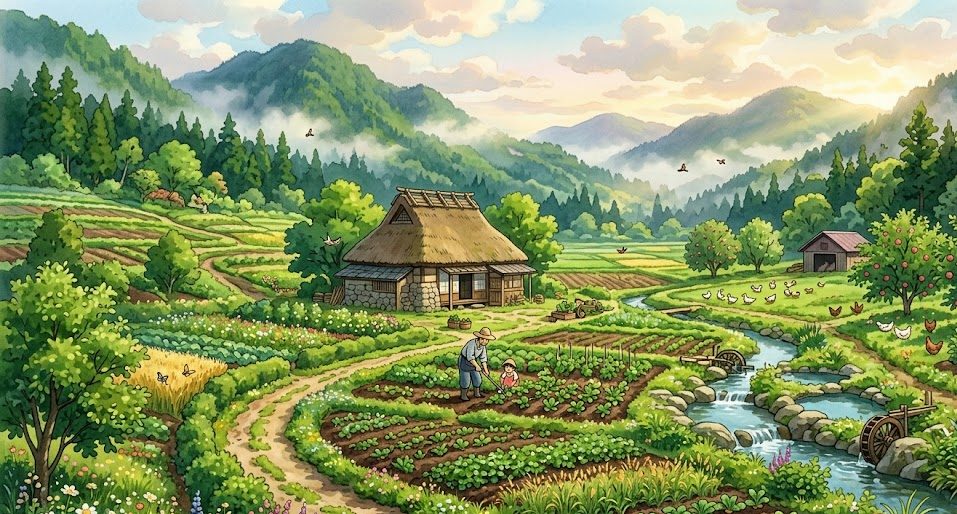
In an era of unpredictable weather patterns and degrading arable land, nature-focused farming has emerged as the most viable solution for the modern agriculturist. This approach doesn’t just aim for high yields; it focuses on building a self-sustaining ecosystem that can withstand droughts, floods, and pests while naturally regenerating the soil.
1. The Foundation: Understanding Soil Health
Soil is not just “dirt”; it is a living, breathing biological engine. To optimize soil health, we must treat it as a long-term asset rather than a medium for chemical inputs.
The Five Pillars of Soil Health:
- Soil Cover: Always keep the soil covered with living plants or residue (mulch). Bare soil is vulnerable to erosion and extreme temperature fluctuations.
- Minimal Disturbance: Reducing tillage (plowing) preserves the complex network of fungal hyphae and earthworm tunnels that provide soil structure.
- Plant Diversity: Different plants have different root depths and nutrient requirements. A diverse field prevents nutrient depletion.
- Living Roots: Keeping active roots in the ground year-round (through cover crops) feeds the soil microbes that provide nutrients to your main crops.
- Livestock Integration: Responsibly managed grazing can return organic matter to the soil in the form of natural manure, closing the nutrient loop.
2. Strategies for Climate Resilience
Climate resilience refers to a farm’s ability to recover from extreme weather events. Nature-focused farming uses the environment as a buffer.
Water Management and Retention
One of the biggest threats today is water scarcity followed by flash floods.
- Increasing Organic Matter: For every 1% increase in soil organic matter, an acre of land can hold an additional 20,000 gallons of water. This acts as a sponge during heavy rain and a reservoir during dry spells.
- Keyline Design: This involves plowing or planting along the natural contours of the land to slow down water runoff and ensure it soaks into the soil rather than washing away topsoil.
Agroforestry and Windbreaks
Planting trees and shrubs around or within crop fields (Agroforestry) serves multiple purposes:
- Micro-climate Regulation: Trees provide shade, lowering the ambient temperature of the crops below.
- Wind Protection: Tall tree lines break the force of heavy winds, preventing crop lodging and reducing soil moisture evaporation.
3. Optimizing Nutrient Cycling Without Chemicals
The transition to nature-focused farming requires moving away from synthetic NPK (Nitrogen, Phosphorus, Potassium) fertilizers, which can kill beneficial soil microbes over time.
Green Manures and Cover Crops
Instead of buying nitrogen, grow it. Leguminous cover crops like clover, vetch, or peas “fix” atmospheric nitrogen into the soil. When these plants are terminated and left on the surface, they slowly release nutrients for the next crop.
Bio-Simulants and Compost
- Vermicompost: Using earthworms to process organic waste creates a nutrient-rich humus that is far superior to chemical fertilizers in terms of long-term soil structure.
- Liquid Ferments: Utilizing fermented plant juices or “Jeevamrut” (a traditional bio-pesticide and fertilizer) introduces billions of beneficial bacteria directly to the root zone.
4. Practical Implementation: A Seasonal Roadmap
Implementing these changes doesn’t happen overnight. It requires a systematic shift in management.
Phase 1: The Transition (Year 1)
Start by reducing tillage and introducing a single cover crop during the fallow season. Monitor your soil’s pH and organic carbon levels to establish a baseline.
Phase 2: Building Complexity (Year 2-3)
Introduce multi-species cover crops (a mix of grasses, legumes, and brassicas). Begin experimenting with biological pest controls like pheromone traps or botanical sprays (neem/garlic) to reduce chemical reliance.
Phase 3: Total Ecosystem Integration (Year 4+)
At this stage, the soil biology should be doing most of the heavy lifting. You will notice fewer pest outbreaks and better water retention. This is when you can explore specialty markets for “Regenerative” or “Organic” produce, which command much higher prices.
5. The Economic Case for Nature-Focused Farming
Is it profitable? The answer is a resounding yes, but the profit comes from cost reduction rather than just volume.
- Lower Input Costs: By growing your own fertilizers (cover crops) and managing pests naturally, you slash your expenditure on commercial chemicals.
- Energy Savings: Reduced tillage means fewer tractor passes, saving significantly on fuel and machinery maintenance.
- Crop Insurance: Healthy, resilient soil acts as a natural insurance policy against crop failure due to drought.
- Premium Pricing: Consumers are increasingly looking for “Earth-friendly” products, allowing farmers to bypass traditional middle-men and sell directly to conscious consumers.
Conclusion: Farming with the Future in Mind
Nature-focused farming is a return to wisdom combined with modern scientific understanding. By optimizing for climate resilience and soil health, we aren’t just farming for today’s harvest; we are ensuring that the land remains productive for the next generation.
For the modern digital entrepreneur in the agri-space, this content highlights the intersection of sustainability and profitability—a niche that is currently seeing massive growth in both search volume and investor interest.