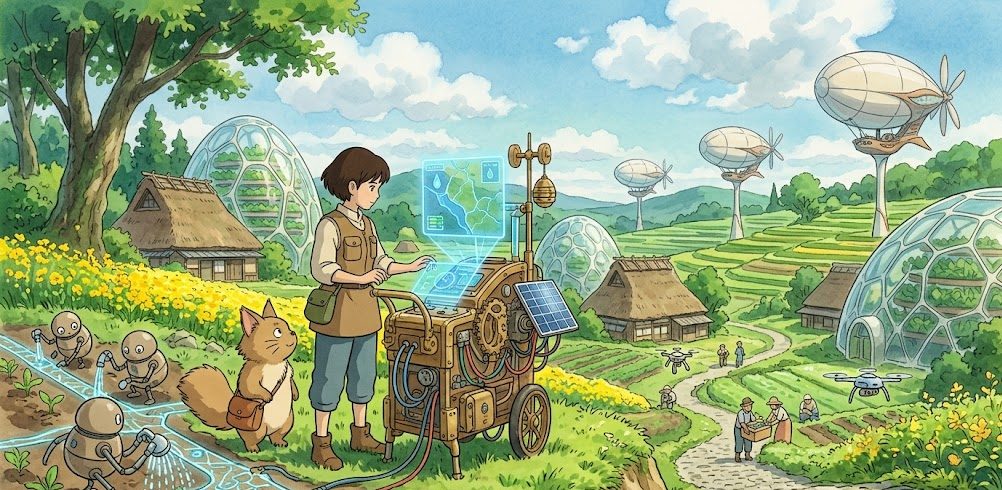
The image of farming is undergoing a radical transformation. For centuries, the “traditional field” was defined by manual labor, seasonal guesswork, and a heavy reliance on unpredictable weather patterns. Today, that field is being re-imagined as a high-tech laboratory. We are currently in the midst of Agriculture 4.0, a digital revolution where data is as valuable as seeds and code is as essential as a tractor.
From the depths of the soil to the heights of orbital satellites, technology is solving the age-old challenges of food security, sustainability, and efficiency. Here is an in-depth look at how innovation is revolutionizing the oldest industry on Earth.
1. Precision Agriculture: Every Inch Matters
Traditional farming often involved “broadcast” methods—applying the same amount of water, fertilizer, or pesticide across an entire field. This was not only wasteful but often environmentally damaging.
Precision Agriculture changes this by treating every square inch of a field as a unique data point.
- Variable Rate Technology (VRT): Modern machinery equipped with VRT can adjust the flow of seeds or chemicals in real-time as the tractor moves.
- Soil Sensors: These IoT (Internet of Things) devices stay buried in the ground to monitor moisture, pH levels, and nutrient density. Instead of watering the whole farm, an automated system only activates the sprinklers in the specific zones that are thirsty.
By using “just enough” of what is needed, farmers are seeing significant cost savings while drastically reducing the runoff of chemicals into local water systems.
2. The Eye in the Sky: Drones and Satellites
Monitoring hundreds of acres on foot is nearly impossible. Today, farmers are taking to the sky to get a “bird’s-eye view” of their operations.
Agricultural Drones
Drones have become the ultimate scouting tool. Equipped with multispectral sensors, they can see things the human eye cannot. They can detect “crop stress” (plants that are beginning to fail due to pests or disease) days before it becomes visible to a person on the ground.
- Precision Spraying: Some drones are now large enough to carry tanks, allowing them to spot-treat infested plants with surgical precision, rather than spraying the whole field from a plane.
Satellite Imagery
With the rise of private space tech, high-resolution satellite imagery is now affordable for individual farmers. These satellites provide weekly “health maps” of farms, allowing growers to track growth patterns across entire regions and predict yields with startling accuracy.
3. Autonomous Machinery and Robotics
The labor shortage in agriculture is a global crisis. Technology is stepping in to fill the gap through automation.
- Self-Driving Tractors: Much like autonomous cars, GPS-guided tractors can now plow, sow, and harvest with centimeter-level accuracy. They can operate 24/7, even in total darkness or heavy fog, maximizing the short windows of perfect planting weather.
- Weeding Robots: Instead of using herbicides, new robots use computer vision to identify weeds and “zap” them with high-energy lasers or pull them mechanically.
- Fruit-Picking Arms: Soft-robotics and AI-vision systems are now delicate enough to pick berries and apples without bruising them—a task that was once thought to be exclusively human.
4. Artificial Intelligence (AI) and Big Data
The most powerful tool in a modern farmer’s arsenal isn’t a plow; it’s an algorithm.
Agriculture generates massive amounts of data—weather logs, soil history, market prices, and genetic info. AI-driven platforms process this “Big Data” to provide actionable insights.
- Predictive Analytics: AI can tell a farmer exactly when to harvest to get the best market price or warn them of a pest outbreak that is moving toward their zip code.
- Climate Modeling: As global weather patterns shift, AI helps farmers select the best crop varieties that can survive heatwaves or unexpected floods specific to their micro-region.
5. The Genetic Frontier: CRISPR and Bio-Tech
Innovation isn’t just happening around the plant; it’s happening inside it.
The traditional method of cross-breeding plants to get better traits could take decades. With CRISPR gene-editing technology, scientists can now “edit” the DNA of a plant in a single season.
- Drought Resistance: Developing crops that require 30% less water.
- Enhanced Nutrition: Creating “super-crops” like Golden Rice or bio-fortified vegetables that carry higher levels of essential vitamins.
- Blight Resistance: Saving entire species, like the banana or the cacao tree, from fungal diseases that threaten to wipe them out.
6. Blockchain: Transparency from Seed to Shelf
Modern consumers want to know where their food comes from. Blockchain technology is revolutionizing the agricultural supply chain by creating an unchangeable record of a product’s journey.
By scanning a QR code on a carton of eggs or a bag of spinach, a consumer can see exactly which farm it came from, when it was harvested, and even the temperature of the truck that transported it. This doesn’t just build trust; it makes food recalls incredibly fast and efficient, potentially saving lives during outbreaks of foodborne illness.
Why This Matters: The Sustainability Mandate
By 2050, the global population is expected to reach nearly 10 billion. To feed everyone, we must produce 60% more food than we do today, but with less land and less water.
Technology is the only way to bridge this gap. It allows us to:
- Reduce Waste: Minimizing the loss of crops to pests and spoilage.
- Protect Biodiversity: By producing more on existing land, we prevent the need to clear-cut more forests for new farms.
- Lower Carbon Footprints: Precision tech means fewer tractor passes (less fuel) and fewer chemicals (less nitrous oxide emissions).
Final Thoughts: The Farmer of the Future
The farmer of the future will be part agronomist, part data scientist, and part mechanical engineer. While the tools are changing, the core mission remains the same: stewardship of the land and nourishment of the people.
The digital revolution in the traditional field is no longer a luxury—it is a necessity. As we integrate AI, robotics, and biotechnology into our soil, we aren’t just growing food; we are growing a more resilient and sustainable future for everyone.
“Agriculture is the most healthful, most useful, and most noble employment of man.” — George Washington.
Today, we might add: “…and the most technologically advanced.”