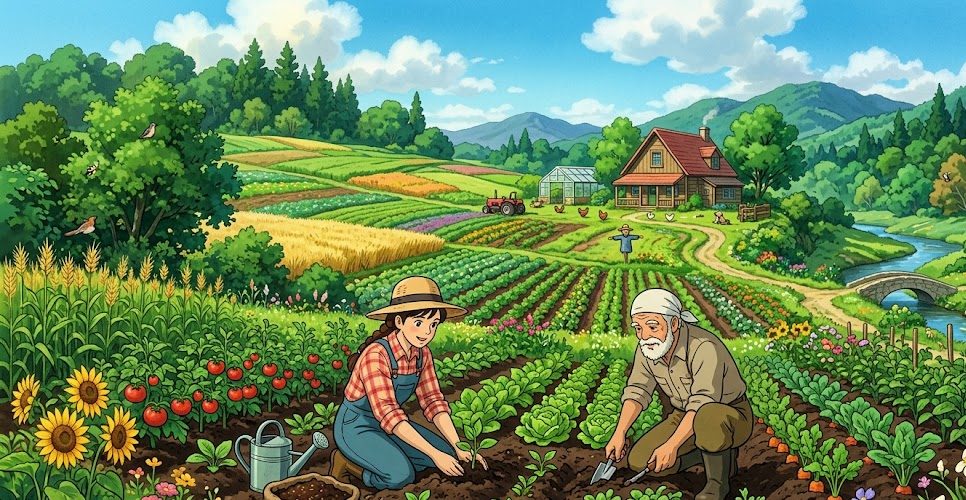
In the rapidly evolving world of agriculture, the line between a profitable farm and a struggling one is often defined by the efficiency of crop and soil management. For the modern farmer, it is no longer enough to just “plant and pray.” Success today requires a strategic blend of traditional wisdom, soil science, and data-driven precision.
This guide provides a comprehensive framework to optimize your land, boost your yields, and ensure the long-term sustainability of your farm business.
1. Understanding the Foundation: Soil Health
Soil is not merely a physical substrate; it is a complex, living ecosystem. If your soil health is compromised, no amount of synthetic fertilizer will yield consistent, high-quality crops.
The Soil Fertility Audit
Before the season starts, you must conduct a professional soil test. This is the single most important investment you can make. A test will tell you:
- pH Levels: Crucial for nutrient availability. Most crops thrive in slightly acidic to neutral soil.
- NPK Ratios: The levels of Nitrogen, Phosphorus, and Potassium.
- Organic Matter Content: The backbone of soil structure.
Pro-Tip: Aim to increase your soil organic matter by 0.5% each year through composting, green manuring, or cover cropping. This will significantly improve your soil’s water-holding capacity.
2. Precision Crop Management
Modern farming is about doing the right thing, at the right time, in the right place.
Crop Rotation Strategy
Monocropping—planting the same crop in the same field year after year—is a recipe for soil depletion and pest build-up. A well-planned rotation strategy should:
- Break Pest Cycles: By changing the host plant, you deny pests their food source.
- Balance Nutrient Extraction: Follow heavy feeders (like corn or wheat) with legumes (like soybeans or pulses) that fix atmospheric nitrogen back into the soil.
The Role of Integrated Pest Management (IPM)
Instead of blanket spraying, use an IPM approach. This involves:
- Monitoring: Use pheromone traps and regular field scouting to identify the presence of pests.
- Thresholds: Only intervene when pest populations reach an economic injury level.
- Biological Control: Encourage natural predators like ladybugs and lacewings to do the work for you.
3. Water Management: Efficiency is Profit
Water is an increasingly scarce resource. Implementing advanced irrigation techniques can drastically reduce your operational costs while protecting your crops from water stress.
Drip vs. Sprinkler Systems
- Drip Irrigation: Highly recommended for high-value vegetable crops. It delivers water directly to the root zone, minimizing evaporation and weed growth.
- Micro-Sprinklers: Ideal for orchards and dense plantations.
Tech Integration: Consider installing simple moisture sensors. These devices tell you exactly when to turn on the pump, preventing both water waste and the root diseases associated with over-irrigation.
4. Nutrient Optimization: Moving Beyond Synthetic Fertilizer
While NPK fertilizers provide a quick boost, they often degrade soil structure over time. The modern approach is to integrate synthetic and organic sources.
- Composting: Convert farm waste into high-value organic fertilizer.
- Fertigation: This is the process of applying fertilizers through your irrigation system. It ensures that nutrients are delivered exactly when the plant needs them, reducing leaching and waste by up to 30%.
- Micronutrients: Don’t ignore the “hidden” needs. Zinc, Boron, and Magnesium are often the difference between an average crop and a premium, high-market-value harvest.
5. Technology and Data: The Modern Farmer’s Edge
To compete in today’s market, you must treat your farm like a business.
- Digital Logs: Keep a detailed journal of every input (seeds, fertilizers, pesticides) and every labor cost. Use a simple spreadsheet or mobile app to track your “cost per acre.”
- Weather Monitoring: Integrate local weather data to plan your sowing and spraying schedules. Avoiding a pesticide application right before a heavy rainstorm saves you both money and environmental impact.
6. Sustainable Practices for Long-Term Profitability
Sustainability isn’t just an environmental buzzword—it’s a financial imperative.
- Conservation Tillage: Minimize deep plowing. No-till or minimum-till methods keep the soil structure intact, reduce erosion, and help the soil retain moisture during dry spells.
- Cover Crops: Never leave the soil bare. Off-season cover crops (like clover or rye) prevent erosion, suppress weeds, and add biomass to the soil.
Conclusion: Putting It All Together
Mastering crop and soil management is a continuous journey of observation and refinement. By focusing on soil health as the primary driver of productivity, employing integrated pest management, and leveraging efficient irrigation, you position your farm to be more profitable and resilient against market fluctuations and climate challenges.
Start by auditing your soil this season, implement a rigid rotation schedule, and track your inputs with precision. Your land is your most valuable asset—treat it with the science and care it deserves, and it will reward you with consistent, high-quality harvests for years to come.
Frequently Asked Questions (FAQ)
Q: How often should I test my soil? A: A full nutrient profile test should be conducted at least once every 2–3 years, or whenever you notice a significant decline in yield quality.
Q: Is “No-Till” farming really better for beginners? A: No-till requires careful management of weeds, which can be challenging for beginners. Start with “Minimum Till” and gradually transition as you get more comfortable with your weed control strategies.
Q: Can I achieve high yields without chemical fertilizers? A: It is possible, but it takes time. You must focus on building soil biology through organic matter, bio-stimulants, and crop diversity. It is a long-term strategy for high-quality, premium-priced produce.