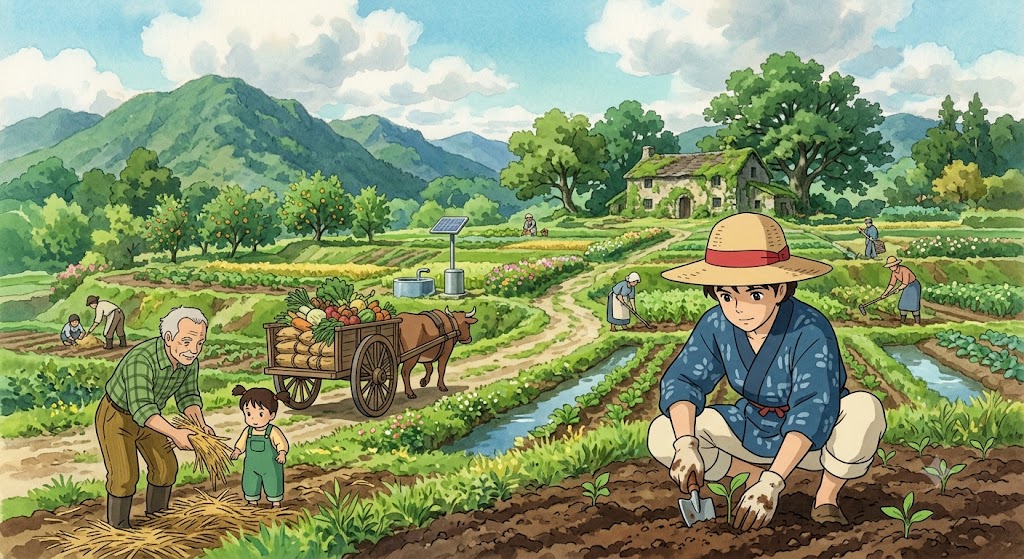
Agriculture plays a vital role in feeding the world’s growing population, but modern farming also faces significant challenges. Soil degradation, water scarcity, climate change, declining biodiversity, and rising production costs are placing increasing pressure on farming systems worldwide. To remain productive and profitable in the long run, farmers must adopt practices that protect natural resources while maintaining strong crop yields.
Sustainable agriculture focuses on balancing productivity, environmental responsibility, and economic viability. Rather than prioritizing short-term gains, sustainable farming aims to create resilient agricultural systems capable of supporting future generations. By improving soil health, conserving water, reducing waste, and promoting biodiversity, farmers can build operations that remain productive and profitable for many years.
What Is Sustainable Agriculture?
Sustainable agriculture is a farming approach designed to meet current food production needs without compromising the ability of future generations to meet their own needs.
It seeks to achieve three primary goals:
- Environmental protection
- Economic profitability
- Social responsibility
Sustainable farming practices help farmers maintain productivity while minimizing negative impacts on soil, water, air, and ecosystems.
Why Sustainability Matters in Agriculture
Conventional farming methods can sometimes lead to:
- Soil erosion
- Nutrient depletion
- Water pollution
- Loss of biodiversity
- Increased pest resistance
- Higher production costs
Sustainable agriculture addresses these challenges by encouraging efficient resource use and long-term land stewardship.
Benefits include:
- Improved soil fertility
- Better water conservation
- Reduced input costs
- Greater climate resilience
- Enhanced biodiversity
- Long-term farm profitability
These advantages make sustainability an essential component of modern agricultural success.
1. Build and Maintain Healthy Soil
Healthy soil is the foundation of sustainable farming.
Productive soil supports:
- Strong root development
- Nutrient availability
- Water retention
- Beneficial microbial activity
Farmers can improve soil health through:
- Compost application
- Organic matter incorporation
- Crop rotation
- Cover cropping
- Reduced tillage
Investing in soil health often results in improved crop performance and reduced dependence on external inputs.
2. Practice Crop Rotation
Growing the same crop repeatedly can deplete nutrients and encourage pest problems.
Crop rotation helps:
- Improve nutrient cycling
- Reduce disease pressure
- Break pest life cycles
- Enhance soil fertility
For example:
- Legumes can follow cereal crops.
- Root vegetables can rotate with leafy crops.
- Nitrogen-fixing plants can improve soil fertility naturally.
A diversified rotation system contributes to long-term productivity and sustainability.
3. Use Cover Crops
Cover crops protect soil during periods when commercial crops are not actively growing.
Common cover crops include:
- Clover
- Rye
- Oats
- Vetch
- Mustard
Benefits include:
- Reduced erosion
- Improved soil structure
- Increased organic matter
- Better moisture retention
- Weed suppression
Cover crops also provide valuable habitat for beneficial insects and microorganisms.
4. Conserve Water Efficiently
Water is one of agriculture’s most valuable resources.
Sustainable irrigation practices help reduce waste while supporting crop growth.
Effective methods include:
- Drip irrigation
- Rainwater harvesting
- Mulching
- Soil moisture monitoring
- Efficient irrigation scheduling
Water conservation not only lowers costs but also improves resilience during drought conditions.
5. Reduce Soil Erosion
Topsoil contains valuable nutrients and organic matter essential for crop production.
Erosion can remove these resources and reduce long-term productivity.
Farmers can reduce erosion by:
- Planting cover crops
- Using contour farming
- Establishing windbreaks
- Applying mulch
- Practicing conservation tillage
Protecting topsoil is critical for maintaining productive farmland.
6. Encourage Biodiversity
Biodiversity strengthens agricultural ecosystems and improves resilience.
Ways to increase biodiversity include:
- Planting multiple crop species
- Maintaining hedgerows
- Preserving natural habitats
- Growing flowering plants
- Supporting pollinator populations
Biodiverse farms often experience fewer pest outbreaks and healthier growing environments.
7. Implement Integrated Pest Management
Integrated Pest Management (IPM) focuses on controlling pests using environmentally responsible methods.
Key components include:
- Crop monitoring
- Biological controls
- Cultural practices
- Physical barriers
- Targeted treatments when necessary
IPM reduces reliance on chemical pesticides while maintaining effective pest control.
8. Utilize Organic Matter
Adding organic matter improves soil quality and enhances sustainability.
Sources include:
- Compost
- Crop residues
- Farmyard manure
- Green manure crops
Benefits include:
- Improved soil structure
- Better nutrient availability
- Enhanced water retention
- Increased microbial activity
Organic matter supports healthy and productive soils over time.
9. Minimize Excessive Tillage
Frequent tillage can damage soil structure and reduce beneficial biological activity.
Conservation tillage practices help:
- Preserve soil moisture
- Reduce erosion
- Increase organic matter retention
- Improve soil biodiversity
Minimizing soil disturbance contributes to healthier agricultural ecosystems.
10. Diversify Farm Income Sources
Diversification helps improve economic sustainability and reduce risk.
Farmers may diversify through:
- Livestock production
- Fruit cultivation
- Vegetable farming
- Aquaculture
- Beekeeping
- Agroforestry
Multiple income streams provide greater financial stability during changing market conditions.
11. Integrate Livestock and Crops
Integrated farming systems create efficient nutrient cycles.
Benefits include:
- Improved manure utilization
- Reduced fertilizer costs
- Better resource efficiency
- Increased farm resilience
Livestock and crop enterprises often complement each other when managed effectively.
12. Adopt Climate-Smart Farming Practices
Climate change is affecting agricultural production worldwide.
Climate-smart strategies include:
- Drought-tolerant crop varieties
- Efficient irrigation systems
- Improved soil management
- Weather-based decision-making
- Agroforestry systems
These practices help farmers adapt to changing environmental conditions while maintaining productivity.
13. Reduce Agricultural Waste
Waste reduction improves efficiency and sustainability.
Farmers can reduce waste by:
- Recycling crop residues
- Composting organic materials
- Improving storage systems
- Reducing post-harvest losses
Efficient resource use contributes to both environmental and economic benefits.
14. Support Pollinator Populations
Pollinators play a critical role in crop production.
Farmers can support pollinators by:
- Planting flowering species
- Reducing harmful pesticide use
- Preserving natural habitats
- Providing nesting areas
Healthy pollinator populations often improve fruit and seed production.
15. Maintain Accurate Farm Records
Good record-keeping supports better management decisions.
Important records include:
- Crop yields
- Fertilizer applications
- Irrigation schedules
- Pest observations
- Production costs
Data-driven decisions help improve efficiency and long-term profitability.
Creating a Sustainable Farming Plan
A successful sustainability strategy should focus on:
- Soil health improvement
- Water conservation
- Crop diversification
- Biodiversity enhancement
- Integrated pest management
- Climate resilience
- Resource efficiency
Combining multiple sustainable practices creates a stronger and more resilient farming system.
The Long-Term Benefits of Sustainable Agriculture
Farmers who invest in sustainability often experience:
- Improved soil productivity
- Lower input costs
- Greater environmental resilience
- Better crop quality
- Reduced production risks
- Stronger market opportunities
Sustainability is not simply an environmental goal—it is also a practical business strategy for long-term success.
Conclusion
Sustainable agriculture provides a pathway toward productive, profitable, and environmentally responsible farming. By focusing on soil health, water conservation, biodiversity, crop rotation, integrated pest management, and efficient resource use, farmers can create resilient systems that support both present and future agricultural needs.
As global challenges continue to affect food production, sustainable farming practices will become increasingly important. Farmers who embrace these approaches today are building stronger operations capable of delivering consistent harvests, protecting natural resources, and supporting long-term farm growth for generations to come.