➡️ INTRODUCTION
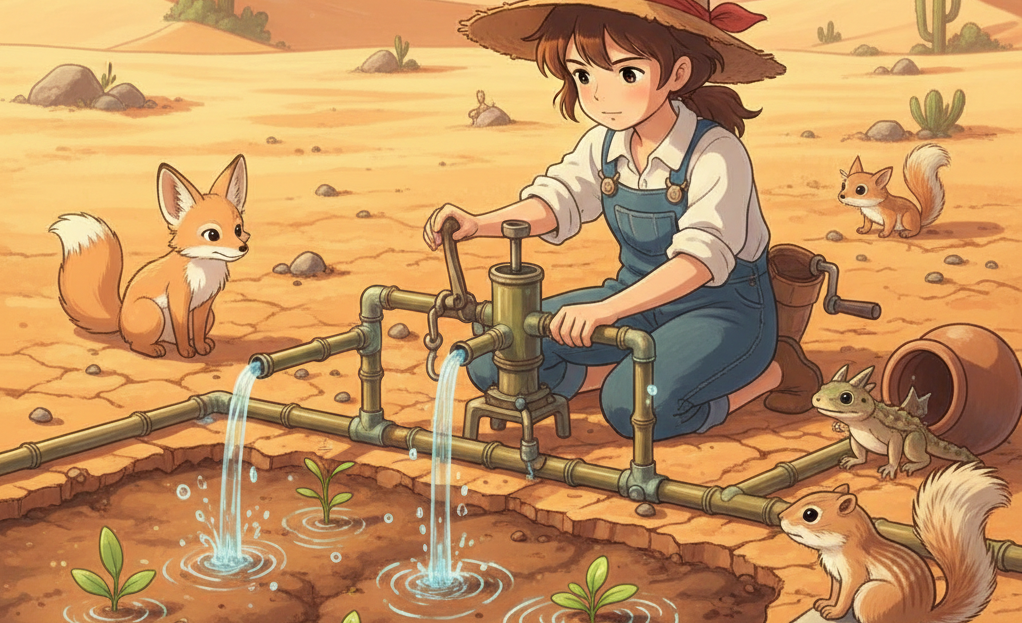
→ Water scarcity is a growing challenge for farmers in many parts of the world. Limited rainfall, declining groundwater levels, and rising temperatures make efficient irrigation more important than ever. In water-scarce regions, every drop counts. Smart irrigation practices help farmers use water wisely while maintaining healthy crops and stable yields. By improving irrigation methods, growers can reduce water waste, lower energy costs, and protect soil quality. Proper planning and monitoring also help prevent overwatering, salinity buildup, and nutrient loss. With practical irrigation strategies, farmers can increase productivity, strengthen resilience against drought, and ensure long-term sustainability even in dry and challenging climates.
➡️ Key Points / Benefits
→ Maximizes crop yield with minimal water use.
→ Reduces water waste and lowers pumping costs.
→ Prevents soil salinity and nutrient leaching.
→ Improves drought resilience and crop survival.
→ Supports long-term groundwater conservation.
🔵 1️⃣ → Choosing Efficient Irrigation Systems
Selecting the right irrigation system is the first step toward water efficiency. Traditional flood irrigation often wastes large amounts of water through evaporation and runoff. Modern systems deliver water directly to plant roots, improving efficiency.
Recommended systems include:
- Drip irrigation: Delivers water slowly at the root zone.
- Sprinkler systems: Suitable for certain crops and moderate climates.
- Micro-irrigation: Ideal for orchards and vegetable crops.
Step-by-step guidance:
- Assess soil type and crop water needs.
- Calculate available water supply.
- Install systems with proper spacing and pressure control.
- Regularly check for leaks or clogged emitters.
For example, drip irrigation can reduce water use by up to 30–50% compared to surface irrigation. Farmers should invest in durable materials and maintain equipment regularly to ensure long-term efficiency.
🔵 2️⃣ → Scheduling Irrigation Based on Crop Needs
Watering at the right time is as important as choosing the right system. Over-irrigation wastes water and weakens roots, while under-irrigation stresses crops.
Effective scheduling tips:
- Irrigate early in the morning or late evening to reduce evaporation.
- Monitor soil moisture using simple tools like moisture meters.
- Adjust watering frequency based on crop growth stage.
- Consider weather forecasts before irrigation.
Young plants often need frequent but light watering, while mature crops may require deeper, less frequent irrigation. Farmers can divide irrigation into smaller sessions to allow better absorption. Proper scheduling improves water efficiency and encourages strong root development.
🔵 3️⃣ → Improving Soil Water Retention
Healthy soil retains water longer, reducing the need for frequent irrigation. Improving soil structure helps farmers conserve moisture naturally.
Actionable strategies:
- Add compost or organic matter to increase water-holding capacity.
- Use mulching to reduce evaporation from the soil surface.
- Practice minimum tillage to preserve soil structure.
- Grow cover crops during off-seasons.
Mistakes to avoid:
- Leaving soil bare under strong sunlight.
- Over-tilling, which breaks soil structure.
- Ignoring soil compaction problems.
Mulching with straw or crop residues can significantly reduce water loss. Organic matter improves soil porosity, allowing water to penetrate deeper. By improving soil health, farmers reduce irrigation frequency and increase drought tolerance.
🔵 4️⃣ → Harvesting and Storing Rainwater
Even in water-scarce regions, seasonal rainfall can be captured and stored for later use. Rainwater harvesting is a practical and cost-effective solution.
Practical guidance:
- Install rooftop collection systems with storage tanks.
- Build small farm ponds or reservoirs.
- Use contour bunds to capture surface runoff.
- Maintain storage structures to prevent leakage.
For example, storing rainwater during short rainy periods can provide supplementary irrigation during dry spells. Farmers should keep storage tanks covered to prevent contamination and evaporation. Combining rainwater harvesting with efficient irrigation ensures better water availability throughout the growing season.
🔵 5️⃣ → Monitoring, Maintenance, and Water Management Practices
Continuous monitoring ensures irrigation systems work efficiently and water is not wasted.
Step-by-step monitoring plan:
- Inspect pipes, pumps, and emitters weekly.
- Measure water flow and pressure regularly.
- Check crops for signs of over- or under-watering.
- Test soil salinity in areas with limited drainage.
- Record water usage for better planning.
Dos:
- Maintain equipment before each planting season.
- Train workers on proper irrigation techniques.
- Use water-saving technologies when possible.
Don’ts:
- Do not ignore small leaks or clogged lines.
- Avoid irrigating during windy conditions.
- Do not apply excess water in saline soils.
Careful maintenance prevents water loss and extends system lifespan. Monitoring also helps farmers make informed decisions during drought periods.
➡️ CONCLUSION
→ Efficient irrigation is essential for farming success in water-scarce regions. By choosing suitable irrigation systems, scheduling watering carefully, improving soil water retention, harvesting rainwater, and maintaining equipment, farmers can maximize productivity while conserving precious resources. Smart water management reduces costs, protects soil health, and strengthens crops against drought stress. These practical strategies can be adapted to different climates and farming systems worldwide. With consistent effort and careful planning, farmers can use water responsibly and ensure sustainable agricultural production even in regions where water is limited.