Introduction
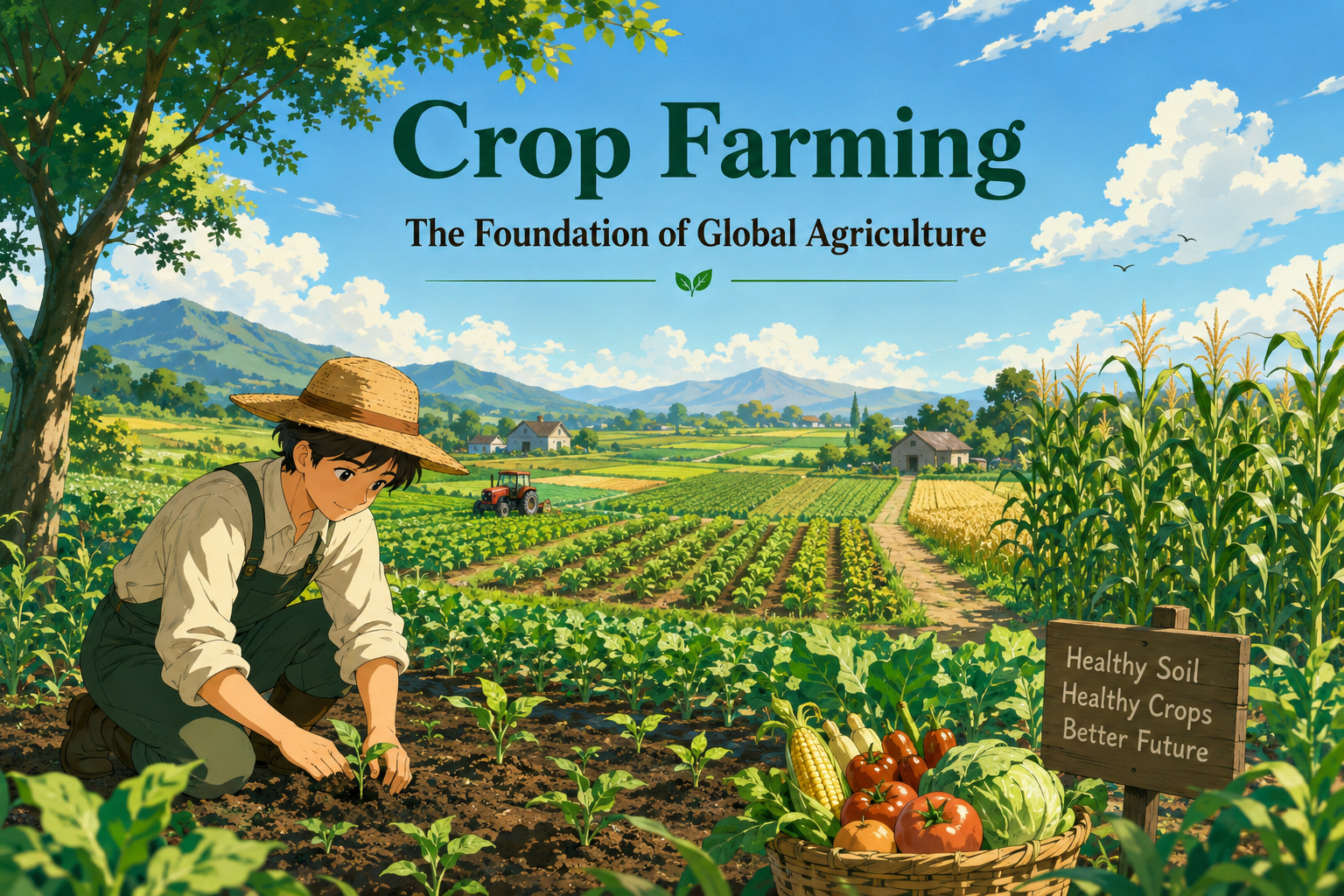
Crop farming is one of the oldest and most important agricultural practices in human history. It involves cultivating plants for food, animal feed, fiber, fuel, and raw materials. Today, crop farming plays a vital role in feeding the world’s growing population, supporting rural economies, and supplying industries with essential agricultural products. From staple grains like wheat and rice to fruits, vegetables, legumes, and oilseeds, crop farming contributes significantly to food security and economic development.
Modern crop farming has evolved far beyond traditional methods. Farmers now use advanced technologies, improved seed varieties, precision agriculture, smart irrigation systems, and sustainable farming practices to increase productivity while protecting natural resources. Despite these advancements, crop farming still faces challenges such as climate change, soil degradation, water scarcity, pests, and fluctuating market prices.
Understanding crop farming and adopting efficient farming techniques can help farmers improve yields, reduce costs, and ensure long-term agricultural sustainability.
What is Crop Farming?
Crop farming is the practice of growing cultivated plants for human consumption, livestock feed, industrial use, and commercial purposes. Farmers prepare the land, plant seeds, care for crops during their growth cycle, and harvest them when they are mature.
Crop farming can be practiced on small family farms or large commercial agricultural operations. The success of crop farming depends on several factors, including soil quality, climate, water availability, seed selection, pest management, and proper farming techniques.
Importance of Crop Farming
Crop farming is essential for the well-being of society and the global economy. It provides food, employment, and raw materials while supporting millions of farming families worldwide.
Some of its major benefits include:
- Produces food for the growing population.
- Supports rural employment and livelihoods.
- Supplies raw materials for industries.
- Contributes to national economic growth.
- Provides feed for livestock.
- Supports exports and international trade.
- Promotes food security.
Without crop farming, many industries such as food processing, textiles, pharmaceuticals, and biofuel production would struggle to meet demand.
Types of Crop Farming
Different types of crop farming are practiced depending on climate, land availability, and farming objectives.
1. Food Crop Farming
Food crops are grown primarily for human consumption.
Examples include:
- Rice
- Wheat
- Maize
- Barley
- Millet
These crops form the staple diet of billions of people around the world.
2. Cash Crop Farming
Cash crops are grown mainly for commercial purposes and income generation.
Examples include:
- Cotton
- Sugarcane
- Coffee
- Tea
- Tobacco
These crops often generate higher profits for farmers and contribute to export earnings.
3. Horticulture
Horticulture focuses on growing fruits, vegetables, herbs, and ornamental plants.
Examples include:
- Tomatoes
- Potatoes
- Apples
- Mangoes
- Onions
Horticultural crops usually require intensive management but often provide higher market value.
4. Oilseed Farming
Oilseed crops are cultivated to produce edible oils and industrial products.
Common oilseed crops include:
- Soybeans
- Sunflowers
- Mustard
- Groundnuts
- Canola
These crops are important for food production and the manufacturing of cooking oils.
Essential Stages of Crop Farming
Successful crop farming follows a series of important steps.
Land Preparation
The first step is preparing the soil by plowing, leveling, and removing weeds. Proper land preparation improves soil aeration and creates favorable conditions for seed germination.
Seed Selection
High-quality, disease-resistant seeds improve germination rates and increase crop productivity.
Planting
Seeds should be planted at the correct depth and spacing to ensure healthy crop development.
Irrigation
Providing adequate water throughout the growing season is essential for healthy plant growth. Efficient irrigation methods reduce water waste and improve productivity.
Fertilization
Applying organic manure and balanced fertilizers supplies crops with the nutrients needed for optimal growth.
Weed Control
Removing weeds prevents competition for nutrients, sunlight, and water.
Pest and Disease Management
Regular crop monitoring helps detect problems early and minimizes crop losses through integrated pest management practices.
Harvesting
Harvesting should be carried out at the right stage of crop maturity to maximize both quality and yield.
Modern Technologies in Crop Farming
Technology has transformed crop farming into a more productive and efficient industry.
Precision Agriculture
Precision farming uses GPS technology, sensors, and digital mapping to optimize planting, irrigation, and fertilizer application.
Artificial Intelligence
AI helps predict weather patterns, identify crop diseases, and recommend farming decisions based on data analysis.
Agricultural Drones
Drones monitor crop health, detect nutrient deficiencies, and spray pesticides with greater precision.
Smart Irrigation
Automated irrigation systems use soil moisture sensors to deliver water only when crops require it.
Farm Management Software
Digital platforms help farmers manage planting schedules, expenses, inventory, and crop performance.
Sustainable Crop Farming Practices
Sustainability ensures that farming remains productive while protecting natural resources.
Important sustainable practices include:
- Crop rotation
- Organic farming
- Conservation tillage
- Mulching
- Cover cropping
- Efficient water management
- Compost application
- Integrated pest management
These methods improve soil fertility, reduce environmental impact, and enhance long-term productivity.
Challenges Facing Crop Farmers
Although crop farming has advanced significantly, farmers continue to face numerous challenges.
Climate Change
Extreme weather events, droughts, floods, and rising temperatures affect crop production.
Soil Degradation
Continuous farming without proper soil management reduces fertility over time.
Water Scarcity
Limited freshwater resources make irrigation increasingly difficult.
Pest and Disease Outbreaks
New pests and plant diseases can cause significant crop losses if not managed effectively.
Rising Production Costs
Seeds, fertilizers, machinery, fuel, and labor continue to become more expensive.
Market Price Fluctuations
Changing market conditions can reduce farmers’ profits even after successful harvests.
Benefits of Modern Crop Farming
Modern farming techniques provide several important advantages.
Increased Productivity
Improved technologies allow farmers to produce more food using fewer resources.
Better Crop Quality
Proper management results in healthier crops with higher market value.
Efficient Resource Use
Precision farming reduces waste of water, fertilizers, and pesticides.
Environmental Protection
Sustainable farming practices reduce pollution and conserve biodiversity.
Higher Farm Income
Better yields and improved crop quality increase profitability.
Tips for Successful Crop Farming
Farmers can improve crop production by following these practical recommendations:
- Test soil before planting.
- Select high-quality certified seeds.
- Follow proper crop rotation practices.
- Use efficient irrigation systems.
- Apply balanced fertilizers based on soil test results.
- Monitor crops regularly for pests and diseases.
- Keep accurate farm records.
- Adopt modern agricultural technologies whenever possible.
- Harvest crops at the correct maturity stage.
- Store harvested crops properly to reduce post-harvest losses.
Future of Crop Farming
The future of crop farming will be driven by innovation, sustainability, and technology. Artificial Intelligence, robotics, biotechnology, precision agriculture, satellite monitoring, climate-smart farming, and renewable energy-powered equipment will continue to improve agricultural productivity.
Researchers are also developing drought-resistant crop varieties, disease-resistant seeds, and environmentally friendly farming methods to help farmers adapt to changing climate conditions. These innovations will ensure that crop farming remains capable of feeding the world’s growing population while protecting natural resources.
Conclusion
Crop farming remains the foundation of global agriculture and food production. It supports economies, provides employment, and ensures food security for billions of people around the world. While challenges such as climate change, water scarcity, and rising production costs continue to impact agriculture, modern farming technologies and sustainable practices offer effective solutions.
By adopting improved seeds, precision agriculture, efficient irrigation, soil conservation, and integrated pest management, farmers can increase productivity while protecting the environment. As agriculture continues to evolve, crop farming will remain a key pillar of sustainable development, helping create a healthier, more secure, and prosperous future for generations to come.