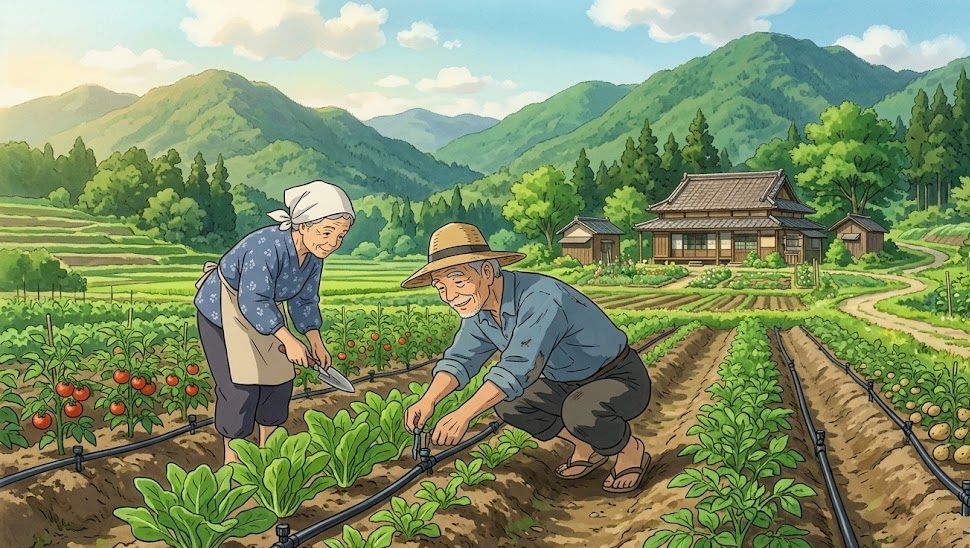
➡️ INTRODUCTION
→ Water is one of the most important resources in agriculture, but it is also one of the most limited. Traditional irrigation methods often lead to water wastage and uneven distribution, which affects crop growth and productivity. With the rise of AgriTech, smart irrigation systems are transforming how farmers manage water. These systems use technology like sensors, automation, and data analysis to deliver the right amount of water at the right time. Smart irrigation not only improves crop health but also reduces costs and saves water. In modern farming, efficient water management is essential for sustainability and long-term success.
➡️ Key Points / Benefits
→ Saves water and reduces wastage
→ Improves crop growth and yield
→ Reduces labor and manual effort
→ Supports sustainable farming practices
→ Minimizes irrigation costs
→ Ensures proper water distribution
🔵 1️⃣ → What are Smart Irrigation Systems?
Smart irrigation systems are advanced watering solutions that use technology to manage water efficiently.
Main features:
- Automated watering
- Soil moisture sensors
- Weather-based adjustments
Benefits:
- Accurate irrigation
- Reduced water usage
- Better crop health
These systems help farmers move from manual irrigation to intelligent farming.
🔵 2️⃣ → Types of Smart Irrigation Methods
There are different types of modern irrigation systems used in agriculture.
Common methods:
- Drip irrigation
- Sprinkler systems
- Automated irrigation systems
Advantages:
- Uniform water distribution
- Reduced water loss
- Improved efficiency
Each method can be selected based on crop type and field conditions.
🔵 3️⃣ → Role of Sensors and Automation
Sensors play a key role in smart irrigation.
Functions of sensors:
- Measure soil moisture
- Monitor weather conditions
- Control irrigation timing
Benefits:
- Real-time data
- Better decision making
- Reduced manual work
Automation ensures that crops get water only when needed.
🔵 4️⃣ → Water Conservation and Sustainability
Smart irrigation helps in conserving water and protecting the environment.
Key advantages:
- Reduces water wastage
- Prevents over-irrigation
- Supports eco-friendly farming
Pro tip:
Combine irrigation with rainwater harvesting for better results.
Efficient water use is essential for sustainable agriculture.
🔵 5️⃣ → Cost Efficiency and Profitability
Smart irrigation systems may require initial investment but provide long-term benefits.
Financial benefits:
- Lower water bills
- Reduced labor cost
- Higher crop yield
Result:
- Increased overall profit
Investing in smart irrigation is a smart financial decision for farmers.
🔵 6️⃣ → Future of Irrigation Technology
Technology is continuously improving irrigation systems.
Future trends:
- AI-based irrigation
- Mobile app control
- Fully automated farms
Opportunities:
- Higher efficiency
- Better resource management
- Improved farmer income
Smart irrigation is a key part of future agriculture.
➡️ CONCLUSION
→ Smart irrigation systems are transforming agriculture by making water management more efficient and sustainable. With the help of sensors, automation, and modern technology, farmers can reduce water wastage, improve crop health, and increase profits. As water becomes a more valuable resource, adopting smart irrigation methods is no longer an option but a necessity. Farmers who invest in these technologies today will benefit from better productivity and long-term success.