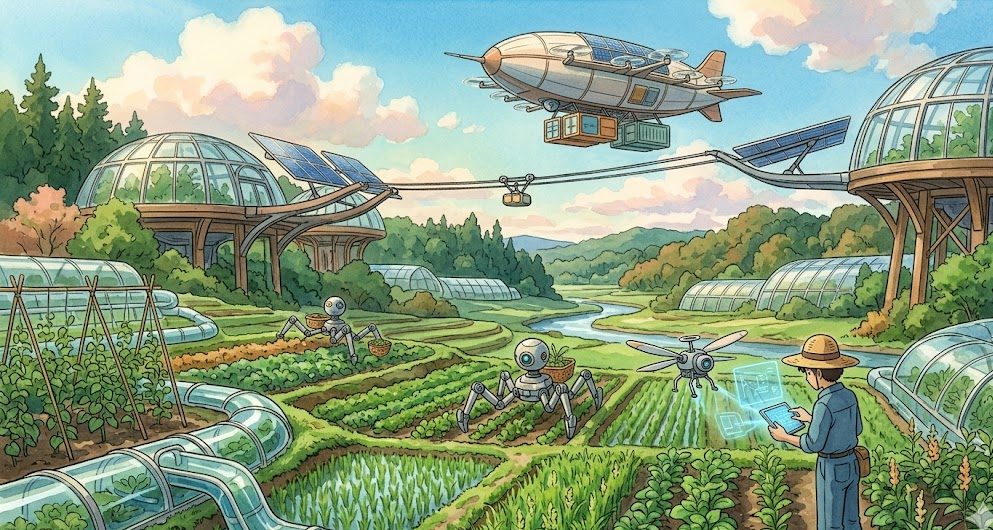
The global agricultural sector is standing at the precipice of a massive technological revolution. With the global population projected to reach nearly 10 billion by 2050, traditional farming practices alone can no longer keep up with the skyrocketing demand for food. Compounded by climate change, water scarcity, and shrinking arable land, the industry is forcing a massive shift in how we grow, harvest, and manage crops.
Enter Future Farming—an ecosystem entirely driven by Advanced AgriTech Innovations and Smart Automation. Today, farms are transforming into high-tech hubs where data science, robotics, and artificial intelligence converge to optimize every single square inch of soil.
Whether you are an agritech developer, a modern investor, or a farmer looking to upgrade your yields, understanding these next-generation technologies is crucial to navigating the future of global food production.
1. The Core Pillars of Future Farming
Future farming isn’t just about bigger tractors; it’s about precision, sustainability, and efficiency. By shifting from generalized field management to individual crop management, modern agriculture can drastically reduce waste while multiplying output.
The Shift to Precision Agriculture
Precision agriculture utilizes data to ensure that crops receive exactly what they need for optimum health and productivity. Instead of treating an entire 100-acre field uniformly, farmers can now apply water, fertilizers, and pesticides with pinpoint accuracy—sometimes down to the exact plant.
Key Drivers of the AgriTech Shift:
- Resource Conservation: Optimizing inputs to save water, reduce chemical runoffs, and lower fuel consumption.
- Climate Resilience: Shielding crops from unpredictable weather patterns through data forecasting and controlled setups.
- Labor Shortage Mitigation: Overcoming the global shortage of agricultural labor through reliable, round-the-clock machine intelligence.
2. Advanced AgriTech Innovations Reshaping the Field
The integration of cutting-edge technology into the soil is changing the physical and digital landscape of modern farms. Here are the most impactful innovations driving the industry forward today.
The Internet of Things (IoT) and Soil Sensors
The modern farm is wired for data. Low-power, long-range IoT sensors are deployed across fields to measure critical variables in real-time. These sensors monitor soil moisture levels, electrical conductivity (nutrient density), ground temperature, and even live weather conditions.
Instead of guessing when to irrigate, a central cloud system analyzes this sensor data and automatically triggers irrigation valves, applying the precise amount of water needed and preventing water logging or drought stress.
AI-Driven Crop Analytics and Computer Vision
Artificial Intelligence is acting as the new “eyes” of the farmer. By mounting high-resolution cameras and multispectral sensors onto field infrastructure or machinery, computer vision algorithms can analyze the leaves of crops in real-time.
AI can detect the early signs of fungal diseases, pest infestations, or nutrient deficiencies weeks before they are visible to the human eye. This allows for localized, targeted treatment, preventing widespread crop loss without spraying an entire field with chemicals.
3. Smart Automation: From Seeding to Harvest
While data gives farmers the knowledge they need, smart automation provides the physical muscle to execute tasks flawlessly. Autonomous machines are quickly taking over repetitive, labor-intensive field operations.
Autonomous Drones for Spraying and Seeding
Agricultural drones have evolved from simple mapping tools into critical field workhorses. Heavy-payload drones can now autonomously fly over uneven terrains to distribute seeds or spray fertilizers and biopesticides. Because they fly directly above the canopy, they use up to 30% fewer chemicals and complete the work up to 10 times faster than traditional tractor setups, all without compacting the soil.
Robotic Weeding and Precision Harvesting
Weeding is one of the most grueling aspects of farming. Modern robotic weeders use AI to differentiate between a cash crop and an invasive weed. Once identified, the robot uses ultra-precise laser bursts or micro-blades to eliminate the weed instantly, removing the need for chemical herbicides completely.
Similarly, robotic harvesters equipped with soft-touch robotic arms are now capable of picking delicate fruits and vegetables, ensuring zero bruising and operating 24/7.
4. Comparing Traditional Farming vs. Future Smart Farming
To truly appreciate how far AgriTech has come, it helps to compare the operational methodologies of traditional methods against fully automated systems:
| Operational Feature | Traditional Farming | Future Smart Farming |
| Water Management | Scheduled irrigation (often leads to overwatering or wasting resources). | Smart IoT-driven drip systems that trigger only on soil dryness. |
| Pest & Disease Control | Proactive, blanket chemical spraying across the entire field. | Targeted AI spot-treatments, lowering chemical usage by up to 80%. |
| Machinery Operation | Manually driven tractors prone to human error and overlapping rows. | GPS-guided, autonomous vehicles running on optimized paths. |
| Data Utilization | Relying on historical patterns and seasonal guesswork. | Real-time, cloud-based data analytics and predictive modeling. |
5. Monetizing AgriTech Content: High CPC AdSense Potential
If you are publishing content within the smart agriculture and automation niche, you are positioning your platform in a highly lucrative ad ecosystem.
Because advanced agricultural equipment, IoT hardware, and specialized enterprise software carry massive price tags, companies in these sectors allocate substantial marketing budgets for digital advertising.
- Target High-Value Intent: To maximize your AdSense earnings, create content focusing on high-intent topics. Articles addressing “commercial drone spraying software,” “best IoT soil sensors for large-scale farms,” or “AI crop monitoring tools” naturally trigger premium, high-CPC (Cost Per Click) ads on your web pages.
- Attract Premium B2B Advertisers: B2B brands selling irrigation automation, industrial greenhouses, and agricultural SaaS platforms are constantly looking for authoritative, highly relevant articles to place their ads. Maintaining a technical yet accessible tone will keep your ad click-through rates (CTR) and earnings consistently strong.
Conclusion: Emoraging into a Greener, Automated Future
Advanced AgriTech innovations and smart automation are no longer futuristic concepts reserved for science fiction movies. They are active, essential tools rapidly deploying across fields worldwide. By turning traditional agriculture into a highly automated, data-centric discipline, the future farm guarantees higher food security, minimal ecological damage, and maximized profitability.
As technology continues to advance, the barrier to entry will fall, allowing even small-scale growers to implement smart systems. The evolution of farming is clear: the future of agriculture belongs to those who trade the traditional plow for the automated dashboard.