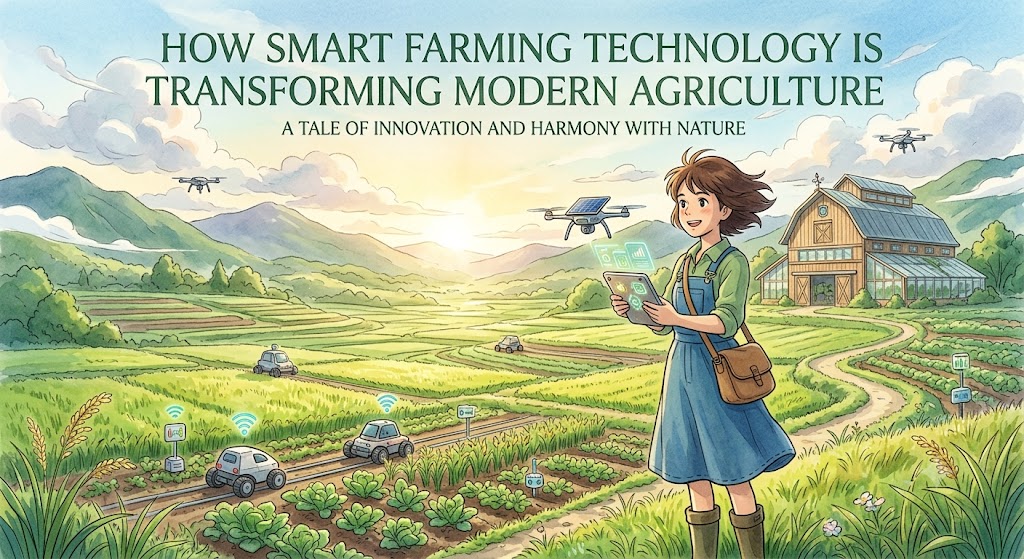
Introduction:)Farming Is Becoming More Intelligent
Agriculture has always evolved with new tools and better techniques, but today’s transformation is happening faster than ever before. Farmers are no longer relying only on experience, seasonal patterns, or manual observation. Modern agriculture is increasingly powered by smart technologies that provide accurate data, automate routine tasks, and help farmers make better decisions every day.
Smart farming combines digital innovation with practical agricultural knowledge. Whether it’s monitoring soil moisture through sensors, using drones to inspect crops, or analyzing weather forecasts to schedule irrigation, technology is helping farmers produce more with fewer resources.
The goal isn’t to replace farmers—it’s to equip them with better information so they can farm more efficiently, reduce risks, and improve long-term profitability.
What Is Smart Farming?
Smart farming, often referred to as precision agriculture, is the use of modern technologies to monitor, manage, and optimize farming activities.
Instead of treating an entire field the same way, smart farming allows farmers to understand what each section of the field actually needs.
Modern smart farming may include:
- Soil monitoring sensors
- GPS-guided equipment
- Agricultural drones
- Satellite crop imaging
- Automated irrigation systems
- Weather monitoring stations
- Farm management software
- Artificial intelligence for crop analysis
Together, these technologies help farmers make informed decisions rather than relying on assumptions.
Why Technology Is Becoming Essential in Agriculture
Agriculture faces several major challenges today:
| Challenge | Impact on Farmers |
|---|---|
| Climate change | Unpredictable weather conditions |
| Water scarcity | Higher irrigation costs |
| Rising input prices | Reduced profit margins |
| Labor shortages | Increased operational expenses |
| Pest outbreaks | Greater production losses |
Smart farming technologies provide practical solutions by improving efficiency and reducing waste.
Soil Monitoring: Understanding What Happens Below the Surface
Healthy soil is the foundation of productive farming.
Modern soil sensors can measure:
- Moisture levels
- Soil temperature
- Nutrient availability
- Salinity
- Soil pH
Instead of applying water or fertilizer on fixed schedules, farmers can respond to actual field conditions.
Why It Matters
- Reduces unnecessary irrigation
- Prevents nutrient loss
- Supports healthier root systems
- Lowers production costs
Precision Irrigation Saves Water and Improves Yields
Traditional irrigation often wastes valuable water.
Smart irrigation systems use real-time information to deliver water only when crops actually need it.
These systems may consider:
- Soil moisture
- Weather forecasts
- Crop growth stage
- Evaporation rates
Key Benefits
✔ Lower water consumption
✔ Healthier crop growth
✔ Reduced pumping costs
✔ Better drought management
Drones Are Changing Field Monitoring
Walking across hundreds of acres every day isn’t always practical.
Agricultural drones provide a bird’s-eye view of the farm and help identify issues that may not be visible from the ground.
Drones can detect:
- Crop stress
- Pest damage
- Disease outbreaks
- Waterlogging
- Nutrient deficiencies
Early detection allows farmers to respond before small problems become major losses.
Artificial Intelligence Supports Better Decisions
Artificial intelligence (AI) is becoming a valuable assistant for modern farmers.
AI systems analyze large amounts of agricultural data, including:
- Historical yields
- Weather patterns
- Soil conditions
- Pest activity
- Crop growth
Based on this information, AI can recommend:
- Optimal planting dates
- Irrigation schedules
- Fertilizer timing
- Disease prevention strategies
AI doesn’t replace farming experience—it strengthens it with data-driven insights.
GPS Technology Improves Field Accuracy
GPS-guided machinery helps farmers work more precisely.
Applications include:
- Straight planting rows
- Accurate fertilizer placement
- Reduced overlap during spraying
- Better fuel efficiency
- Improved field mapping
Greater precision reduces waste while improving overall productivity.
Digital Farm Management Makes Planning Easier
Managing a modern farm involves far more than planting and harvesting.
Farm management software helps organize:
- Crop calendars
- Input costs
- Equipment maintenance
- Worker schedules
- Harvest records
- Financial reports
Having all information in one place makes planning and decision-making much easier.
Weather Forecasting Reduces Farming Risks
Weather has always influenced agriculture.
Today’s forecasting tools provide detailed local information that helps farmers prepare for changing conditions.
Farmers can use forecasts to:
- Delay irrigation before rainfall
- Protect crops from frost
- Schedule pesticide applications
- Plan harvesting activities
- Reduce storm-related losses
Better planning often leads to better harvest outcomes.
How Smart Farming Supports Sustainability
Technology is helping agriculture become more environmentally responsible.
Modern farming systems contribute to sustainability by:
- Reducing water waste
- Lowering fertilizer use
- Minimizing pesticide applications
- Conserving fuel
- Protecting soil health
- Improving resource efficiency
Sustainable farming benefits both the environment and farm profitability.
Is Smart Farming Only for Large Farms?
Not at all.
Many smart farming solutions are now affordable for small and medium-sized farms.
Examples include:
- Mobile weather apps
- Low-cost soil moisture meters
- GPS-enabled smartphones
- Digital record-keeping tools
- Simple automated irrigation controllers
Farmers can adopt technology gradually based on their needs and budget.
Challenges Farmers Should Consider
Although smart farming offers many advantages, successful adoption requires planning.
Common challenges include:
- Initial investment costs
- Learning new technologies
- Internet connectivity in rural areas
- Equipment maintenance
- Data management
Starting with small, practical technologies often provides the best return on investment.
The Future of Smart Agriculture
The next generation of farming is expected to become even more connected.
Future innovations may include:
- Autonomous farm machinery
- Advanced robotic harvesting
- AI-powered disease prediction
- Fully automated irrigation systems
- Climate-adaptive farming platforms
- Real-time satellite crop monitoring
As technology becomes more accessible, farmers of all sizes will have greater opportunities to improve productivity and profitability.
Key Takeaways
Before investing in any technology, remember these essential principles:
✔ Choose solutions that solve real farming problems.
✔ Improve soil and water management first.
✔ Combine technology with practical farming knowledge.
✔ Keep accurate farm records.
✔ Adopt new tools gradually rather than all at once.
Technology delivers the greatest value when it supports good farming practices instead of replacing them.
Final Thoughts
Smart farming technology is transforming modern agriculture by giving farmers better information, greater precision, and improved control over daily operations. From soil sensors and drones to artificial intelligence and automated irrigation, these innovations help reduce waste, improve yields, conserve natural resources, and increase long-term profitability.
The future of agriculture belongs to farmers who combine traditional knowledge with modern technology. By embracing practical digital tools and making informed decisions, today’s farmers can build more resilient, efficient, and sustainable farming systems that are prepared for the challenges of tomorrow.
Frequently Asked Questions
1. What is the biggest advantage of smart farming?
Smart farming helps farmers make accurate, data-driven decisions that improve productivity while reducing resource waste.
2. Can small farms benefit from smart farming technology?
Yes. Many affordable tools, such as weather apps, soil sensors, and digital record-keeping systems, are designed specifically for small and medium-sized farms.
3. Does smart farming reduce water usage?
Yes. Smart irrigation systems use real-time data to apply water only when crops need it, improving efficiency and reducing waste.
4. Are drones necessary for every farm?
Not necessarily. Drones are useful for monitoring large fields, but smaller farms can begin with simpler technologies based on their needs.
5. Will technology replace traditional farming knowledge?
No. Technology supports better decision-making, but successful farming still depends on the farmer’s experience, observation, and understanding of local conditions.