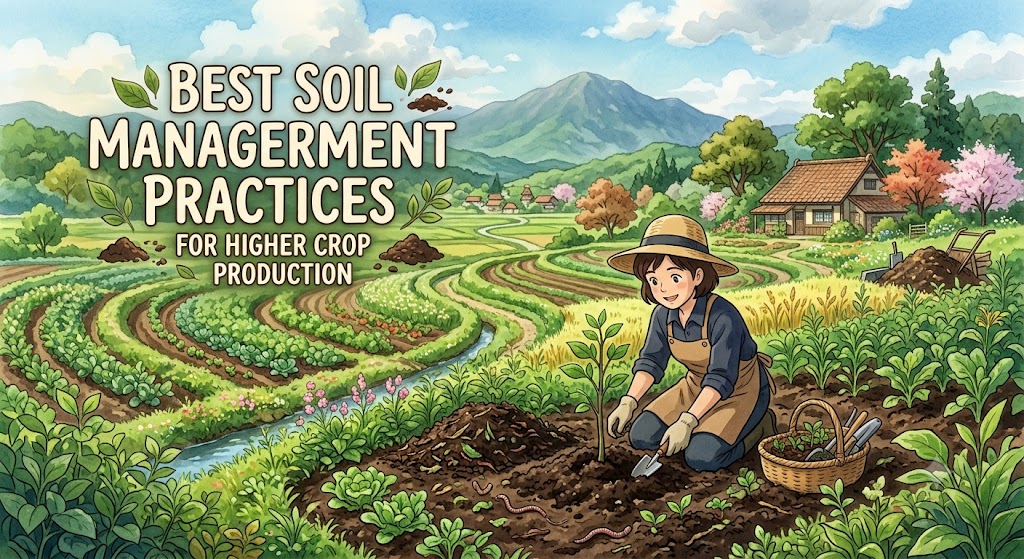
Healthy soil is the foundation of successful agriculture. No matter how advanced farming equipment becomes or how much fertilizer is applied, crops cannot reach their full potential if the soil is unhealthy. Productive soil supplies nutrients, stores water, supports beneficial microorganisms, and provides a stable environment for plant roots. Farmers who invest time in improving soil health often enjoy stronger crops, higher yields, and better long-term profitability.
Over the years, many agricultural experts have concluded that soil should be managed as a living ecosystem rather than simply a growing medium. By following practical soil management techniques, farmers can increase productivity while reducing production costs and protecting natural resources. This guide explains the best soil management practices that help improve crop production in a sustainable and cost-effective way.
Why Soil Management Is Important
Healthy soil supports every stage of crop growth. It provides essential nutrients, improves water retention, and allows roots to absorb oxygen efficiently.
Good soil management helps farmers:
- Increase crop yields
- Improve soil fertility
- Reduce fertilizer waste
- Conserve water
- Prevent erosion
- Support long-term farm productivity
Ignoring soil health often leads to declining yields, nutrient deficiencies, and increased production costs.
1. Test Your Soil Regularly
Soil testing is one of the simplest and most effective ways to improve farm productivity.
A soil test helps determine:
- Soil pH
- Nitrogen levels
- Phosphorus availability
- Potassium content
- Organic matter percentage
- Micronutrient deficiencies
With accurate soil information, farmers can apply fertilizers only where needed instead of using unnecessary amounts.
2. Add Organic Matter
Organic matter improves both soil fertility and structure.
Excellent sources include:
- Compost
- Farmyard manure
- Vermicompost
- Crop residues
- Green manure
Organic materials increase microbial activity, improve nutrient availability, and help soil retain moisture during dry periods.
Applying compost regularly builds healthier soil over time.
3. Practice Crop Rotation
Growing the same crop repeatedly can reduce soil fertility and encourage pests and diseases.
Crop rotation helps by:
- Restoring nutrients naturally
- Breaking pest life cycles
- Improving soil structure
- Reducing weed pressure
For example, planting legumes after cereal crops helps increase nitrogen availability for future crops.
4. Reduce Soil Erosion
Topsoil contains most of the nutrients plants need.
Heavy rainfall and strong winds can quickly remove this valuable layer.
To reduce erosion:
- Plant cover crops
- Use contour farming
- Apply mulch
- Maintain grass borders
- Avoid leaving fields bare
Protecting topsoil is one of the most important investments a farmer can make.
5. Improve Water Management
Water and soil health work together.
Poor irrigation practices often lead to nutrient loss, root diseases, and compacted soil.
Good practices include:
- Drip irrigation
- Mulching
- Rainwater harvesting
- Irrigating early in the morning
- Monitoring soil moisture
Efficient water management keeps soil productive while reducing unnecessary water use.
6. Prevent Soil Compaction
Heavy machinery and repeated foot traffic can compress soil, limiting root growth and reducing water infiltration.
To prevent compaction:
- Avoid working wet fields.
- Reduce unnecessary machinery traffic.
- Use controlled wheel tracks.
- Add organic matter regularly.
- Loosen compacted areas when necessary.
Healthy, loose soil allows roots to spread more easily.
7. Maintain Proper Soil pH
Different crops perform best within specific pH ranges.
If soil becomes too acidic or too alkaline, plants cannot absorb nutrients efficiently.
Regular testing helps determine whether lime or other soil amendments are needed to maintain balanced pH levels.
Balanced soil chemistry improves nutrient uptake and plant growth.
8. Use Cover Crops
Cover crops protect the soil between main growing seasons.
Popular cover crops include:
- Clover
- Rye
- Mustard
- Cowpea
- Hairy vetch
Benefits include:
- Reduced erosion
- Improved soil fertility
- Better moisture retention
- Weed suppression
- Increased organic matter
Cover crops also encourage beneficial soil organisms.
9. Encourage Beneficial Soil Microorganisms
Healthy soil contains billions of bacteria, fungi, and earthworms.
These organisms:
- Break down organic matter
- Release nutrients
- Improve soil structure
- Support root development
- Increase plant resilience
Avoid excessive chemical use that may disturb this natural ecosystem.
10. Keep Detailed Soil Records
Recording soil conditions each season helps farmers make better management decisions.
Useful records include:
- Soil test results
- Fertilizer applications
- Organic matter additions
- Irrigation schedules
- Crop rotation history
- Crop performance
Good records make future planning easier and more effective.
Soil Management Practices at a Glance
| Practice | Main Benefit |
|---|---|
| Soil Testing | Accurate nutrient management |
| Organic Matter | Better fertility and soil structure |
| Crop Rotation | Healthier soil and fewer pests |
| Cover Crops | Reduced erosion and improved fertility |
| Efficient Irrigation | Better moisture management |
| Soil pH Management | Improved nutrient availability |
| Record Keeping | Better long-term planning |
Common Mistakes to Avoid
Many farmers unintentionally reduce soil productivity by making avoidable mistakes.
Avoid:
- Overusing chemical fertilizers
- Ignoring soil testing
- Leaving fields uncovered after harvest
- Overwatering crops
- Repeatedly growing the same crop
- Using heavy machinery on wet soil
- Neglecting organic matter additions
Correcting these habits can significantly improve long-term soil health.
Conclusion
Healthy soil is one of the most valuable assets any farmer can have. By following practical soil management practices such as regular soil testing, adding organic matter, rotating crops, conserving water, preventing erosion, and maintaining balanced soil pH, farmers can create the ideal conditions for strong plant growth and higher crop production.
Improving soil health is a long-term investment rather than a one-time task. Every season presents an opportunity to strengthen soil fertility, protect natural resources, and increase farm productivity. Farmers who consistently care for their soil are better prepared to achieve reliable harvests and sustainable agricultural success for many years to come.
Frequently Asked Questions
1. Why is soil management important for crop production?
Healthy soil provides nutrients, water, and a stable environment for plant roots, leading to stronger crops and higher yields.
2. How often should soil be tested?
Most farms should test their soil every two to three years or before planting a new crop.
3. What is the best way to improve soil fertility naturally?
Adding compost, farmyard manure, vermicompost, and growing cover crops are among the most effective natural methods.
4. Can crop rotation improve soil health?
Yes. Crop rotation helps restore nutrients, reduce pests and diseases, and improve soil structure.
5. What causes soil degradation?
Common causes include erosion, excessive chemical use, poor irrigation practices, soil compaction, and continuous cultivation without proper soil management.