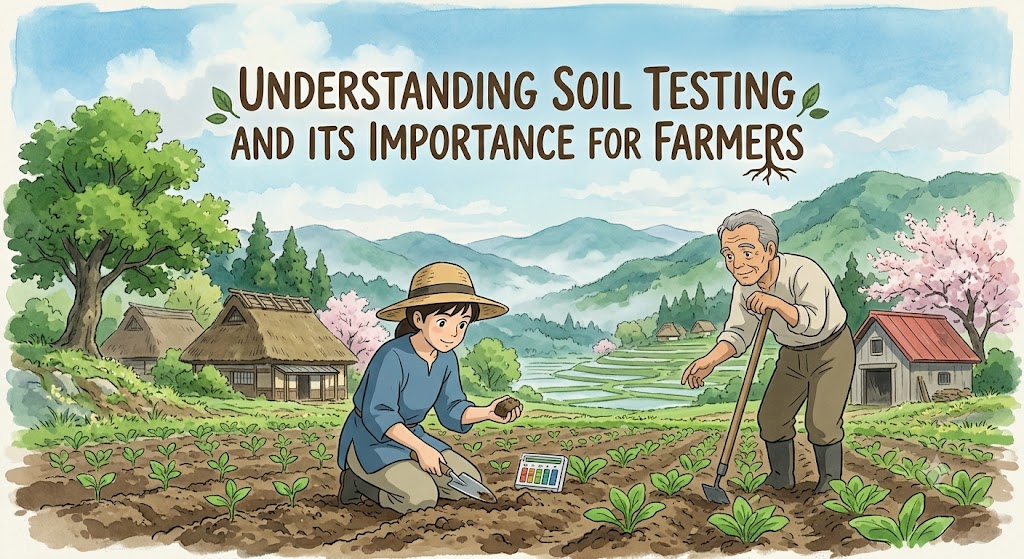
Healthy soil is the backbone of successful farming. Every crop depends on the soil for nutrients, water, and root support. However, many farmers apply fertilizers without knowing what their soil actually needs. This often results in unnecessary expenses, poor crop growth, nutrient imbalances, and lower yields. Soil testing is one of the simplest yet most valuable tools available to farmers because it provides accurate information about soil health before planting begins.
Whether you own a small vegetable farm or manage large agricultural fields, understanding soil testing can help you make informed decisions, improve productivity, and protect your land for future generations. In this guide, you’ll learn what soil testing is, why it matters, and how it contributes to higher crop production and sustainable farming.
What Is Soil Testing?
Soil testing is the process of analyzing soil samples to determine their physical and chemical properties. A soil test measures important factors such as nutrient levels, soil pH, organic matter, and the presence of essential minerals.
Instead of guessing what your crops need, soil testing provides reliable information that helps farmers apply the right nutrients in the correct amounts.
A typical soil test evaluates:
- Soil pH
- Nitrogen (N)
- Phosphorus (P)
- Potassium (K)
- Organic matter
- Calcium
- Magnesium
- Sulfur
- Micronutrients like zinc and iron
These results help create an effective nutrient management plan.
Why Soil Testing Is Important
Many farming problems begin below the surface. Crops may appear weak or unhealthy even when enough fertilizer has been applied. In many cases, the issue is not the amount of fertilizer but an imbalance of nutrients or unsuitable soil conditions.
Regular soil testing helps farmers:
- Increase crop yields
- Improve soil fertility
- Reduce unnecessary fertilizer use
- Save money on farm inputs
- Protect the environment
- Improve long-term soil health
Healthy soil supports healthy plants, and healthy plants produce better harvests.
1. Helps Apply the Right Fertilizers
One of the biggest advantages of soil testing is accurate fertilizer management.
Without testing, farmers may:
- Apply nutrients the soil already contains
- Miss important nutrient deficiencies
- Waste money on unnecessary fertilizers
A soil test identifies exactly which nutrients are lacking, allowing farmers to apply balanced fertilizers more efficiently.
2. Improves Crop Yield
Plants require balanced nutrition throughout their growth cycle.
When nutrients are supplied according to soil test recommendations:
- Seed germination improves
- Root systems become stronger
- Plants grow more vigorously
- Flowering increases
- Harvest quality improves
Balanced nutrition helps crops reach their full production potential.
3. Maintains Proper Soil pH
Soil pH plays a major role in nutrient availability.
If the soil becomes too acidic or too alkaline, plants cannot absorb nutrients effectively, even when those nutrients are present.
Most agricultural crops grow best within a slightly acidic to neutral pH range.
Regular soil testing helps farmers identify pH problems and correct them with appropriate soil amendments.
4. Saves Money
Many farmers spend a significant portion of their budget on fertilizers.
By applying nutrients only where needed, soil testing helps reduce unnecessary expenses.
Financial benefits include:
- Lower fertilizer costs
- Reduced input waste
- Better return on investment
- More efficient farm management
Over time, these savings can significantly improve farm profitability.
5. Supports Sustainable Farming
Healthy soil is essential for sustainable agriculture.
Regular testing allows farmers to monitor soil health and make gradual improvements instead of relying on excessive chemical inputs.
Combining soil testing with:
- Compost
- Organic fertilizers
- Crop rotation
- Cover crops
- Efficient irrigation
creates a more productive and environmentally responsible farming system.
How Soil Testing Is Done
The process is simple but should be performed carefully.
Step 1: Collect Soil Samples
Take small soil samples from different parts of the field at a similar depth.
Avoid collecting samples from unusual areas such as compost piles, field edges, or recently fertilized spots.
Step 2: Mix the Samples
Combine all samples in a clean container to create one representative sample for the field.
Step 3: Send to a Laboratory
Submit the sample to a reliable soil testing laboratory for analysis.
Step 4: Review the Results
The laboratory report provides recommendations for fertilizer use, soil amendments, and pH management.
When Should Farmers Test Their Soil?
The best time to test soil is before planting a new crop.
Most agricultural experts recommend testing:
- Every 2–3 years for stable fields
- Before changing crop types
- After major flooding
- Before establishing orchards
- When crop performance declines unexpectedly
Regular testing helps track long-term changes in soil health.
Common Soil Problems Revealed by Testing
Soil testing can identify several issues that are difficult to recognize visually.
These include:
- Nitrogen deficiency
- Phosphorus shortage
- Potassium imbalance
- Low organic matter
- Acidic soil
- High soil salinity
- Micronutrient deficiencies
Early detection allows farmers to solve problems before they reduce crop yields.
Benefits of Soil Testing at a Glance
| Benefit | Why It Matters |
|---|---|
| Better Fertilizer Use | Reduces unnecessary costs |
| Higher Crop Yield | Provides balanced nutrition |
| Improved Soil Health | Supports long-term productivity |
| Correct Soil pH | Improves nutrient availability |
| Environmental Protection | Reduces nutrient runoff |
| Better Farm Planning | Supports informed decisions |
Common Mistakes to Avoid
To obtain accurate results, avoid these mistakes:
- Collecting soil from only one location
- Taking samples immediately after fertilization
- Using dirty containers
- Ignoring laboratory recommendations
- Skipping regular testing
Following proper sampling methods ensures more reliable results.
Conclusion
Understanding soil testing is one of the smartest investments a farmer can make. Instead of relying on guesswork, soil testing provides accurate information about nutrient levels, soil pH, and overall soil condition. This knowledge allows farmers to apply fertilizers efficiently, improve crop growth, reduce unnecessary expenses, and protect valuable farmland for future generations.
Healthy soil leads to healthy crops, and healthy crops lead to better harvests. By making soil testing a regular part of farm management, farmers can increase productivity, strengthen soil fertility, and build a more sustainable agricultural business.
Frequently Asked Questions
1. What is the main purpose of soil testing?
Soil testing measures nutrient levels, pH, and other properties to help farmers manage soil more effectively.
2. How often should soil be tested?
Most farms benefit from testing every two to three years or before planting a new crop.
3. Can soil testing increase crop yields?
Yes. Soil testing helps farmers apply the right nutrients, improving plant growth and harvest quality.
4. Is soil testing expensive?
Compared to the cost of unnecessary fertilizer applications, soil testing is generally an affordable and valuable investment.
5. Why is soil pH important?
Soil pH affects how easily plants absorb nutrients. Maintaining the proper pH helps crops grow stronger and healthier.