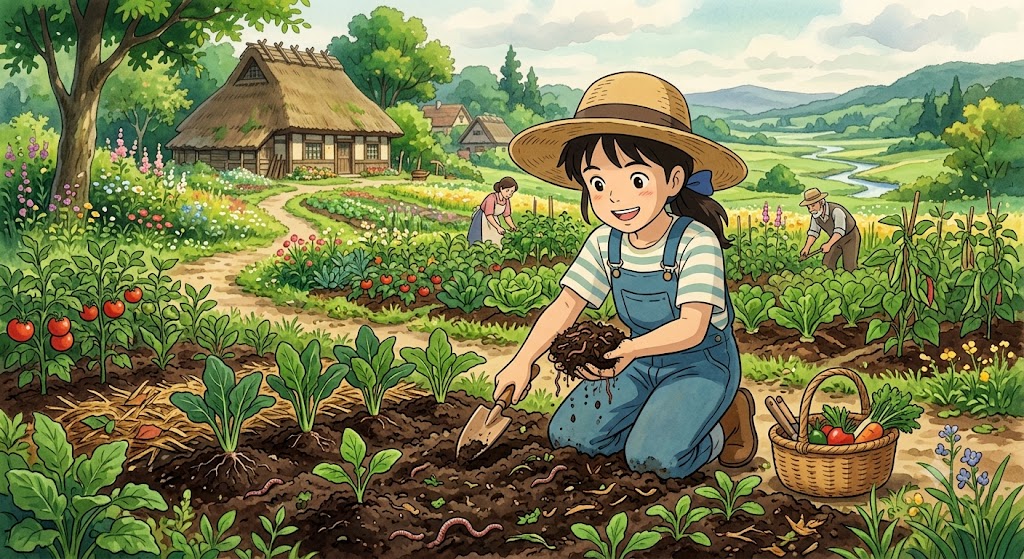
Healthy soil is the foundation of successful agriculture. Every productive farm begins with fertile, living soil that supplies crops with nutrients, water, and a stable environment for root development. While fertilizers can temporarily improve plant growth, long-term productivity depends on maintaining healthy soil through natural management practices.
Over the years, intensive farming, excessive chemical use, soil erosion, and changing weather conditions have reduced soil quality in many agricultural regions. As a result, farmers often face declining yields, higher production costs, and increased pest and disease problems. Fortunately, improving soil health does not always require expensive inputs. Natural soil management techniques can restore fertility, improve crop performance, and support sustainable farming for generations.
This guide explains practical soil health management tips that help farmers improve crop growth naturally while protecting the environment and reducing long-term farming costs.
Why Soil Health Matters in Agriculture
Healthy soil is much more than dirt. It is a living ecosystem filled with beneficial microorganisms, organic matter, insects, fungi, and nutrients that work together to support plant growth.
Healthy soil provides several important benefits:
- Stronger root development
- Better water retention
- Improved nutrient availability
- Higher crop yields
- Reduced erosion
- Increased resistance to drought
- Better protection against plant diseases
When soil remains healthy, crops grow more vigorously and require fewer external inputs.
Understand Your Soil Before Making Changes
Every farm has different soil conditions. Before applying fertilizers or soil amendments, farmers should understand their soil’s characteristics.
Important factors include:
- Soil texture
- Organic matter content
- pH level
- Nutrient availability
- Drainage capacity
- Moisture retention
Regular soil testing helps identify nutrient deficiencies and prevents unnecessary fertilizer applications.
Knowing your soil allows you to make informed decisions that improve productivity without wasting resources.
Add Organic Matter Regularly
Organic matter is one of the most valuable components of healthy soil.
It improves soil structure, supports beneficial microorganisms, and increases nutrient availability.
Natural sources include:
- Compost
- Farmyard manure
- Crop residues
- Green manure
- Leaf litter
Adding organic matter each season gradually improves soil fertility while enhancing its ability to hold moisture during dry periods.
Practice Crop Rotation
Growing the same crop year after year gradually exhausts soil nutrients and encourages pest populations.
Crop rotation naturally restores soil balance.
For example:
- Legumes add nitrogen to the soil.
- Deep-rooted crops improve soil structure.
- Different crop families interrupt pest and disease cycles.
A well-planned rotation improves fertility while reducing dependence on chemical fertilizers and pesticides.
Grow Cover Crops Between Seasons
Cover crops protect soil when main crops are not growing.
Popular cover crops include:
- Clover
- Mustard
- Rye
- Oats
- Cowpea
- Sunn hemp
These crops:
- Reduce erosion
- Suppress weeds
- Improve organic matter
- Fix atmospheric nitrogen
- Support beneficial soil organisms
When incorporated into the soil, cover crops act as natural fertilizers.
Reduce Excessive Tillage
Frequent deep tillage disturbs soil structure and destroys beneficial microorganisms.
Conservation tillage helps maintain soil health by:
- Preserving soil aggregates
- Reducing erosion
- Conserving moisture
- Protecting earthworms
- Increasing carbon storage
Minimal soil disturbance allows natural biological activity to flourish.
Use Compost Instead of Relying Only on Chemical Fertilizers
Compost slowly releases nutrients while improving soil structure.
Benefits include:
- Better microbial activity
- Improved nutrient cycling
- Increased water-holding capacity
- Reduced soil compaction
- Enhanced root growth
Unlike synthetic fertilizers, compost continues improving soil long after application.
Encourage Beneficial Soil Microorganisms
Millions of microorganisms live in healthy soil.
These organisms:
- Break down organic matter
- Release nutrients
- Protect roots from diseases
- Improve soil structure
- Support healthy plant growth
Farmers can encourage microbial activity by:
- Adding compost
- Avoiding unnecessary pesticide use
- Maintaining organic matter
- Preventing excessive soil disturbance
Healthy microbial populations naturally improve crop productivity.
Maintain Proper Soil Moisture
Both excessively dry and waterlogged soils reduce plant growth.
Natural moisture management practices include:
- Mulching
- Drip irrigation
- Rainwater harvesting
- Organic matter application
- Proper drainage systems
Maintaining balanced moisture creates ideal conditions for root development and microbial activity.
Apply Mulch Around Crops
Mulching is one of the simplest ways to improve soil naturally.
Organic mulch materials include:
- Straw
- Dry grass
- Leaves
- Wood chips
- Crop residues
Mulch helps:
- Reduce evaporation
- Suppress weeds
- Moderate soil temperature
- Prevent erosion
- Increase organic matter as it decomposes
It also reduces irrigation frequency during hot weather.
Prevent Soil Erosion
Topsoil contains the highest concentration of nutrients and beneficial organisms.
Losing topsoil significantly reduces productivity.
Natural erosion control methods include:
- Contour farming
- Terracing
- Windbreaks
- Cover crops
- Vegetative buffer strips
- Permanent ground cover
Protecting topsoil preserves fertility for future growing seasons.
Balance Soil pH Naturally
Soil pH influences nutrient availability.
If the soil becomes too acidic or too alkaline, crops cannot absorb nutrients efficiently.
Natural methods include:
- Agricultural lime for acidic soils
- Organic compost
- Wood ash (used carefully)
- Sulfur-based amendments for alkaline soils
Regular soil testing helps determine the correct approach.
Avoid Overusing Chemical Fertilizers
Chemical fertilizers provide quick nutrients but excessive use may:
- Damage beneficial microbes
- Increase soil acidity
- Reduce organic matter
- Cause nutrient imbalance
- Pollute nearby water sources
A balanced approach that combines organic and mineral fertilizers often produces the best long-term results.
Improve Soil Biodiversity
Healthy soil contains countless living organisms working together.
Supporting biodiversity creates stronger agricultural systems.
Farmers can improve biodiversity by:
- Rotating crops
- Planting diverse species
- Maintaining field borders
- Reducing unnecessary chemical use
- Adding organic materials regularly
Greater biodiversity improves nutrient cycling and strengthens ecosystem resilience.
Integrate Livestock with Crop Farming
Mixed farming creates a natural nutrient cycle.
Livestock contribute by producing manure that enriches soil with organic matter and essential nutrients.
Crop residues can feed animals, while manure returns valuable nutrients to the fields.
This sustainable cycle reduces fertilizer costs and improves soil quality naturally.
Plant Deep-Rooted Crops
Deep-rooted plants naturally improve soil structure.
Benefits include:
- Breaking compacted soil
- Improving drainage
- Bringing nutrients from deeper layers
- Increasing organic matter below the surface
Examples include:
- Alfalfa
- Sunflower
- Pigeon pea
- Radish
- Sorghum
These crops naturally improve soil for future plantings.
Monitor Soil Health Every Season
Improving soil health is an ongoing process.
Farmers should regularly observe:
- Earthworm populations
- Soil color
- Water infiltration
- Root development
- Organic matter levels
- Crop performance
Keeping records helps evaluate which management practices produce the best long-term results.
Long-Term Benefits of Natural Soil Health Management
Healthy soil rewards farmers year after year.
Long-term advantages include:
- Higher crop yields
- Lower fertilizer costs
- Improved drought tolerance
- Better nutrient efficiency
- Reduced pest and disease pressure
- Greater farm profitability
- Enhanced environmental sustainability
Investing in soil today creates stronger farms for future generations.
Conclusion
Natural soil health management is one of the most valuable investments any farmer can make. Instead of relying solely on chemical inputs, farmers can build fertile, productive soil through composting, crop rotation, cover cropping, mulching, conservation tillage, and proper water management. These practices improve soil structure, encourage beneficial microorganisms, conserve moisture, and increase nutrient availability, resulting in healthier crops and more reliable harvests.
Healthy soil is not created overnight, but consistent care delivers lasting benefits. Farmers who prioritize soil health strengthen their farms against drought, erosion, pests, and changing climate conditions while reducing production costs and protecting the environment. By treating soil as a living resource rather than simply a growing medium, agriculture can remain productive and sustainable for generations to come.
Frequently Asked Questions
1. What is soil health in agriculture?
Soil health refers to the soil’s ability to function as a living ecosystem that supports healthy plant growth, stores water, cycles nutrients, and maintains biological activity.
2. How can farmers improve soil health naturally?
Natural methods include adding compost, rotating crops, planting cover crops, reducing tillage, applying mulch, managing water efficiently, and maintaining soil biodiversity.
3. Why is organic matter important for soil?
Organic matter improves soil structure, increases moisture retention, supports beneficial microorganisms, and supplies nutrients gradually to crops.
4. How often should soil be tested?
Most farms benefit from soil testing every two to three years, while intensive farming systems may require annual testing to monitor nutrient levels and pH.
5. Can healthy soil reduce fertilizer requirements?
Yes. Healthy soil stores nutrients more effectively, improves nutrient cycling, and increases fertilizer efficiency, often reducing the amount of fertilizer needed over time.