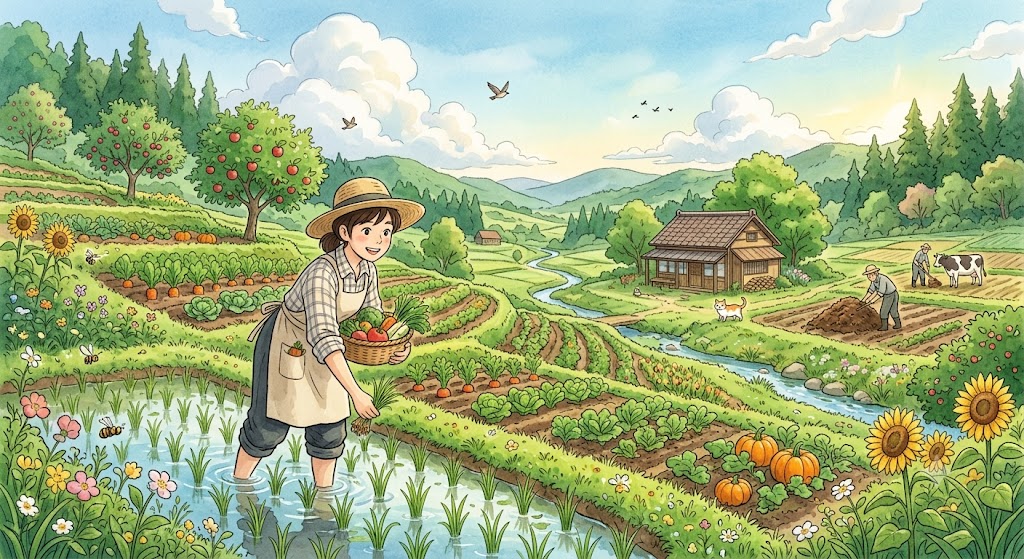
Agriculture plays a vital role in feeding the world’s growing population, but farming also depends heavily on healthy soil, clean water, stable weather, and rich biodiversity. Over the years, excessive use of chemical fertilizers, pesticides, and intensive farming methods has placed significant pressure on natural resources. Soil fertility has declined in many regions, water sources have become polluted, and beneficial insects have disappeared from agricultural fields.
Eco-friendly farming offers a practical solution to these challenges. It focuses on producing healthy crops while protecting the environment and preserving natural resources for future generations. Instead of relying entirely on synthetic inputs, eco-friendly farming encourages sustainable techniques that improve soil health, conserve water, reduce pollution, and increase long-term productivity.
Whether you own a small family farm or manage large agricultural land, adopting environmentally responsible farming practices can improve crop quality, reduce production costs, and build a more sustainable farming business.
What Is Eco-Friendly Farming?
Eco-friendly farming is an agricultural approach that minimizes environmental damage while maintaining productive and profitable farms. It combines traditional farming knowledge with modern sustainable practices to protect ecosystems without sacrificing crop yields.
The primary goals include:
- Improving soil fertility
- Conserving water
- Reducing chemical pollution
- Protecting biodiversity
- Producing healthy food
- Supporting long-term farm sustainability
Rather than focusing only on short-term production, eco-friendly farming creates balanced agricultural systems that remain productive year after year.
Why Eco-Friendly Farming Matters
Modern agriculture faces several environmental challenges, including climate change, declining soil fertility, water shortages, and increasing pest resistance. Sustainable farming practices help reduce these risks while protecting valuable natural resources.
Some important benefits include:
- Healthier soil
- Better crop quality
- Reduced farming costs
- Improved water conservation
- Increased biodiversity
- Greater resilience to climate change
Healthy ecosystems also support stronger and more reliable agricultural production.
1. Improve Soil with Organic Matter
Healthy soil is the foundation of successful farming.
Instead of relying only on synthetic fertilizers, farmers should regularly add:
- Compost
- Farmyard manure
- Vermicompost
- Crop residues
- Green manure
Organic matter improves soil structure, increases water retention, supports beneficial microorganisms, and gradually releases nutrients for healthy crop growth.
2. Practice Crop Rotation
Growing the same crop every season can reduce soil fertility and encourage pests and diseases.
Crop rotation helps:
- Restore soil nutrients
- Reduce pest populations
- Improve soil structure
- Suppress weeds
- Increase long-term productivity
For example, rotating legumes with cereal crops naturally improves soil nitrogen levels.
3. Use Water Efficiently
Water conservation is becoming increasingly important in agriculture.
Eco-friendly irrigation practices include:
- Drip irrigation
- Rainwater harvesting
- Mulching
- Soil moisture monitoring
- Early morning irrigation
These methods reduce water waste while maintaining healthy crop growth.
4. Reduce Chemical Pesticide Use
Heavy pesticide use can harm pollinators, beneficial insects, wildlife, and nearby water sources.
Instead, farmers can adopt Integrated Pest Management (IPM), which includes:
- Crop monitoring
- Neem-based sprays
- Beneficial insects
- Crop rotation
- Field sanitation
- Pest-resistant crop varieties
Natural pest management creates healthier farming ecosystems.
5. Protect Pollinators
Bees, butterflies, and other pollinators are essential for many crops.
Farmers can support pollinators by:
- Planting flowering borders
- Avoiding unnecessary pesticide spraying
- Maintaining natural habitats
- Providing clean water sources
Healthy pollinator populations improve fruit set, seed production, and crop quality.
6. Prevent Soil Erosion
Topsoil contains valuable nutrients that crops depend on.
Protect the soil by:
- Planting cover crops
- Using mulch
- Practicing contour farming on slopes
- Maintaining grass strips
- Avoiding excessive tillage
Reducing erosion helps preserve soil fertility for future growing seasons.
7. Grow Diverse Crops
Planting different crops increases farm resilience and reduces production risks.
Crop diversity offers several advantages:
- Better soil health
- Reduced pest outbreaks
- Improved biodiversity
- More stable farm income
- Lower disease pressure
Mixed cropping systems also make farms more adaptable to changing weather conditions.
8. Encourage Beneficial Wildlife
Healthy farms support birds, earthworms, frogs, spiders, and beneficial insects.
These organisms naturally:
- Control pests
- Improve soil fertility
- Support pollination
- Maintain ecological balance
Avoid destroying natural habitats whenever possible.
9. Maintain Healthy Farm Records
Good record keeping helps farmers improve decision-making.
Track:
- Planting dates
- Fertilizer use
- Irrigation schedules
- Pest outbreaks
- Harvest quantities
- Production costs
Accurate records help identify successful practices and improve future planning.
10. Continue Learning and Adapting
Agriculture continues to evolve with new research and improved sustainable techniques.
Farmers should:
- Attend agricultural training programs
- Follow local extension services
- Learn about climate-smart agriculture
- Test new practices on small areas before expanding
Continuous learning helps farms remain productive while protecting natural resources.
Eco-Friendly Farming Practices at a Glance
| Practice | Main Benefit |
|---|---|
| Compost Application | Improves soil fertility |
| Crop Rotation | Reduces pests and restores nutrients |
| Drip Irrigation | Saves water |
| Cover Crops | Prevents soil erosion |
| Integrated Pest Management | Reduces chemical use |
| Pollinator Protection | Improves crop production |
| Mixed Cropping | Increases farm resilience |
Common Mistakes to Avoid
Many farmers unintentionally reduce environmental sustainability by making avoidable mistakes.
Avoid:
- Overusing chemical fertilizers
- Excessive pesticide applications
- Leaving soil uncovered after harvest
- Over-irrigating fields
- Growing the same crop continuously
- Ignoring soil testing
- Removing beneficial insects and natural vegetation
Correcting these practices improves both environmental health and farm productivity.
Conclusion
Eco-friendly farming is not about reducing production—it is about producing food in a smarter and more responsible way. By improving soil health, conserving water, protecting pollinators, reducing chemical dependence, and encouraging biodiversity, farmers can create productive agricultural systems that benefit both the environment and future generations.
Every sustainable practice, no matter how small, contributes to healthier crops, stronger ecosystems, and long-term farm success. As agriculture continues to face climate and environmental challenges, eco-friendly farming will play an increasingly important role in ensuring food security while protecting the natural resources that farming depends on.
Frequently Asked Questions
1. What is eco-friendly farming?
Eco-friendly farming is an agricultural approach that protects natural resources while maintaining productive crop and livestock systems.
2. How does eco-friendly farming improve soil health?
It uses compost, crop rotation, cover crops, and organic matter to improve soil fertility, structure, and microbial activity.
3. Can eco-friendly farming reduce production costs?
Yes. Efficient water use, healthier soil, and reduced dependence on chemical inputs can lower long-term farming expenses.
4. Why are pollinators important in sustainable farming?
Pollinators help many crops produce fruits and seeds, leading to better yields and improved crop quality.
5. Is eco-friendly farming suitable for small farms?
Absolutely. Small farms can successfully adopt sustainable practices such as composting, mulching, crop rotation, rainwater harvesting, and natural pest management with relatively low investment.